'The Secret Lives of Somerset Maugham': Incisive biography of an underrated author
Selina Hastings' splendid biography of William Somerset Maugham reads like Somerset Maugham at his best, its myriad details judiciously selected and precisely arranged into a satisfying narrative, its insights into character and motivation altogether clear-eyed and unsentimental.
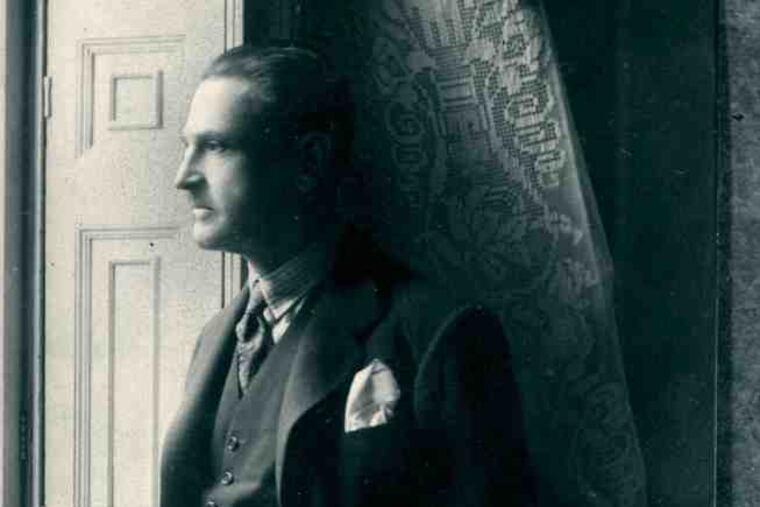
A Biography
By Selina Hastings
Random House. 626 pp. $35
nolead ends nolead begins
Reviewed by Frank Wilson
Selina Hastings' splendid biography of William Somerset Maugham reads like Somerset Maugham at his best, its myriad details judiciously selected and precisely arranged into a satisfying narrative, its insights into character and motivation altogether clear-eyed and unsentimental.
The "Secret Lives" of the title should not lead one to think that this is a tabloid biography. While Hastings could hardly have ignored Maugham's sexual voracity, she does not dwell on it unnecessarily. But Maugham did lead a carefully compartmentalized life and went to great lengths to make sure certain compartments would remain secret even after his death:
Evening after evening . . . Maugham, assisted by his secretary, went systematically through his papers, throwing every last scrap of personal correspondence onto the fire. He also wrote to his friends asking them to destroy any letters of his in their possession; and he issued strict instructions to his literary executors that no biography should be authorized, no access to his papers be allowed, and all requests for information be firmly refused.
As is usually the case with best-laid schemes, this one in the long run failed. The Royal Literary Fund, executors of Maugham's estate, "recently rescinded the clause in his will forbidding access to his correspondence." Worse, "a transcript has been uncovered of a long and detailed recording made by his daughter, Liza, of the inside story of her father's private and domestic life." This, Hastings assures us, is "extremely frank" and "richly revealing." Finally, and unsurprisingly, "Maugham's request that his letters should be destroyed ensured not only that they were kept but that most were sold for very large sums to American universities."
So, Hastings actually has a wealth of new information to offer, including the ghastly details of Maugham's marriage, and is able to provide a more nuanced portrait of the love of Maugham's life - the handsome, charming, and alcoholic American Gerald Haxton. (Maugham's friend, the film director George Cukor, said that "Gerald Haxton was wonderful for Willie. He kept him in touch with the gutter.")
Much of the story will already be familiar to those familiar with Maugham's writings, especially Of Human Bondage. He was the youngest of four sons, and by the time he was born his siblings were all in school in England. He could just as well have been an only child, and his love for his mother endured throughout his life: A photo of her was always beside his bed.
She died when he was 8, and his father died two years later. His childhood thereafter was wretched. He was sent to live with an uncle, a humorless Anglican vicar. School was an even worse trial. Maugham was born in Paris, and his first language was French. When he was sent to England, he spoke English with a French accent and often, when nervous, mixed the languages up. He developed a severe stammer, and became to his schoolmates an object of ridicule.
Maugham said that, but for his stammer, he would probably have gone to Cambridge. Instead, he studied medicine at St. Thomas's Hospital, where he received the observational training - and exposure to some of the grittier details of life - that was to prove crucial to his fiction.
Hastings is very good in showing how Maugham's experiences served as the foundation for that fiction. "Maugham was a realist," she writes; "his imagination needed actual people and events to work on." She points out, for example, that in The Painted Veil, one of Maugham's finest novels, there are "visible parallels between the home life of the Fanes and that of the Maughams, with both husbands, taciturn by nature, married to chatterboxes. Like Syrie [Maugham's wife], Kitty was 'willing to chatter all day long.' "
Often, Maugham didn't even bother to give his characters fictitious names. The model for Miss Sadie Thompson in his story "Rain" was in fact named Sadie Thompson.
Hastings' treatment of Maugham's work is excellent. She rightly judges it to be better than most critics have been willing to admit. To begin with, after serving as a British agent in Switzerland and Russia during World War I, he practically invented the genre of spy fiction as we now know it, and as subsequent practitioners have readily admitted. John Le Carré, who acknowledges having been influenced by Maugham, has said that "Maugham was the first person to write about espionage in a mood of disenchantment and almost prosaic reality." In 1950, Raymond Chandler wrote to Maugham about Ashenden, the collection of espionage tales featuring Maugham's alter ego William Ashenden, and said that "there are no other great spy stories."
Maugham's stories in general are models of the form. "Fluent in style and apparently effortless," Hastings writes, "the stories are tightly constructed and minutely observed, amply demonstrating the three virtues he himself prized highest, of lucidity, simplicity and euphony."
He was also the leading playwright of his day, having at one point four productions running simultaneously in London's West End. And those plays still work: A revival of The Constant Wife in 2005 garnered Tony nominations for the play, and for Lynn Redgrave and Kate Burton.
As for the novels, Of Human Bondage is a classic, and Cakes and Ale, The Painted Veil, and The Razor's Edge are all still definitely worth reading.
The wide range of his work - and the many adaptations of it for stage and screen - enabled Maugham to become fabulously rich. His Villa Mauresque on the Riviera was graced "with a well-trained staff of thirteen - a butler, two footmen, a femme de chambre to look after the ladies, a chef, kitchen maid, chauffeur, and six gardeners." Everybody who was anybody craved a weekend at Willie's.
Maugham had hopes his life would display an aesthetic arc comparable to that of his fiction. He probably imagined himself becoming a kind of literary Prospero, laying aside his golden pen and settling back into a contemplative diminuendo.
He ended instead as a grotesque parody of King Lear, "like a malignant crab," his nephew Robin wrote. He went to court, claiming Liza was not really his daughter and seeking to disown her and adopt as his son Alan Searle, who had taken the place of Haxton after Haxton's death. The court decided otherwise.
Later, Searle wrote to a friend that "Willie is now completely out of his mind and is in a constant state of terror and misery." When, toward the end, Liza visited Maugham, she "was appalled by the sight of her father, a tiny wizened figure, his face constantly contorted as he constantly bared his teeth and growled at her, sometimes lunging toward her, his hands like claws."
He died on Dec. 16, 1965, a month shy of his 92d birthday. How trivial all the glitter and the glamour of his life must have seemed to him by then.