Page-turners based on fact, crafted in fiction
We're in a golden age of nonfiction. There are more stories out there, better ways of recording them - and a generation of readers and writers who love them. The fiction isn't bad, either. Here are 10 good examples of each, about to hit the shelves.
We're in a golden age of nonfiction. There are more stories out there, better ways of recording them - and a generation of readers and writers who love them. The fiction isn't bad, either. Here are 10 good examples of each, about to hit the shelves.
- Michael D. Schaffer and John Timpane, Inquirer staff writers
Fall Preview: Books
Nonfiction
What W.H. Auden Can Do for You, by Alexander McCall Smith (Princeton, $19.95, Sept. 22). It's an Auden kind of autumn for the Princeton University Press. After publishing a wonderful edition of Auden's masterwork For the Time Being in May, Princeton presents McCall Smith, the eminent Scot, author of The No. 1 Ladies' Detective Agency and so much else. He's a fevered Auden fan, and he argues that poetry in general, and Auden in particular, is very good for you. His little book, part of Princeton's Writers on Writers series, is a joy, start to finish.
Shady Characters: The Secret Life of Punctuation, Symbols, and Other Typographical Marks, by Keith Houston (Norton, $25.95, Sept. 24). You might think such a book would drive you nuts, to read or to write, but this one's funny, surprising, and, of course, geeky. As much as you could possibly wish to know, and fun.
Thank You for Your Service, by David Finkel (Farrar, Straus and Giroux, $27, Oct. 1). What happens when war's over and you have to come home? An eminent journalist and writer tells of infantrymen who return from war.
Book of Ages: The Life and Opinions of Jane Franklin, by Jill Lepore (Knopf, $27.95, Oct. 1). Ben had a younger sister, and they wrote letters. Lepore reveals the little-known life of this woman of early America.
Jefferson and Hamilton: The Rivalry That Forged a Nation, by John Ferling (Bloomsbury, $30, Oct. 1). Big egos, competitors, incredible gossips, and very different men, these two helped invent a nation. We couldn't have done without either one, and Ferling shows why. Fresh history.
Ties That Bind: Stories of Love and Gratitude from the First Ten Years of StoryCorps, by Dave Isay with Lizzie Jacobs (Penguin, $25.95, Oct. 17). If you listen to NPR Friday mornings, you hear real-life stories from StoryCorps, which has collected more than 50,000 such tales since 2003. These are real, hard to take, and will inspire what they contain: love and gratitude.
The Accidental Species: Misunderstandings of Human Evolution, by Henry Gee (U. of Chicago, $26, Oct. 21). That's some theory, that theory of evolution. It's the best one out there - but it's far from complete, and its popular rep isn't accurate. Gee, an editor at Nature, knows his stuff, likes to call people wrong, and furnishes a great tour of the field.
Eminent Hipsters, by Donald Fagen (Viking, $26.95, Oct. 22). Yes, that Donald Fagen, one-half of the jazz-pop band Steely Dan. This is his memoir of life on the road, told in notes and short essays, with cameos by Boz Scaggs, Chevy Chase, Michael McDonald, and others. Wry, funny, with a human touch.
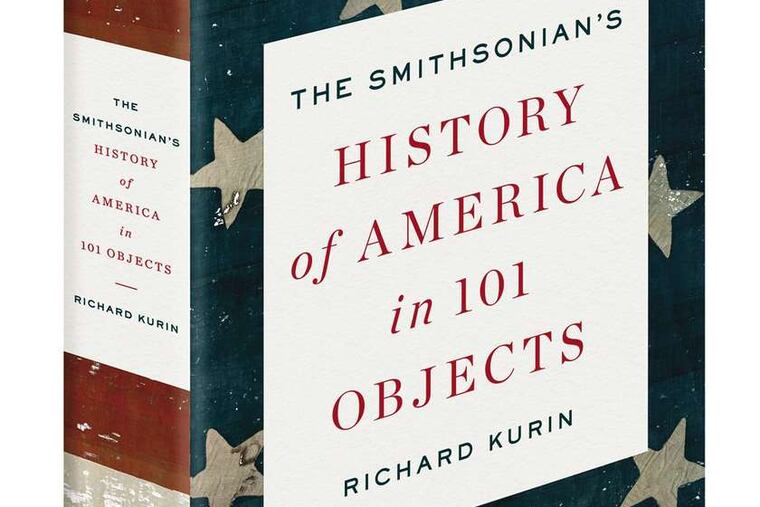
The Smithsonian's History of America in 101 Objects, by Richard Kurin (Penguin, $50, Oct. 29). A new way to tell a story you might have thought you knew, from slave manacles to fire trucks, space suits to the ruby slippers of The Wizard of Oz.
Wounded: A New History of the Western Front in World War I, by Emily Mayhew (Oxford, $29.95, Nov. 1). This is a beautifully, heartbreakingly told book, extremely well researched, and timely for any time. It wasn't the war that ended all wars, but the view that Mayhew weaves of this war, and all wars, will stay with you.
White Girls, by Hilton Als (McSweeney's, $24, Nov. 12). Sure, Flannery O'Connor and Louise Brooks were female and white - but how was Richard Pryor a "white girl"? How was Michael Jackson? Als, a gifted critic, writes a series of essays about how people categorize us. Smart, hip, full of insight.
Fiction
The Childhood of Jesus, by J.M. Coetzee (Viking, $26.95, in stores) A man and boy arrive as refugees in a new country where they are welcomed, formally but not warmly, in an allegory on identity that is only tangentially about the life of Jesus. The boy has been separated from his mother, and the man is trying to help him. What they're really looking for is a new life.
Someone, by Alice McDermott (Farrar, Straus and Giroux, $25, in stores) There's nothing special about Marie Commeford, except maybe her weak eyesight. But McDermott, winner of a National Book Award for her novel Charming Billy, creates a richly detailed novel of Irish-Americans in Brooklyn as she hopscotches through the life of myopic Marie.
The Lowland, by Jhumpa Lahiri (Knopf, $27.95, Sept. 24) Pulitzer Prize-winner Lahiri deftly probes the depths of brotherly love in the story of Indian brothers Udayan, a communist revolutionary, and Subhash, a cautious scientist who marries Udayan's young widow after the police kill him.
Dissident Gardens, by Jonathan Lethem (Doubleday, $27.95, in stores) Family life can be so messy, especially when you mix in politics. Lethem, winner of a National Book Critics Circle Award for Motherless Brooklyn, ventures into Queens this time to tell the story, from the Depression through Occupy, of Communist spitfire Red Rose Zimmer, her Aquarian daughter Miriam, and their various men.
Who Asked You?, by Terry McMillan (Viking, $27.95, Sept. 17). Another tale of strong black women and their families from the queen of resilience. At the center of the story, told through the voices of several characters, is Betty Jean - wife, mother, grandmother, sister, friend, tower of strength - who holds her family together with a weary dignity as they cope with illness, death, imprisonment, and the responsibilities of success.
Bleeding Edge, by Thomas Pynchon (Penguin Press, $27.95, Sept. 17) It's 2001 in New York, pre-9/11, and fraud investigator Maxine Tarnow has lost her license but still has two boys in grade school, a Beretta in her purse, some hot info on a geeky computer tycoon, and an ex-husband who's still on her mind. That should be enough for any novelist, but Pynchon makes it into a sprawling tale with a cast of wacky characters, including Russian mobsters, an emo-therapist, and a variety of digital delinquents.
How to Be a Good Wife, by Emma Chapman (St. Martin, $24.99, Oct. 15) Marta was 21 when she married and can't really remember what it was like to be unmarried. And now she seems to be coming unglued. For 25 years, she has taken her cues from a book given to her on her wedding day: How to Be a Good Wife. The directions aren't enough to stop her from holding her husband's razor and eying the veins in her wrist in this chilling first novel.
The Signature of All Things, by Elizabeth Gilbert (Viking, $28.95, Oct. 1) Memoirist Gilbert turns back to fiction to tell the story of 19th-century Philadelphia heiress and scientist Alma Whittaker, whose study of moss takes her to the tropics and romance with artist Ambrose, who leads her into the world of spiritualism.
The Goldfinch, by Donna Tartt (Little, Brown, $30, Oct. 22) Theodore Decker is just 13 when he survives a terrorist attack at the Metropolitan Museum of Art that kills his mother and leaves him in possession of a valuable painting - but worth more than its monetary value to Theo for its connection to his mother. It sustains him through dangers on the dark side of the art world.
Treasure Hunt, by Andrea Camilleri, translated from the Italian by Stephen Sartarelli (Penguin, $15 paperback, Oct. 24) Inspector Salvo Montalbano becomes an instant celebrity when he goes all Bruce Willis to capture an elderly brother and sister who open fire from their apartment on a public square in Vigàta, Sicily. End of story? Of course not, as a series of messages in verse sends him off on a deadly "treasure hunt."