'Last Days in Vietnam': How we left
One of the most memorable scenes from The Unknown Known, Errol Morris' unsettling portrait of former Defense Secretary Donald Rumsfeld, was the now-iconic shot of American servicemen pushing helicopters overboard during the evacuation of Saigon in 1975, while Rumsfeld said, "Some things work out, some things don't."
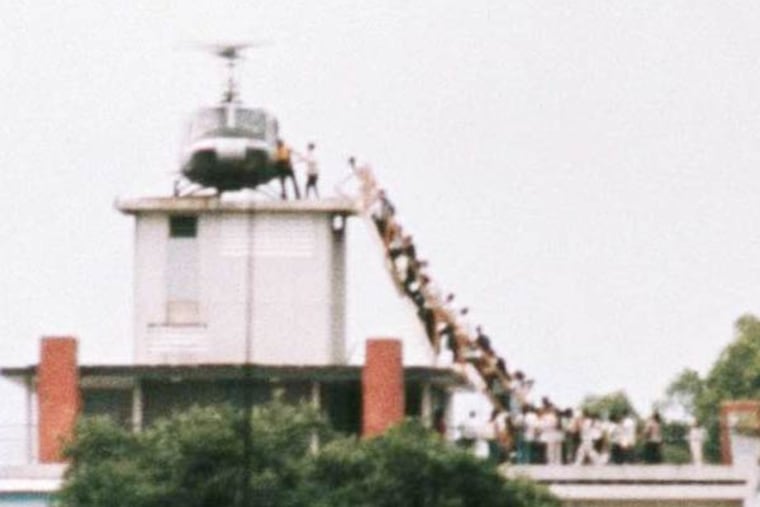
One of the most memorable scenes from The Unknown Known, Errol Morris' unsettling portrait of former Defense Secretary Donald Rumsfeld, was the now-iconic shot of American servicemen pushing helicopters overboard during the evacuation of Saigon in 1975, while Rumsfeld said, "Some things work out, some things don't."
That footage seemed to encapsulate so much about hubris and self-deception and the cyclical nature of defeat.
But with Last Days in Vietnam, filmmaker Rory Kennedy goes deeper into the reality behind the image, turning it from a symbol of loss into a portrait of courage, humanity and pride.
There's still no question that those final days and hours in Saigon, when thousands of U.S. operatives and South Vietnamese clamored to escape an encroaching North Vietnamese army, were fraught with pain, even betrayal. But in this judicious, deeply moving account of that episode, Kennedy illuminates the human - and humane - responses to the situation that have hitherto been forgotten or lost to history.
Using archival footage and present-day interviews, Kennedy plunges viewers back into the years following the 1973 peace accords, when between 5,000 and 7,000 U.S. military advisers and diplomats were still in South Vietnam. Although one condition of the accords was that America would come to its ally's aid in the event of an incursion from the north, the resignation of President Richard M. Nixon made that a moot point. When the south indeed become vulnerable, a war-weary Congress and the American populace they represented effectively put the kibosh on more aid, either for military support or an orderly evacuation.
That left the Americans on the ground, led by Ambassador Graham Martin, in a vulnerable position. Martin is described in the film as a courtly gentleman who felt honor-bound not to abandon his post or panic the South Vietnamese people, with whom he had come to feel strong allegiance. While Martin held firm against evacuation as the North Vietnamese troops headed toward Saigon, his military aides came up with a "black op" strategy whereby they secretly got their South Vietnamese allies and their families out of the country by any subterfuge necessary.
In Kennedy's scrupulous, adroit hands, Last Days in Vietnam plays like a wartime thriller, with heroes engaging in jaw-dropping feats of ingenuity and derring-do. The most shocking episode takes place on the Kirk, one of the U.S. ships that was standing by to accept refugees as they were helicoptered into the harbor off Saigon. As Kennedy makes clear, those helicopters were being shoved off the deck not as a gesture of giving up, but to make room for more people.
Last Days in Vietnam, at its core, is about moral courage - the bravery to confront the question of "who goes and who gets left behind," as retired Army Col. Stuart Herrington puts it. Within the context of a war perceived through the scrim of so much misgiving and moral outrage, Kennedy finds heroes who were willing to ask that tough question, and put everything on the line to answer it.
Last Days in Vietnam **** (out of four stars)
Directed by Rory Kennedy. Distributed by American Experience Films/PBS.
Running time: 1 hour, 38 mins.
Parent's guide: No MPAA rating.
Playing at: Ritz at the Bourse.
EndText