Redemption for '54': Director talks film's re-release
Seventeen years ago, Mark Christopher watched as 54, the film he wrote and directed, was taken away from him by Miramax and recut beyond recognition.
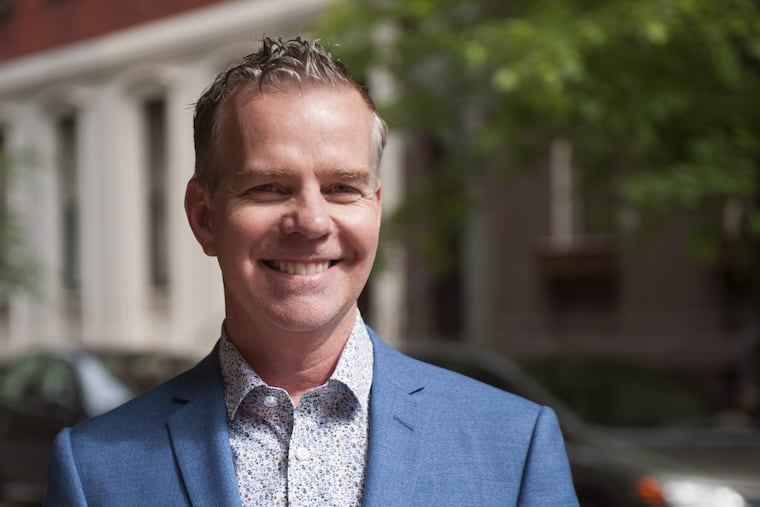
Seventeen years ago, Mark Christopher watched as 54, the film he wrote and directed, was taken away from him by Miramax and recut beyond recognition.
The movie - starring Ryan Phillippe, Neve Campbell, Salma Hayek, and Mike Myers (as club owner Steve Rubell) - concerns the decadent goings-on at the New York club Studio 54 in the 1970s. In Christopher's mind, it was a dark film with strong gay themes. By the time of its release, it was about a plucky Jersey boy trying to make it in the big city. What was released in theaters in 1998 was a critical and commercial flop - but it was not Christopher's movie.
Now an assistant professor of film and television at Drexel University, Christopher has since recut the film back to his original vision, in which it has premiered at film festivals. On Tuesday, the film was released on iTunes.
Did you ever think your version of 54 would see the light of day?
I've been trying for 17 years, but did I ever think it would really happen? It's hard to say. I wanted to make a director's cut for me, the team, and the actors. It screened at Outfest in 2008 and then the [Torino Gay and Lesbian Film Festival] around the same time. It literally caused a riot because it was oversold. In the meantime, my producer, Jonathan King, kept in touch with Miramax. I was shooting with my Drexel kids on campus, and the e-mail came in that we got the green light.
How did Ryan Phillippe's teen-idol status affect 54? The movie was a bit ahead of its time. There was a flawed lead character; it was set in a dark world. Now you turn on television, and any one-hour drama that's on cable, it's de rigueur to have flawed characters. Ryan's character is an opportunistic young fellow. You turn on HBO and, right, of course, that's what you see, but for a big movie in 1998, that was a lot. The rerelease owes a lot to television.
The movie came out right after I Know What You Did Last Summer.
This is the interesting thing about Ryan getting the job. The studio would have loved to have a star, but the star boys of that age are hard to get. They were fine with me making a discovery. Ryan had just had a tiny part in White Squall. He looked like a 16-year-old when we started casting, but it took me a year to cast this film. And he came back after I Know What You Did Last Summer, and he came back a young man. As I was prepping, the cast got more and more famous. I member shooting in Toronto and I woke to Ryan screaming, and it was just a commercial for I Know What You Did Last Summer. Neve [Campbell] was doing Scream 2 by then, and Austin Powers had just hit home video.
When it came to restoring your original vision, what was the most important aspect of the film?
The story was a huge thing [laughs]. It's really a different story, the character development, the themes. That was all changed in the studio release. And the world I had created. Part of that world was to shoot nightclubs as how I experienced them: dark places that are viewed through flashes of light, or bubbles or glitter. Other movies would film these light club scenes.
We wanted to shoot a dark movie. In the studio release, they pumped a bunch of light into it. It no longer looked like this dark, luscious, decadent place. We were able to restore the color and the darkness. It's made the jokes better.
That's quite a bit.
Half of the movie is different. Over 30 minutes of reshoots are removed, and 40 minutes of original footage was put back. Some scenes are basically the same. But, for example, in my cut, in one scene Ryan was shirtless and Mike is wearing this giant orange coat. But in the reshoot, Ryan is wearing a shirt, and that changes the image.
Ryan redid his opening voice-over, so what was interesting was he's a 40-year-old and he actually got to look back on his 19-year-old self. I don't think any other movie can claim that.
So what's next?
Next is fall semester. I have a deal with Warner Horizon to write - guess what! - a dark, one-hour drama called Berlin. I have a deal with Miramax because they're awesome. I'm also working on a screenplay right now.
So do you ever look back and think, "What if?"
I don't really think like that. There's no benefit to thinking that way.
215-854-5909
@mollyeichel
StartText
A Star is Born (1954, directed by George Cukor, starring Judy Garland and James Mason):
"The director's cut restores the sound, but they don't have all the moving pictures, so they just have still images [with] the sound on top of it. It wears its battle scars. In my director's cut, you'll see material that is dark and grainy because we couldn't find the best negative. So I use VHS footage. It looks underground because I literally stored it in my friend's basement. I'm also very proud of my battle scars.
EndText