R&B Radio Roulette
When Radio One's WRNB-FM (100.3) flipped its format in April from standard R&B - mixing hip hits and past favorites - to straight "old-school," it seemed like a great fit. After all, Philadelphia had birthed many of the staples of such fare, the hits of the '70s, '80s, and '90s.
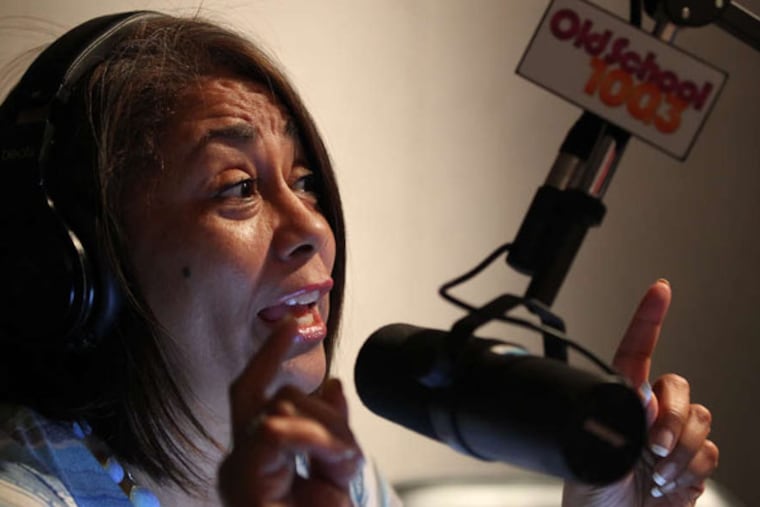
When Radio One's WRNB-FM (100.3) flipped its format in April from standard R&B - mixing hip hits and past favorites - to straight "old-school," it seemed like a great fit. After all, Philadelphia had birthed many of the staples of such fare, the hits of the '70s, '80s, and '90s.
But some observers wonder whether ignoring current chart-climbers and playing updated oldies is just an attempt - possibly doomed - to save commercial R&B stations.
For Philly's sizable black audience, battered by recession and lopsided unemployment rates, it's audio comfort food, refuge in memories of better days. And R&B stations across the country have been following suit, focusing on those who came of age during the first run of bell bottoms, Jheri curls, and shell-front Adidas.
Though such old-school stations represent just a sliver of U.S. commercial radio - there are 50, as opposed to 336 urban adult contemporary stations - they're growing in number. Arbitron numbers say the new WRNB is a success, given the city's demographics and standing. It's the eighth-largest radio market in the nation, sixth in African American listenership.
In former times, stations such as WDAS-FM (105.3) (in its pre-Clear Channel days) and the old WHAT-AM (1340) provided a unifying mix of music, introducing and elevating new artists as well as informing and advocating on behalf of its black audience. But for Tylon Usavior Washington, maker of the 2008 documentary Disappearing Voices: The Decline of Black Radio, R&B radio has been increasingly adrift as black ownership has dwindled. Owners set agendas and determine access, said Washington. Both, he said, are compromised today.
"Today's mantra for successful business is formulaic and risk-adverse," Washington said. "To say things are 'old,' like 'old-school,' is to suggest it's had its time and it's over. It marginalizes the creative impact. And it reinforces the narrative that black people don't want anything new, that we're just coming from one place."
As it is, traditional radio as a whole is struggling to retain younger audiences, who increasingly see radio as a relic. Those stakes are higher for black radio, long accustomed to fewer resources and smaller ad revenue. Marsha Washington George, author of Black Radio . . . Winner Takes All: America's 1st Black DJs, says the Clinton-era deregulation didn't help. It allowed corporate owners to own multiple stations, and multiple media, in a single market. The result: smaller black-owned stations were largely squeezed out.
"It's all about money now," George said. "And radio is in a big fight."
Former heavyweights are starting to teeter. New York's premier urban stations, WBLS-FM (107.5) and KISS-FM (98.7), merged last year. Stations from Los Angeles to Jacksonville to Baltimore are betting on old-school formats, which draw blacks who are older and better educated, with higher-income-ad gold.
Music, meanwhile, remains a youth-driven industry, and any format that shuts out new artists and new music may spell only short-term success, said Mark Anthony Neal, a pop culture critic and professor in Duke University's department of African & African American studies department.
"About 15 years ago, everyone wanted a smooth jazz station. Where are they now?" Neal said. "DJs have much less ability to frame what they're playing. So R&B radio now goes to nostalgia. Older audiences listen to the radio. Young folks, those under the age of 20, don't."
That set is online, and the artists have followed. Breaking a new song means trending on YouTube and Twitter, not visiting a DJ's booth, said Jamie Wexler, founder and coeditor of ThisIsRNB.com. It's a path to fandom forged by Janelle Monáe, Frank Ocean, Austin Brown, and a host of others seldom heard on R&B radio, as Dyana Williams will tell you.
As a DJ, Williams is celebrated on WRNB for her Soulful Sundays program, which focuses on artists most known for their work of 30, 40, or 50 years ago. She's also a celebrity strategist, helping new artists - who won't get airplay on her station or others like it - navigate a changing industry.
"What we're doing with the old-school is definitely resonating with adults," Williams said. But she also sees it as necessary listening for any artist who wants a career in R&B. "How can you be a singer in 2013 and not know Donnie Hathaway, Smokey Robinson, or Curtis Mayfield, one of the greatest poet-songwriters of all time?"
True, says Jerry Blavat - but must that condemn R&B radio to locked-down, perhaps moribund playlists? Blavat, the "Geator with the Heater," started out as a white kid spinning black music and wound up part of Philadelphia's R&B legacy. For today's teens and music lovers, he said, streaming networks like Pandora and Slacker hold the same wide-open appeal as radio once did.
"Radio today is governed by formats and program directors," Blavat said. "Radio does not give the disc jockey the freedom to pick the music he likes and would like to share with his audience."
At least current commercial radio doesn't. Colleges and outlets such as WXPN-FM (88.5) remain labs for new music, as do emerging HD stations.
Three years ago, San Antonio debuted a new nonprofit station to fill the void left when the city's only black-owned, black-oriented outlet was bought by Clear Channel, then flipped to a contemporary Christian format. KROV-FM has an R&B base that adds other genres for intergenerational appeal and advocacy to affirm its mission. It's also considering an affiliate in Philadelphia.
This noncommercial realm, in fact, may soon rival the Web as the future of R&B radio. Stay tuned.