Hillary Rea: Story of her life turns into story of her living
Training for a competitive-eating event that it turns out doesn't exist, being accused of terrorism in Japan, or, for that matter, using the phrase "turning Japanese" in a college-application essay - these are the types of cringe-worthy memories many of us would rather forget.
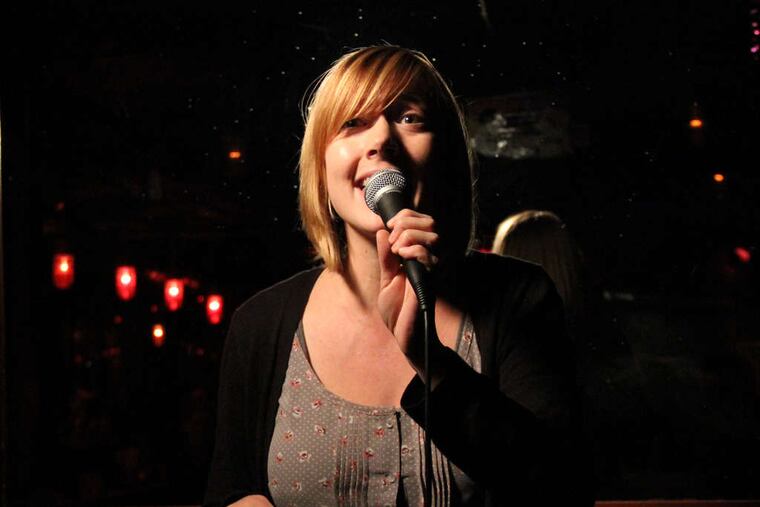
Training for a competitive-eating event that it turns out doesn't exist, being accused of terrorism in Japan, or, for that matter, using the phrase "turning Japanese" in a college-application essay - these are the types of cringe-worthy memories many of us would rather forget.
But for South Philadelphia resident Hillary Rea, 32, those missteps are worth remembering. Recalled with just enough perspective and the right comic timing, they have become fodder for Rea's burgeoning career in storytelling, just as it's becoming a buzzword in the arts, media, and business.
Even Rea is surprised by where this story is taking her.
"I'm the type of person that always plans my path," Rea said. "But this was a thing I stumbled upon, and discovered it was way bigger than I thought."
Rea has become the host of several curated storytelling events: Wednesday is the third anniversary of her bimonthly series "Tell Me a Story" at Shot Tower Coffee in Queen Village. And she has translated the art form into a business, spreading the gospel of personal narrative through workshops, a consulting business, and collaborations with area theater companies.
Rea, who studied vocal performance at New York University, began dabbling in stand-up comedy several years ago, unaware of the storytelling movement unfolding in New York and slowly making its way to Philadelphia.
"I always ended up telling a true story and I realized: OK, the thing that I'm good at is turning things that happen to me into a funny story."
Her storytelling debut, however, was inauspicious (and a little soggy). She entered the first story slam she attended, run by the Philadelphia documentary arts organization First Person Arts, which lets participants put their names in a hat for the chance to perform.
"I got splashed by a SEPTA bus on the way there and showed up totally drenched but also nervous, because I hadn't done it in that setting before," she said. "I was the first name to be picked out of the hat, which was terrifying because I didn't even have an example of anyone going before me."
But it went well enough that Rea kept at it, winning story slams in Philadelphia and at the Moth in New York.
Eventually, Rea, who had previously described herself as a comedian/storyteller/writer, decided to "get rid of the slashes" and focus on storytelling full-time.
She began hosting events, including "Tell Me a Story" and "Fibber," which features three true stories and a work of total fiction, all presented as fact for the audience to figure out (see it next at Fleisher Art Memorial's ARTspiration festival on June 14).
And she has been running storytelling workshops for organizations such as the Pennsylvania Council on the Arts, as well as ongoing classes open to anyone seeking improved storytelling skills.
The monthly workshops draw performers as well as individuals just looking to communicate more effectively. Local comedian Cecily Chapman took several of Rea's workshops, and is now bringing the story she developed to the stage at Wednesday's "Tell Me a Story" event.
Chapman said she sees a trend away from observational or punch-line comedy, toward something more personal and confessional. "I think storytelling comes into play in comedy a lot more now," she said.
It's also finding its way into theater productions, said Jennifer Childs, artistic director of 1812 Productions.
Rea (whose father is Inquirer film critic Steven Rea) collaborated with Childs on the Women and Comedy Project, which culminated last year in a performance that incorporated personal storytelling. This summer, she'll work with teen girls to do the same in 1812's weeklong Funny Girls Boot Camp.
"Hillary really opened my eyes to the idea of storytelling as an art form," Childs said. "What really impressed me about it is, when you tell your own story it makes it yours. There's ownership. Especially if you tell it with humor, it's a way of transforming really terrible, tragic events into moments of joy."
Childs said audiences tend to have a strong reaction to storytelling - but educating them on what, exactly, it is remains a challenge.
"It falls in this place where it's close to stand-up, but not stand-up. It's close to theater, but not theater," she said.
Yet, it's catching on. The Moth, which now can draw lines for two hours ahead of its New York shows, began hosting monthly story slams in Philadelphia in January, and First Person Arts events continue.
Rea thinks the movement's growth can be traced to a culture of voyeurism fueled by reality TV and YouTube as much as by the popularity of public radio's This American Life.
Or maybe, she said, it's something more basic.
"Our society likes to grab onto people's personal stories," she said. "It's a way to stay socially connected in a world that feels disconnected."
Fortunately, Rea is more than willing to share - but is keeping some of her best stories in reserve.
She's hoping to make storytelling a full-time endeavor, but meantime she takes on freelance gigs, including as a standardized - pretend - patient for medical students.
"It's fodder for stories that I have yet to tell on stage," she said, "because we have some confidentiality agreements that we have to sign."
215-854-5053 @samanthamelamed