Stevie Wonder brings his 'Songs in the Key of Life' to the concert stage
Is Songs in the Key of Life the greatest of Stevie Wonder albums? Many see it that way, as the crowning achievement of the mind-boggling, brilliant mid-1970s creative explosion in which the former Motown child star came to maturity with an unfettered expression of one-man musical genius, the likes of which the world hasn't heard before or since. So is it?
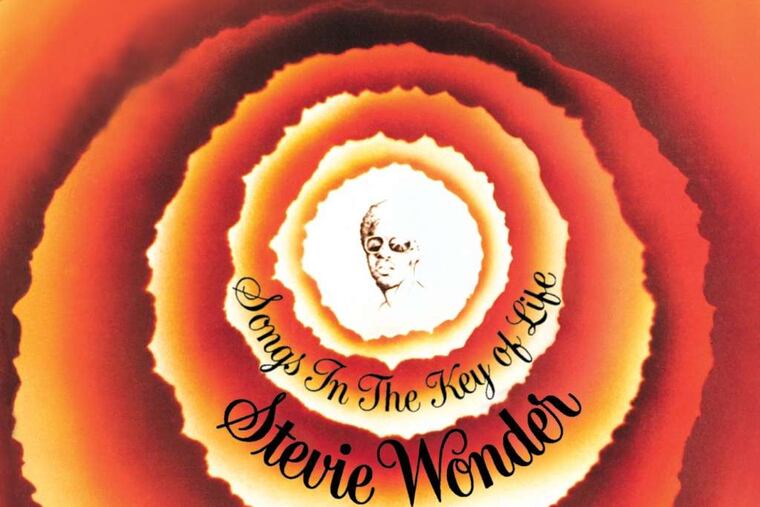
Is Songs in the Key of Life the greatest of Stevie Wonder albums? Many see it that way, as the crowning achievement of the mind-boggling, brilliant mid-1970s creative explosion in which the former Motown child star came to maturity with an unfettered expression of one-man musical genius, the likes of which the world hasn't heard before or since. So is it?
Quite possibly, although supporters of Innervisions might have something to say about that. Innervisions came out in 1973, three years before Key of Life, and includes "Living for the City," "Higher Ground," and "Don't You Worry 'Bout a Thing."
Meanwhile, the tough-minded and transcendent early-funk "Superstition" is on Talking Book, the 1972 album that is the official starter set for Wonder's "classic period." You also have the 1974 alliterative tour de force, the stripped-down Fulfillingness' First Finale, which included one of Wonder's most effective protest songs, the anti-Nixon administration rager "You Haven't Done Nothin'."
Wonder's still-unbelievable classic period has influenced thousands of musical artists - in pop, rap, hip-hop, R&B, jazz, and orchestral music - ever since. It's one of the reasons President Obama will present Wonder with a perhaps-too-delayed Medal of Freedom on Nov. 24.
But never mind those other masterworks. We're here to talk about Songs in the Key of Life. Its the wonder Wonder will celebrate this evening, when he performs the album in its entirety at the Wells Fargo Center, in a show that's gotten glowing reviews in its initial tour stops.
Key of Life came out in 1976, when Wonder was 26 but already more than a decade into a career in which Motown founder Berry Gordy had introduced him to the world as "The 12-Year-Old Genius." Released at a momentous time in America's bicentennial year, Key was a 21-song grand musical statement that stretched to almost an hour and a half. "The music, thank God, has stood the test of time," Wonder told Billboard this month.
It opens with the utterly gorgeous "Love's in Need of Love Today," and it includes three big hits: "Isn't She Lovely," the joyous celebration of the birth of his daughter Aisha; "I Wish," the deliciously gurgling groove that memorably yearns for the carefree days "when I was a little nappy-headed boy"; and the irresistibly effusive ode to African-American musical achievement, and music itself, "Sir Duke."
In its original release, the genre-spanning collection - going from, for example, the Chick Corea-style, fusion-forward "Contusion," to the Bach-inspired "Pastime Paradise" (later recast by rapper Coolio for the 1995 hit "Gangsta's Paradise") - was spread out over four LP sides. Plus, there was a 45 r.p.m. bonus EP called A Something's Extra, highlighted by the perfectly amazing funk jam "All Day Sucker," whose shimmy-shaking opening riff sounds an awful lot like DJ record-scratching, although the technique had not yet been invented.
The four-song EP - which I was crestfallen not to find in the only slightly water-damaged gatefold sleeve of Key of Life I located in my basement this past week - also includes hidden gems such as the perfectly lovely album-closing instrumental "Easy Goin' Evening (My Mama's Call)." I did, however, find the 24-page lyric and liner note booklet, in which Wonder thanks Kareem Abdul Jabbar, Kenny Gamble, and Frank Zappa, among many others, and writes: "Songs in the Key of Life is only a conglomerate of thoughts in my subconscious that my Maker decided to give me the strength, the love + love - hate = love energy making it possible for me to bring to my conscious an idea."
However, Key of Life came to be, through divine instigation or otherwise, we can be thankful it did. The album - which won four Grammys, including album of the year - has been heaped with praise. Elton John called it "for me, the best album ever made."
Michael Jackson went to school on it, recognizing Wonder as a singular visionary and the studio master in the Motown family he could learn from. As a teenager, Jackson observed Wonder sessions before beginning his own epic creative run with Off the Wall in 1979.
"Now, Stevie Wonder, he's a musical prophet," Jackson told Ebony in 2007. "I wanted to experience it all. So Stevie Wonder used to literally let me sit like a fly on the wall. I got to see Songs in the Key of Life get made, some of the most golden things."
So Songs in the Key of Life is the single most effective, consistent, expansive undertaking of one of the pop music titans of the 20th century. (Its double-album follow-up, 1979's Stevie Wonder's Journey Through 'The Secret Life Of Plants', was an indulgent disappointment.)
But do we really need to see and hear the entire thing performed from start to finish in a performance that stretches close to three hours? Hasn't the play-your-classic-album-in-its-entirety gambit been done to death already?
Well yes, it has, from Roger Waters doing Pink Floyd's The Wall to Nas, bringing the 1994 rap classic Illmatic to town last month.
It's hard to argue with Dave Grohl. Asked by the Brit rock mag NME if he planned to perform the Foo Fighters self-titled 1995 album on tour next year for a 20th anniversary celebration, he said: "I don't like it when a band's tour is just to play one past record. . . . It's presumptuous. It's lazy."
But such objections apply to most mere mortals. We're talking about Stevie Wonder here. Songs in the Key of Life might not be a perfect record. It's baggy and a little unfocused. And as well-intentioned as the multicultural history lesson "Black Man" is, at 81/2 pedantic minutes it goes on way too long after turning vocal duties over to shouting schoolchildren.
Those are about the only bad things I can say about it, though. Relistening, it's difficult not to be bowled over all over again by the all-encompassing musicality that runs through everything, from lesser hits like "As" (which features Herbie Hancock on keyboards) to the melodious "Knocks Me Off My Feet" to the boundlessly energetic "Sir Duke."
All of those songs, and Key of Life as a whole, display the undeniable openhearted enthusiasm that's a natural state of musical being for Wonder, and render any quibbles about his weakness for sticky-sweet sentiment inconsequential. At the Wells Fargo Center, he'll be performing the album with a band of more than 20 pieces. Nuevo-retro soul singer India Arie is among the backup vocalists, plus there's an 11-piece string section. It's going to be a lovefest, and I'm looking forward to it more than any other show this season.
@delucadan www.philly.com/inthemix