Mexican music scene growing in Philly
There's no shortage of Latino music in Philadelphia. From the Kimmel to the Painted Bride, the sounds of Puerto Rico, Brazil, and Cuba - traditional or jazz, plus electronic, rap/hip-hop, and pop/rock variations - ring out.
There's no shortage of Latino music in Philadelphia. From the Kimmel to the Painted Bride, the sounds of Puerto Rico, Brazil, and Cuba - traditional or jazz, plus electronic, rap/hip-hop, and pop/rock variations - ring out.
So where is the music of Mexico?
According to the 2010 U.S. census, Philadelphia's Mexican population increased from 6,220 to 15,531 during the previous decade, with a majority of immigrants moving into South Philly's Italian Market area.
"Mexican business owners helped revitalize the Market," says Emilio Mignucci, co-owner of 75-year-old DiBruno Bros. cheese shop and director of the South 9th Street Business Men's Association. "When it was dark here, they brought light and liveliness."
With liveliness comes music. Bold, oversize posters advertise it in the Market. Ironically, however, much of it (Son Jarocho, mariachi, cumbia, bolero, modern takes on rap and punk) is played elsewhere, such as Club Space 69 in Upper Darby or the El Rancho Bar in Camden.
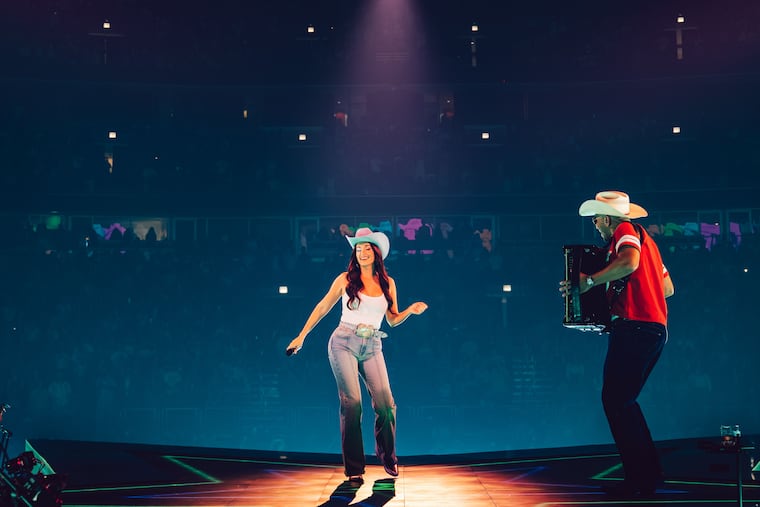
"Big posters with dramatic effects are similar to those of the bull-riding/rodeo scene," says Rahassan Lucas, a Latin-music promoter (Afrotaino Productions). On June 30, he brought to the Trocadero Mexican music legends Viento Callejero and a new Philly "space Mexican" act, Interminable. As part of its Nuevofest on Sunday at the Troc, Afrotaino will highlight Mexico party-starters Mexican Dubwiser, along with five other bands.
Interminable is one of Philly's alt-Mexican bands. With Mazzeratti and rockers D2ENDOS, plus quirky traditionalists like the dance ensemble Mariachi Oro De Mexico, they lead the Mexican music scene here. "It's not underground, either," Lucas says. "Attend a Los Tigres del Norte or Gerardo Ortiz concert - they draw thousands." Lucas has booked Afro-Mexican band Jarana Beat (doing Pink Floyd's The Wall en Español) for July 31 at the Philadelphia Art Museum. He notes that those colorful posters are effective because, since there are limited venues catering to Mexican music, they help lead enthusiasts to their music.
Ximena Violante, 23, and Yared Portillo, 21, are singers in Interminable. The two Mexican women met at Swarthmore College. "We found our focus in this community, as many of its people didn't have the privileges I did," says Violante. Her father came to America from Mexico City as a disaster-recovery services executive with a visa for himself and papers for his family. "That's not the reality for many immigrants in the Market."
"Missing the community I grew up in, and its music, is how I got connected to the Italian Market," says Portillo, a Californian native with Mexican-immigrant parents. "I feel at home here. It's a place where I can engage."
Violante and Portillo have a project they call Son Revoltura ("Sound Mix"), which has its own Facebook page and a Leeway Grant. It's dedicated to getting out the word about music events in the area and educating people about music like Son Jarocho, a regional sound from Veracruz. Their target audience includes Italian Market Mexican immigrants who don't have the time ("they work constantly," says Portillo) or money ("they send it back home to Mexico") to learn or hear the sounds of their homeland.
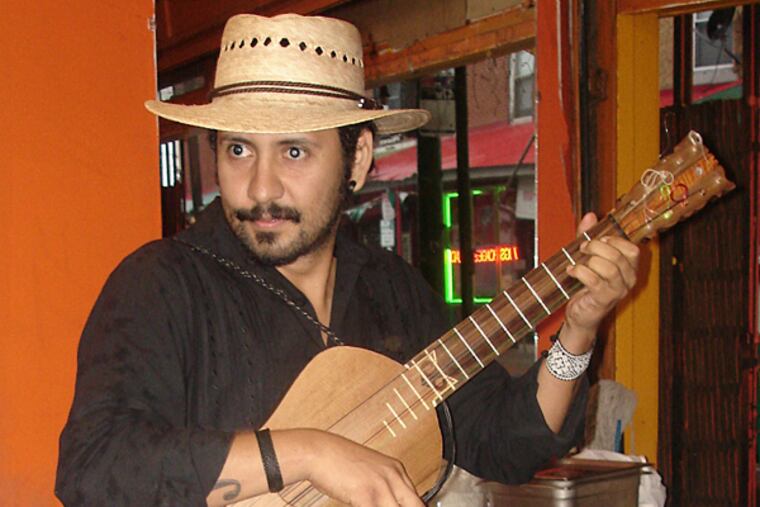
At jam-session-like fandangos, musicians gather to sing, dance, and strum jaranas (guitarlike instruments that sound like ukuleles) around a tarima, a wooden box with a percussive husk. On June 27, with the aid of Philatinos, the digital radio station broadcasting from Ninth Street, and Juntos (a Latino immigrant-rights organization), the pair operated Son Jarocho talleres (workshops) at Casa Monarca last week and fandangos at Florería El Detalle on Ninth and Ellsworth Streets - the first of many to come.
Complete with free chorizo tacos from Los Taquitos de Puebla (which loaned Portillo and Violante its flower shop for the party), the fandango started early Saturday, lasted long into the rainy night, and featured players from all over, including California and Idaho. Two of those players had taught in the Son Revoltura musical workshops: poet/jarana master Zenen Zeferino and guitarist Sinuhe Padilla.
"Ximena contacted me two years ago, as she was doing deep, meaningful research on Son Jarocho, and wanted to bring it - and me - to South Philly to teach and play," says Padilla (himself a transplant from Mexico City to Manhattan). "She's so devoted, and it's wonderful in the Market. It smells and tastes like Mexico. This community is unificado . . . como se dice? . . . very unified around her."
Violante insists that what they are bringing to the Market is bigger than her, that they're expanding the sense of Mexican community through musical tradition - its variations, its words about the motherland, love, or protest - beyond Ninth Street.
"We take the instruments to the street and the versos, some hundreds of years old, into our modern reality," says Violante. The fight for immigrant rights, she says, goes far beyond South Philly. She is enthusiastic about her mission to bring Mexican sounds to the Italian Market. "The cool thing is, once you learn and love Son Jarocho - all this Mexican music - you're automatically connected to a transnational community."