The big breakup: Why people part with TV shows
'It's not you, it's me." "We've just drifted apart." "It's like I don't know you anymore." Stereotypical excuses given for a breakup? Sure. But these are often the same reasons once-devoted fans give for dumping longtime favorite TV shows.
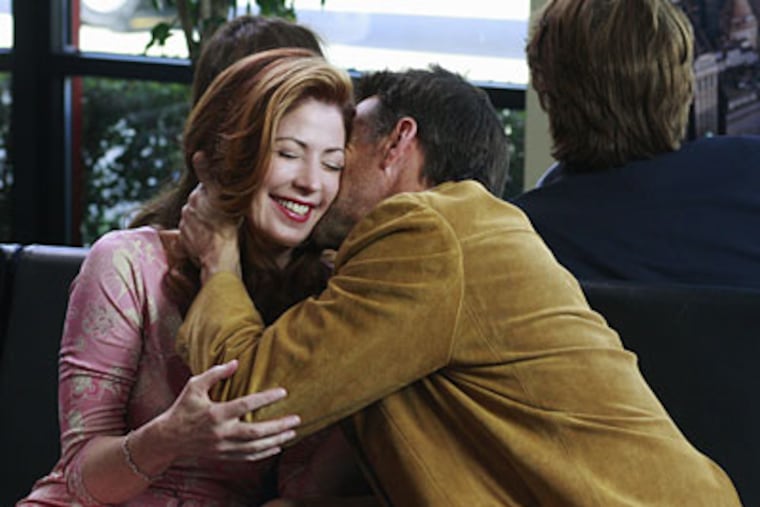
'It's not you, it's me."
"We've just drifted apart."
"It's like I don't know you anymore."
Stereotypical excuses given for a breakup? Sure. But these are often the same reasons once-devoted fans give for dumping longtime favorite TV shows.
There are employees at each network - executives of "current" programming - charged with offering producers guidance to ensure that viewers don't ditch their shows en masse.
For some TV consumers, it's easy to drop a show if they weren't that attached to begin with. Most TV watchers are casual viewers - CBS research shows that "regular viewers" watch only one out of three or four episodes - but there's a devoted subset of dedicated TV fans who watch with greater regularity, and some who are completists. When these people quit on a show, network executives have a real reason to worry.
The first thing to ask is why people are watching the shows in the first place. In part it's because TV has long acted as a social binding agent, something that adults dissect around the proverbial water cooler the next day at the office.
Lauren Zalaznik, 29, first started watching Desperate Housewives because it was what her coworkers talked about Monday mornings. But when she moved in with her now-husband, he got her hooked on The Sopranos, and it usurped Housewives as her Sunday-night viewing choice.
But it wasn't just that she liked The Sopranos better; she'd also grown disenchanted with Housewives in its second season.
"I remember watching when the Applewhites were the new family on the block, and their storyline got so much hype, but then was such a letdown, and the family moved away," Zalaznik wrote in an e-mail. "Not only did the Applewhite storyline really turn me off, but I never really cared for Teri Hatcher's character, Susan. . . . Her character only got more annoying as the seasons went on."
Roger Klein, an associate professor at the University of Pittsburgh who teaches a course in media psychology, cites two psychology/communication theories that explain the relationship some viewers have with TV: "uses and gratification" and "parasocial interaction."
Uses and gratification suggests viewers are looking for something - adventure, drama, comedy, romance - when they tune in to a show.
"The question is, does the program meet the needs for the person at that point in time?" Klein said. "People could have their needs met elsewhere. Maybe you're not in a romantic relationship [when you start watching a show] and as your own life changes, your needs change and you're no longer as gratified by this vicarious romance. They have something else in their life and it might suggest they were using a program to fill a void."
Parasocial interaction describes the situation in which a viewer develops a one-way connection with a TV personality or character. Klein said parasocial interaction has been studied in regard to how viewers relate to TV news anchors and feel they know them and are touched by their joys and pains, even though the news anchor doesn't know the viewer. The same could be applied to fictional TV characters.
"A character may change over time and a viewer may come to dislike a character or simply decide [the character] no longer meets their needs," Klein said.
But there may still be a curiosity about what's happening on the show. Zalaznik said she still sometimes reads online recaps of Desperate Housewives on Monday mornings.
"I compare it to when you break up with someone, but still periodically check their Facebook/Twitter/MySpace, just to 'keep tabs,' " she explained.
Kathy Newman, an associate professor of English at Carnegie Mellon University who is writing a book about television in the 1950s, said she broke up with ABC's Lost after deciding that the show's title described how it made her feel.
"The creators [of Lost] are very clever, so clever I don't feel smart enough to be in the same room with their TV show," she said. "I'm frustrated with them. I felt like they would up the level of mystery and complexity but without giving me a sense of confidence I would ever be satisfied."
Ensuring that TV shows keep viewers satisfied is part of David Brownfield's job at CBS as senior vice president of current programs. His job may be easier than some of his counterparts' at rival networks because CBS tends to air more procedural shows that change less over time than a serialized program such as Lost.
"I feel like with serialized shows what's really tough about them is it's like buying a new car: It will never be as valuable as when you drive it off the lot," Brownfield said. "If you don't open [to big ratings] with a serialized show, the odds of picking people up are slimmer."
Brownfield said CBS begins each season talking with producers of veteran shows about ways to evolve their programs that will appeal to the show's core viewers. Sometimes the network will do research and survey viewers on a potential direction and what viewers might think of that story. The decision to kill off David Conrad's character last year on Ghost Whisperer was born out of such explorations.
"That created a tremendous amount of controversy on the message boards. Some people were really offended and some people thought it's something that would energize the show," Brownfield said. "You have to let viewers know that even though you're doing something [different], you're doing it in a way to reassure viewers everything will be OK."
He said CBS also tries to hold back character developments until later in a show's run when viewers are more comfortable with the characters. He gave an example from Without a Trace, which initially suggested that the Anthony LaPaglia and Poppy Montgomery characters had had a relationship in the show's second episode. Network executives felt that was too soon and pushed producers to hold off on that revelation until the penultimate episode of the first season.
"It's something that could be perceived as salacious and could have potentially driven women viewers away, but by the time it actually came out, viewers had been through a lot with the two of them and were on more solid footing in terms of him being a detective and there would be no question that their personal lives would not impinge on their jobs. We've found if you drop enough bread crumbs in the beginning, viewers will be craving to know more."
For some viewers, breaking up with TV shows can have less to do with so-called jump-the-shark moments than with having only so much time to devote to watching television.
"I wonder if the DVR has both improved and hurt people's ability to stay connected to a show," CMU's Newman said. "If you're DVRing a lot, there's only so much time you have to watch what you've taped and how do you make choices of what you've got on your hard disk" about shows to keep and shows to delete to make room for other programs.
And in contrast to real-world relationships, breaking up with TV shows isn't so hard to do.