Why I can't quit watching bad TV
It should have been time to stop when the gorilla got to second base with Lizzy Caplan. That's when I should have turned off Showtime's Masters of Sex, the 1960s-set drama about sex researchers - Caplan's Virginia Johnson and Michael Sheen's William Masters - that ended its third season last Sunday.
It should have been time to stop when the gorilla got to second base with Lizzy Caplan.
That's when I should have turned off Showtime's Masters of Sex, the 1960s-set drama about sex researchers - Caplan's Virginia Johnson and Michael Sheen's William Masters - that ended its third season last Sunday.
I'm serious. A gorilla got fresh with a TV character and I still kept watching the show.
Why?
I'm a TV obsessive (they don't give this space away to casual viewers). But with time-shifting, thanks to DVRs and streaming services, and the constant chastisements of, "But, but, but! It got so good!", quitting TV shows is harder than it seems. I'm not the only one who has problems letting go of shows even after they've outlived their premise or jumped the shark.
Normal people have this problem, too.
After a lackluster third season, when I grew to hate every character save for a few - Annaleigh Ashford's ex-prostitute-turned-expectant-mother will always have my heart - I'm finally ready to dump Masters of Sex. But why do we stick with shows even after they become unbearable?
Of course, there are the "hate-watch" programs, shows we keep tuning in to even though they're so bad - looking at you, True Detective Season 2, or every single episode of The Newsroom. I watched these shows so I could revel in how much I didn't like them. A waste of time? Of course, but what else am I going to do? Read!?
But then there are the shows that I once loved that I slowly grew to dread.
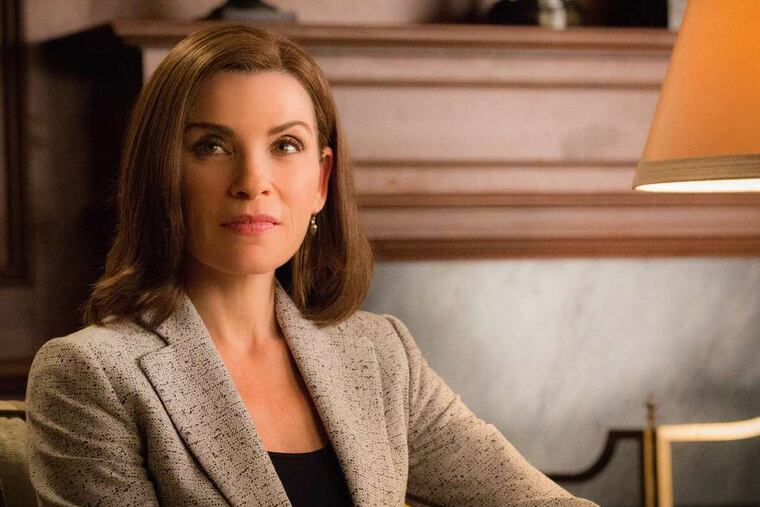
The Good Wife, premiering its seventh season at 9 p.m. Sunday on CBS, was terrible last year, especially disappointing after a terrific Season 5 that seemed to reinvigorate the premise, even if it meant losing Josh Charles' Will Gardner.
The weakest aspect of The Good Wife has always been its political content (sorry, Peter Florrick), and the sixth season decided to lean heavily into that, when Alicia (Julianna Margulies) runs for state's attorney. The previous season also highlighted how Kalinda (Archie Panjabi), once the show's breakout star, had been written into a corner, perhaps due to behind-the-scenes agita among cast members (Panjabi and Margulies famously did not even film their final scene together at the same time).
Every week, I rolled my eyes at the latest episode - ick, remember the heavy-handed episode "The Debate," in which Alicia white-splains a Michael Brown-inspired case to a bunch of people of color? - yet I still kept watching.
I trust the writers of The Good Wife. They made mistakes before (Kalinda's odd relationship with her ex-husband certainly comes to mind) and corrected them (goodbye, ex-husband). More important, though, I loved these characters enough, and the actors who play them, to stick with them even if I thought their every action was unfounded and, frankly, stupid.
I'm happy to report that the seventh season starts off strong, with a renewed sense of purpose now that Alicia is no longer saddled with a campaign she never actually seemed to want to win. Alicia, disgraced after her unintentionally stolen election, is once again a scrappy lawyer trying to make a name for herself by working in bond court. Still, her saintliness was tarnished not just by the election, but by Alicia's actions last season. Unfortunately, it seems saintliness has returned, and I mourn the loss of depth that came from her earned hard edge.
There are new characters to replace the dear, departed Kalinda, including Cush Jumbo as a fellow bond lawyer, and the great character actress Margo Martindale as a campaign operative who poses a threat to Eli Gold (the equally great character actor Alan Cumming).
The Good Wife contrasts directly with a show like Homeland, premiering its fifth season at 9 p.m. Sunday on Showtime. I gave up after the second season. Like everyone else, I thought the first season was brilliant and decided to stick it out through a murky second. But I just couldn't compel myself to watch the third. Why did I give up on Homeland and not The Good Wife? Because as warmly as I felt toward Alicia, Cary Agos (Matt Czuchry), and Diane Lockhart (Christine Baranski), I felt no warmth toward Carrie Mathison (Claire Danes) or the now-deceased Nicholas Brody (Damian Lewis). I was interested only in the plot, and when that turned sour, I didn't have time to care.
I'm still filled with TV-fueled regret about Homeland. I've been told the show bounced back in quality last season. The fifth go-round picks up with Carrie now in the private sector in Berlin. She's a doting mother with a live-in boyfriend. But conflict in Syria, a refugee crisis, and a U.S.-German data breach likely mean Carrie won't stay happy for long.
What about shows too young to have a proven track record of excellence?
Take The Affair, premiering its second season at 10 p.m. Sunday on Showtime. I loved the first half of The Affair, which split up the storytelling between two parties - Noah (The Wire's Dominic West) and Alison (Luther's Ruth Wilson) - in an adulterous relationship with a classic Rashomon effect. What made The Affair even better was that the best performances came not from the leads, but from their jilted spouses, Maura Tierney's Helen and Joshua Jackson's Cole.
But as the series progressed, the storytelling device that made The Affair so compelling did not serve its purpose anymore. The same side of the story was not being told. Instead, they were vastly different versions of the same tale, rendering the split stories confusing and nonsensical. Unreliable narration can be a fascinating exercise (see the first-season episode of True Detective in which Rust and Marty repeat a tale of false heroics). But that's not the same as unreliable storytelling, which serves no purpose at all.
It also upped the soap, which is not something I hold against a show. But - in a show whose strength lies in its quiet moments - we had deafening interludes, in the form of out-of-nowhere plot twists that threatened to drown out the smaller character-based moments.
The second season opens with Alison and Noah together. The story does not make vast jumps. Memories are still skewed and misremembered, but at least now Helen and Cole get to tell their side of the story, and Tierney and Jackson remain respectively fantastic. I want to see them act, even if I'm not sure I like everything else that's going on around them. What drew me to the series in the first place is not what's keeping me there.
I'm still weary of The Affair. I still think Noah is unsympathetic and awful, and I'm still concerned that the narrative device, The Affair's defining quality, will continue to sour me on the series.
But for now, I'm not ready to break up with The Affair.
215-854-5909
@mollyeichel