U.S. has risen from economic ashes before
Historically, economic recessions such as the Great Depression, the Oil Crisis of the 1970s, and our current recession were brought on by many factors, but all served as a much-needed reality check on the American need to overindulge.
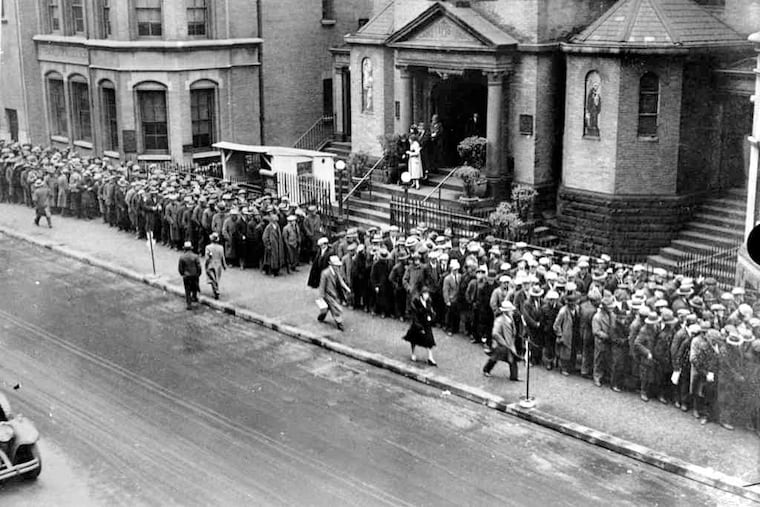
Historically, economic recessions such as the Great Depression, the Oil Crisis of the 1970s, and our current recession were brought on by many factors, but all served as a much-needed reality check on the American need to overindulge.
One of the main causes of the Great Depression was factory overproduction. The high demand for cars and entertainment outlets such as radios and movies created a "great glut" out of American industry. More demand led to more innovation, and soon enough, more cost and time effective labor-saving machines replaced American workers, and increased unemployment.
The seemingly steady rise in stock prices during Herbert Hoover's presidency crashed abruptly on Oct. 27, 1929.
The British, who had raised interest rates in hopes of bringing back investments that had traveled overseas in order to reap in the benefits of industrious America, contributed to the crash on Black Tuesday.
The increase in rates issued uncertainty in the market, thus creating a mad international and domestic 16,410,030 stock selling spree.
Under President Hoover, situations did not improve. More than five thousand banks went under during the first three years of the Depression. Eleven million Americans were unemployed at the end of his presidency. Harlem was hit especially hard with 50 percent of its inhabitants unemployed. Suicide rates increased from 14 to 17 in 100,000.
With the inauguration of Franklin D. Roosevelt and his New Deal plan, a new hope ignited the masses. His liberal ideas that focused relief, recovery, and reform helped to create the Works Progress Administration that put millions of Americans back to work. Social Security also started as a result of the Depression.
Through the efforts of FDR and his successor, the depression ended in 1939. Some programs instituted because of the New Deal are still in use today, such as the Federal Deposit Insurance Corp., the Federal Housing Administration, and the Securities and Exchange Commission.
The 1970s oil crisis
Unlike the Great Depression that was caused by excess American goods, the oil crisis of the 1970s was due to the United States' huge dependence on foreign oil.
The OPEC oil embargo on Israel and any of its supporting countries during the Yom Kippur War created a huge fuel shortage in the United States. That, along with the increase in deficit spending for the Vietnam War, contributed to the stock market crash of 1973.
The oil crisis and the recession of the 1970s forced the United States to start using fuel more conscientiously and thinking about alternative energies.
Many large companies started to use coal again, while local gas stations willingly closed on Sundays. At home, many Americans became more conservative with fuel usage by lowering thermostat temperatures. These efforts, along with federally issued speed limits, helped to decrease the total U.S. fuel consumption by 20 percent.
The federal government also gave tax incentives to anyone who made advancements in alternative energy sources or to anyone who used alternative energy.
After the Corporate Average Fuel Economy level was raised to 27.5 miles per gallon, many Americans started to buy their cars from Japan. U.S. automotive companies had to change their products in order to comply with the new standards and compete with foreign car manufacturers.
Some changes spurred by the oil crisis and recession were Daylight Saving Time, which initially began in order to save on electricity, speed limits, fuel economy stickers, more efficient appliances, and electric heat that replaced oil heat.
President Richard Nixon also started the Strategic Petroleum Reserve as a safeguard against oil shortages in the future. Currently, the SPR can contain up to 727 million barrels of oil, which provides roughly 35 days of oil based off of the U.S. daily consumption level of around 21 barrels a day. The Department of Energy, created under the Carter administration, maintains the SPR.
The housing bubble
The most recent recession was mostly caused by the subprime mortgage crisis in the U.S. that led to the collapse of mortgage-backed security and then the near-bankruptcy of many major corporations in late 2007.
Following home real estate prices that reached their peak in 2006, many homeowners who had borrowed from mortgage-backed security companies and bought homes with adjustable-rate mortgages found that they could not pay their mortgages. Home foreclosures hurt mortgage-backed security, which in turn resulted in huge losses for domestic and foreign investors in the mortgage-backed security pool.
What resulted was the worst economic crisis since the Great Depression: major businesses collapsed, banks and corporations were bailed out by the national government, stock prices plummeted, credit froze, millions of jobs lost, and spending decreased.
During 2008 and 2009, the federal government under the Obama administration implemented two stimulus packages that collectively totaled almost $1 trillion dollars.
To improve credit, over $2.5 trillion of national government and private debt was purchased by central banks around the world, which became the largest monetary policy motive in history.
Some worry that banks that used money in foreign investments may create currency issues with other countries in the future.
Although experts believe the recession ended in 2009, recovery is a slow process and solutions are still in their early stages in Congress. For the future, the main objectives are increasing Federal Reserve authority in order to deal with similar situations in the future; reforming capitol requirements; instituting more regulation on financial institutions like investment banks, monetary market funds, and hedge funds; placing more regulation on derivatives; and dealing with consumer protection.
History continues to repeat itself, as proven by the reoccurring results of Americans wanting too much and or spending too much. However, the recession of 2007, the oil crisis and recession of the 1970s, and the Great Depression have been wake-up calls to our greed and overindulgence.