Carnal Knowledge | Bloomin' freaky: Sex lives of plants
To hear the botanists tell it, the plants on display at the Philadelphia Flower Show may lead weirder and more varied sex lives than people do.
To hear the botanists tell it, the plants on display at the Philadelphia Flower Show may lead weirder and more varied sex lives than people do.
You can't assume that plants lead a boring existence just because they're rooted in soil. Echoing the patterns of many animals, males often find ways to compete for a chance to inseminate females, and females find ways to screen the males. There's even one plant known to engage in floral prostitution.
The motif of female choice and male competition repeats itself in the plant and animal worlds. In both, the two sexes are defined the same way. Males make smaller and more abundant sex cells - sperm - and strive to spread them around. Females make the larger, more substantial egg or seed.
Most plants are bisexual, say botanists. By that, they mean the plants make flowers with both male and female sex organs.
Such flowers could potentially have sex with themselves, but many have evolved mechanisms to avoid it, since this represents an extreme form of inbreeding.
In some flowers, the female parts, which are collectively called the pistil, are placed so they don't get pollinated by their own male parts, the stamen. In others, the male sex parts and the female counterparts aren't active at the same time. Others, such as the cucumber plant, produce a mix of male and female flowers.
And still others undergo sex changes.
"Plants have a much greater diversity of mating systems than animals," says biologist Loren Rieseberg of the University of British Columbia.
In some species, including zucchini, some plants will produce fully equipped bisexual flowers, others flowers with just the female apparatus. In a handful of species, plants with strictly male flowers will appear among bisexuals.
Rieseberg helped discover the first example of such a plant in 1989, a California shrub called Datisca glomerata, or durango root. But how do the males find a purpose in life when the females can make their own pollen? It turns out, he says, the male flowers are the macho men of the plant world, producing and disseminating nearly four times the pollen of the bisexuals.
The plant, he says, looks like marijuana, so much so that he had several run-ins with local police when trying to grow it.
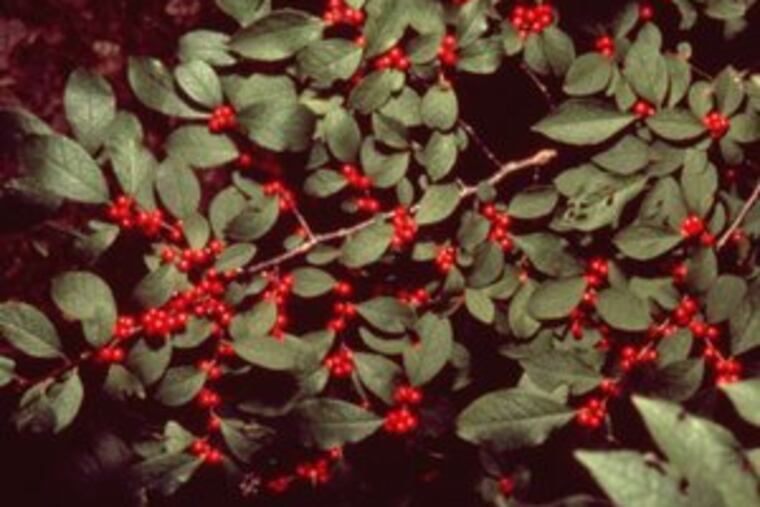
Real marijuana, by contrast, is a straight, heterosexual plant, along with holly and ginkgo trees. Only female holly produces the red berries and only female marijuana produce THC, which derives from a sticky resin that the plant probably uses to protect itself from being eaten, says biologist Frank Frey of Colgate University in New York.
But the males among these heterosexual plants have their own challenges: They must compete with each other. Botanist Richard Niesenbaum of Muhlenberg College has been studying the sex lives of a local shrub called a spicebush, which has aromatic leaves and blooms with tiny yellow flowers in April. As in other flowering plants, the pollen has to bore a tunnel through the flower's female style to reach the ovary.
If pollen from several males lands on the same flower, then it's a race to the ovary, he says.
Beyond that, the female exercises the plant equivalent of choice by investing oils and other resources in a seed only if it was fertilized by the winner of a big race, Niesenbaum says. That way, her offspring will inherit the genes from the plant version of an Olympic medalist rather than a mere high school track star.
In other plants, says Colgate's Frey, the females set up tests and barriers for their suitors, attacking with salts or with enzymes that blow apart all but the hardiest of pollen grains.
But flowers in general don't evolve to impress other plants, but to lure insects to help them with their sex lives.
Some entice with color, sweet smells, symmetrical forms or trickery. An orchid called Ophrys attracts male wasps by mimicking the backside of a female wasp.
The male mates with the plant, or at least attempts to, and in the process, pays it with pollination. Hence the nickname for the flower: prostitute orchid.