Success of HIV vaccine is less than first thought
WASHINGTON - The "modest" success of an HIV vaccine clinical trial in Thailand, trumpeted by researchers last month as a milestone in the AIDS pandemic, is turning out to be even more modest than originally advertised.
WASHINGTON - The "modest" success of an HIV vaccine clinical trial in Thailand, trumpeted by researchers last month as a milestone in the AIDS pandemic, is turning out to be even more modest than originally advertised.
Full details of the study, released yesterday at a scientific meeting in Paris, show that the vaccine provides no protection to people at the highest risk of HIV infection. In people at lower risk, the benefits may start to wane after a year. Furthermore, when the results of the three-year experiment are analyzed using alternative methods, the protective effect falls short of formal statistical significance.
Despite the caveats, many researchers say the findings remain important.
"This is a modest effect at best, but I believe it has relevance and is a real effect that needs to be built upon," said Anthony Fauci, director of the National Institute of Allergy and Infectious Diseases, which paid for much of the $105 million study.
Some think the results have been oversold in a potentially damaging way.
"When this was rolled out a couple of weeks ago, it was terribly hyped by the investigators," said Gregg Gonsalves, a longtime AIDS activist. "That damages the credibility of the effort."
Initial results of the RV144 trial were revealed in late September. The presentation in Paris provided much more detail, as does a paper released simultaneously by the New England Journal of Medicine.
The effort to make an HIV vaccine has been dogged by failure for two decades. The Thai trial, which employed a two-component vaccine and a total of six injections, was the first to show protection. It was conducted principally by Thailand's Ministry of Public Health, the U.S. Army, and the Royal Thai Army.
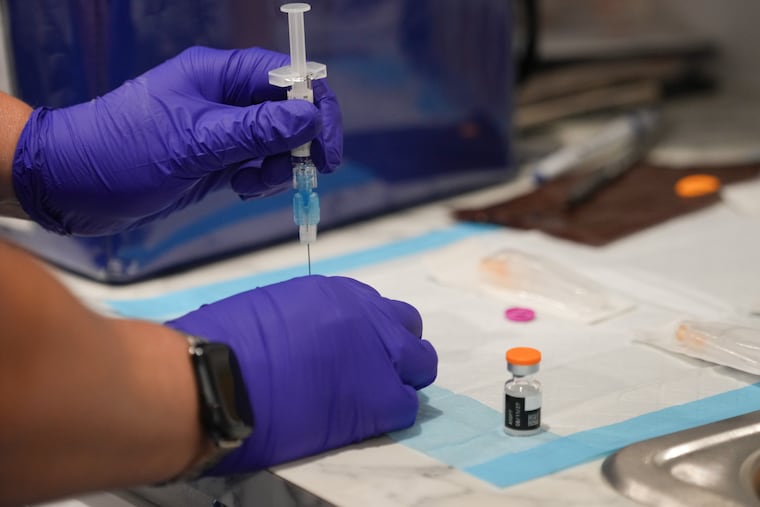
The vaccine was tested in 16,402 Thai men and women ages 18 to 30 who were randomly assigned to receive either the vaccine or placebo injections. Only 132 of the volunteers became infected.
When only the people who received all six injections on schedule - a condition that reduced the total sample by 30 percent - there was a trend toward protection, although not a significant one.
However, when the researchers examined the experience of everyone, except for seven people who were discovered to have already been infected when the trial started, the results significantly favored the vaccine. It reduced the chance of becoming infected by 31 percent.
Nelson Michael, an Army physician, defended the study. Not everyone can follow a complicated shot schedule, so it was legitimate to include people who didn't get all six injections, he said.