Trouble urinating, pain halt handyman, 35
A 35-year-old handyman had been working all day, installing tiles in a house, despite feeling under the weather. A low-grade fever was giving him chills, and his stomach was bothering him, but he powered through until about 4 p.m. when his symptoms worsened radically.
A 35-year-old handyman had been working all day, installing tiles in a house, despite feeling under the weather. A low-grade fever was giving him chills, and his stomach was bothering him, but he powered through until about 4 p.m. when his symptoms worsened radically.
He found a bathroom and tried to urinate, but the attempt produced only a searing pain in his groin.
By the time he found his way to the emergency department, he was drenched in sweat and doubled over with pain in his lower abdomen.
In the hospital, the ER doctors noticed scars across his back. He explained that a month earlier, during a fight, he had been stabbed with a piece of glass.
That had hurt, he said, but the current pain in his belly and groin was far worse.
His perception, however, was clouded by the fact that at the time of the attack, he said he had been anesthetized with a generous, self-administered dose of cocaine.
Ah.
The doctors examined the man's belly and determined he was suffering from acute urinary retention. A catheter was inserted into his urethra, draining a liter of clear urine.
What had caused the blockage?
In older men, urinary retention is common. The benign enlargement of the prostate (BPH) makes it difficult to empty the bladder, thus impeding the ability to ride out rush-hour commutes on I-95 or sit through an uninterrupted screening of any Lord of the Rings film.
At the relatively tender age of 35, however, BPH was unlikely.
Maybe he had an epidural abscess, an infection between the bones of the spine and the outer sheath of the spinal cord?
Tests were run. The results were negative. Blood and urine cultures were taken, but the findings would not be available until the next day.
Once the man felt more comfortable, he was sent home with a catheter, allowing his bladder to empty freely. He also was given an appointment to see a urologist for further examination and tests later in the week.
Within 24 hours, however, he returned to the ER complaining of a fierce burning sensation in his groin and demanding that the catheter be removed.
His blood and urine cultures revealed MRSA (methicillin-resistant Staphylococcus aureus).
MRSA is a bacterium that has developed resistance to standard antibiotics such as penicillins and cephalosporins. It can be found on the skin or in the nose of about 1 percent of the population and is harmless, unless it enters the body, usually through a break in the skin.
The patient's results were significant, although the presence of MRSA did not seem to have any correlation to his problem emptying his bladder.
His doctors reexamined him and gave him the antibiotic vancomycin.
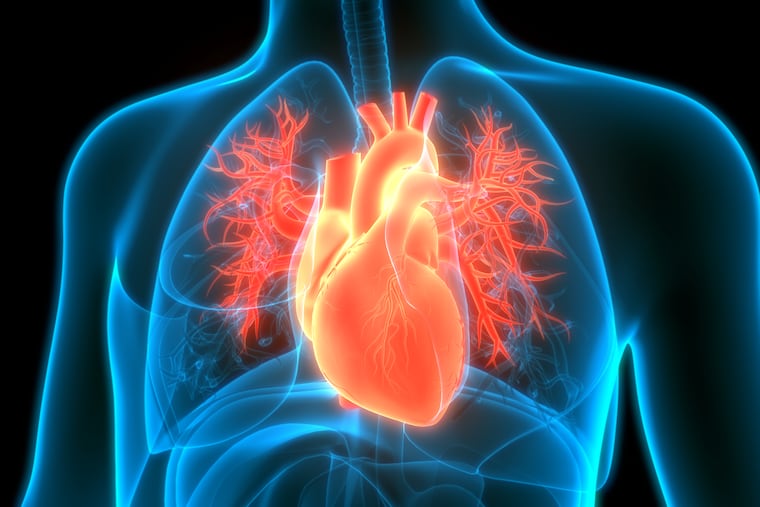
Concerned that the bacterial infection might have impaired his heart valves, they also ordered a transthoracic echocardiogram, an imaging test through the chest wall.
His heart looked fine.
Finally, his doctors attempted to examine his rectum. Attempted. The patient nearly leaped off the table, screaming in pain, and they could not proceed.
Solution:
Was there a connection between this extreme sensitivity, the MRSA, and the urinary blockage?
Yes.
A CT scan was ordered and revealed an abscess the size of a tennis ball in his prostate. That afternoon, surgeons drained the infected area.
This was a curious development, since the prostate is usually "immune" to staph bacteremia.
So what had caused it?
There are two possibilities.
MRSA had entered his body either through the stab wound or intravenously from his cocaine use.
But the attack had occurred a month earlier. Why was he infected now?
It can take a week or two for an abscess to form. So it is possible that he had injected cocaine after the stabbing.
Or, he might have developed a small wound infection that healed on the surface but sent MRSA into the bloodstream and seeded the prostate gland.
That infection could have taken several weeks to evolve.
But that is just a guess.
The mystery remains unsolved.