GreenSpace: Unvented gas stoves are an asthma risk
When most people think of air pollution, they think of outdoors - smokestacks and tailpipes. So they may overlook a significant source indoors - the household gas stove, which is gaining new notoriety as an air polluter these days.
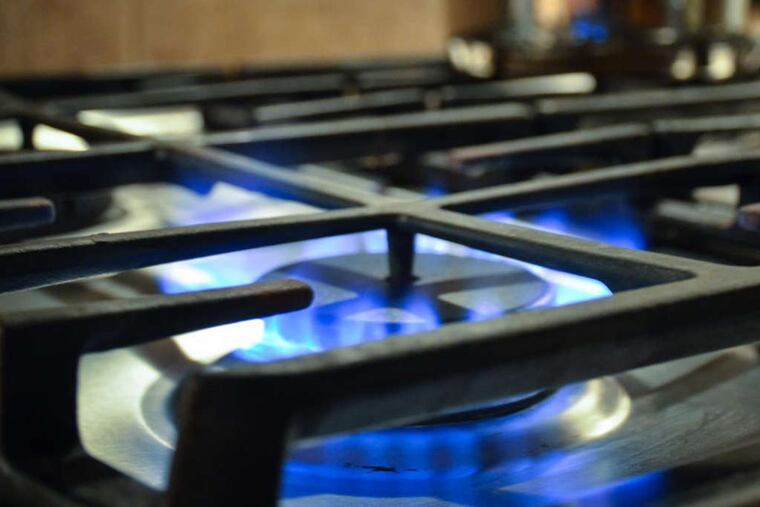
When most people think of air pollution, they think of outdoors - smokestacks and tailpipes. So they may overlook a significant source indoors - the household gas stove, which is gaining new notoriety as an air polluter these days.
New studies are quantifying their emissions more precisely. Most recently, researchers have found an association between gas-stove emissions and asthma, asthma symptoms, and chronic bronchitis in children.
Among indoor polluters in the U.S., gas stoves are a prime one, said Drexel University's Michael Waring, who leads the College of Engineering's Indoor Environment Research Group.
They emit particulates, carbon monoxide, nitrogen dioxide, and formaldehyde. Each is a concern individually. Formaldehyde is a carcinogen. Breathing carbon monoxide can make you feel lethargic and like you have the flu. Particulates and nitrogen dioxide can have a range of respiratory impacts.
Of course, this is all relative to dose. Smaller amounts, smaller impacts.
But "when you have a source that emits all of them at one time, it's going to be important," he said. "This is something that we should pay more attention to."
Not long ago, scientists at the Department of Energy's Lawrence Berkeley National Laboratory in California measured emissions as they cooked hamburgers and stir-fried green beans in a test kitchen they set up in a tightly sealed building at the lab.
They also looked at how emission levels differed when they used range hoods that would vent the gases outside.
Their results, published in November in the journal Environmental Health Perspectives, showed that without venting, some household occupants would be exposed to pollution levels that exceed health-based air-quality standards.
The researchers concluded that reducing such exposure should be a public health priority.
Especially when children are in the household. Nationwide, asthma is the No. 1 chronic disease in children.
A more recent study, published in September in Environmental Health, found the prevalence of asthma and wheezing was higher in homes where a gas stove was used without venting.
With venting, children were 32 percent less likely to have asthma, 38 percent less likely to have bronchitis, and 39 percent less likely to have wheezing.
The researchers, led by Molly Kile, an environmental epidemiologist at Oregon State University, said they didn't know whether a lack of venting actually caused respiratory issues, but they recommended more research.
This could have important implications here.
Health workers from Children's Hospital of Philadelphia have been visiting the homes of children with asthma for about 17 years, thousands of homes. Nearly all have had gas stoves.
But the workers never noted whether the stoves were vented, said Tyra Bryant-Stephens, director of the Community Asthma Prevention Program at Children's. Based on the results of the Oregon study, this is "certainly something we need to add to our screening," she said.
She said researchers have known nitrogen dioxide is a trigger that increases respiratory symptoms, including asthma symptoms. "What hasn't been reported is how adequate ventilation affects this."
Also intrigued by the Oregon study was Gayle Higgins, a nurse practitioner who deals with asthma and environmental triggers as part of her work at St. Christopher's Hospital for Children and its Center for the Urban Child.
"People are finally realizing that asthma is not a disease that can be treated by education alone," she said. "You also need to treat the environment, and where they live."
Venting a gas stove is not the only answer to asthma problems, of course. There are plenty of other irritants and allergens, from dust to pets to vermin to cigarette smoke - the No. 1 environmental trigger for asthma. It also turns out that half the asthmatic children whom Children's Hospital studies live with smokers.
But venting stands out as a doable fix, albeit not something everyone can afford. A system that vents outdoors can cost $500 and well beyond.
Waring and others said stand-alone range hoods that do not vent outdoors merely redirect emissions rather than lessen them.
Researchers also suggest cooking on back burners to reduce inhalation.
Those who don't have range hoods should put an exhaust fan in the kitchen ceiling or simply crack a window.
There's one final catch in all this - one that made a few people with even top-notch ventilation systems laugh: If you do have a vent for your gas stove, you have to actually turn it on to get the benefit.
215-854-5147 @sbauers