How one woman took charge of her pain
C.J. Rhoads imagines she might have had two futures after the car accident 14 years ago that left her with ongoing memory problems and chronic back pain.
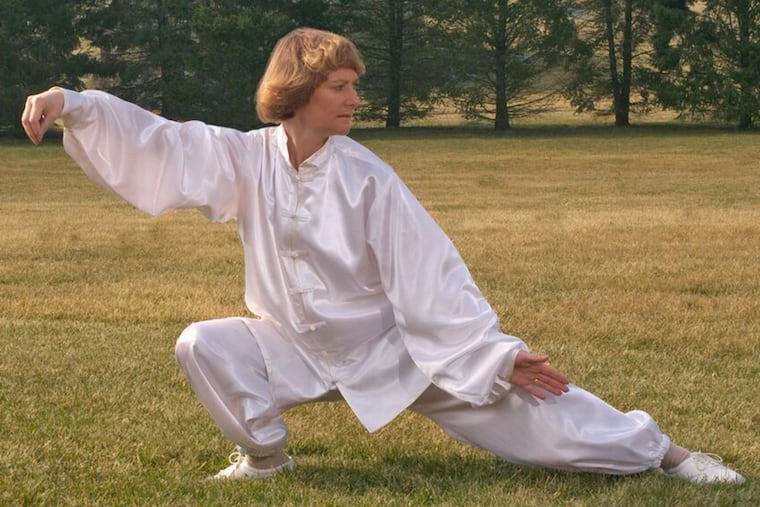
C.J. Rhoads imagines she might have had two futures after the car accident 14 years ago that left her with ongoing memory problems and chronic back pain.
In the one she seemed to be headed for, she'd still be overcome by pain, taking oxycodone, and lying in bed much of the time. She'd probably be on disability, but couldn't afford to keep her Berks County home.
In the other one, the one she actually got, she still hurts, but she rarely takes medicines. She's taken charge of her pain with an intense, holistic approach that includes exercise, diet, stress reduction and therapy. She's teaching at Kutztown University, a job she loves. She got to keep the house.
"My whole life is due to the fact that I learned how to get out of pain without medication," she said.
Rhoads, 55, credits her happier path to Martin Cheatle, a pain psychologist who takes a multidisciplinary approach to pain at Reading Hospital and Penn Medicine. He helped her realize that she had control over some pain triggers and her own reactions.
Rhoads, who lives in Douglassville, tackled her pain like a science project. She said cognitive behavioral therapy made her realize how angry she was about the accident and the way it had changed her life. She also realized that anger exacerbated her pain.
"A big thing was changing my entire personality so I was no longer angry and stressed out," she said.
She also learned not to obsess about the pain. "I got to control whether I focused on the pain," she said. "If you focus on the pain, it gets stronger."
Occupational and physical therapy taught her that she could do exercises and make modifications that allowed her to live the life she wanted.
By trial and error, she came up with a regimen that helps her function with the pain. First, she gave up the standard American diet and switched to one heavier on fruits, vegetables, and fish, and low on sugar, carbs, and meat. She lost the 40 pounds she had gained on opioids. She had practiced tai chi for years and realized it calmed her. That is now a must every day. She makes sleep a priority.
She does Pilates twice a week and other exercise, such as walking or biking, three or four hours a week. She gets massages and meditates and has her own traction machine for her neck.
She estimates that the whole effort costs her $6,000 to $7,000 a year. "When you're in a lot of pain, cost is no object," she said.
During a few crises, she's had more therapy and taken painkillers for a while.
She's happy with how things have turned out. "I now, in my opinion, have the perfect life," she said.
215-854-4944
@StaceyABurling