Donated kidney came riddled with cancer
RALEIGH, N.C. —
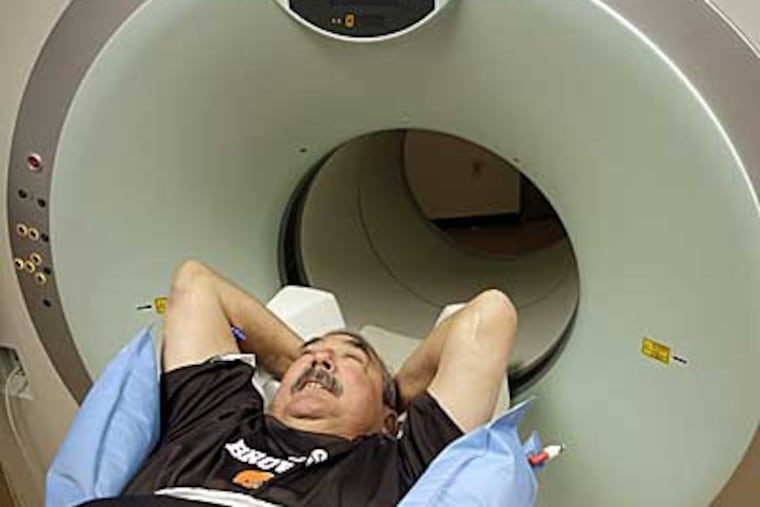
Warzel, 66, who had the donated organ removed, has not developed the lymphoma evident in the kidney. But he and his wife, Patricia, have spent the last year struggling to learn how the incident occurred and working to make sure it never happens again.
The diseased organ came from
The
Beyond those basic facts, however, the Warzels have met stony silence as they have sought information about the donor, the eligibility screenings by the organ procurement agency or the suitability tests done at
"Everyone just wants us to go away,"
Citing a federal privacy law — the Health Insurance Portability and Accountability Act, or HIPAA — officials at
In general, officials said, measures are taken to rule out donors who have diseases, including recent histories of cancer.
Warzel's donor was probably unaware of his cancer, leaving his family with no information that would raise red flags about his organs during screenings by Carolina Donor Services and
Potential donors — often traffic or trauma victims — are identified by their driver's licenses, which carry a red heart symbol indicating their wish to give their organs for transplant. But in a race against time to preserve fragile organs that could save lives, the types of screening tests conducted are designed to catch the most likely and dangerous possibilities.
"We can't go and biopsy every single part of the body," said Dr.
Unless there were elevated white blood cell counts associated with advanced disease, he said, blood tests during the organ screening process would register as normal.
"These are chronic lymphomas, where patients often live for decades, sometimes without treatment, though in many cases they ultimately require treatment and sometimes can be life threatening," Leonard wrote in an e-mail.
"We remain optimistic," said Dr.
Last summer, stymied in their efforts to get information about how the cancerous kidney went undetected, the Warzels hired a lawyer to pursue legal action.
"We weren't interested in damages,"
"It's one thing to be concerned about the confidentiality of a living person and another for the deceased person, as weighed against the interests of the living person," Clark said. "I think the person receiving the donor organ should have the superior right."
Clark and colleagues at his former law firm, Comerford & Britt, declined to take the Warzels' case. As a result, the Warzels have been left with no specifics about how well the donor was screened or whether there was any medical information that might have indicated the man was sick.
"We would love to have answers,"
———
HOW ORGAN SCREENING WORKS
1. A red heart on a drivers' license signifies a person's wish to donate organs for transplant. In the Triangle, Carolina Donor Services is the organ procurement agency that determines whether those wishes can be fulfilled.
2. In the initial screening, Carolina Donor Services workers ask relatives a lengthy list of questions about the potential donor, including medications taken, recent complaints such as vision difficulties or balance problems, and even whether tattoos and piercings are new.
3. If the interview raises no cause for concern, the hospital where the donor has been treated then conducts a battery of blood and tissue tests, including screenings for HIV/AIDS, hepatitis and other diseases.
4. Carolina Donor Services collects all the information and generates a computer list that matches the donor organs to people waiting for transplants.
5. The agency then contacts transplant hospitals that have patients who match the organs.
6. Doctors have one hour to decide whether the organs are suitable for their patients. If not, they're offered to another transplant center.
7. Matched patients are called and given the option of accepting or declining the organs.
8. Often, surgeons at the transplant center travel to the donor's hospital and recover the organs for their patients.
9. Within hours, a donor's heart, lungs, pancreas, kidneys, liver, eyes and other viable tissue can be used to save patients whose own organs are failing.
SOURCE: United Network for Organ Sharing
———
WHAT ARE THE ODDS?
Between 1994 and
SOURCES: U.S. Department of Health and Human Services; United Network for Organ Sharing