Treating kids' fever properly
Most caregivers in a recent study mistakenly said fever would have harmful effects on children.
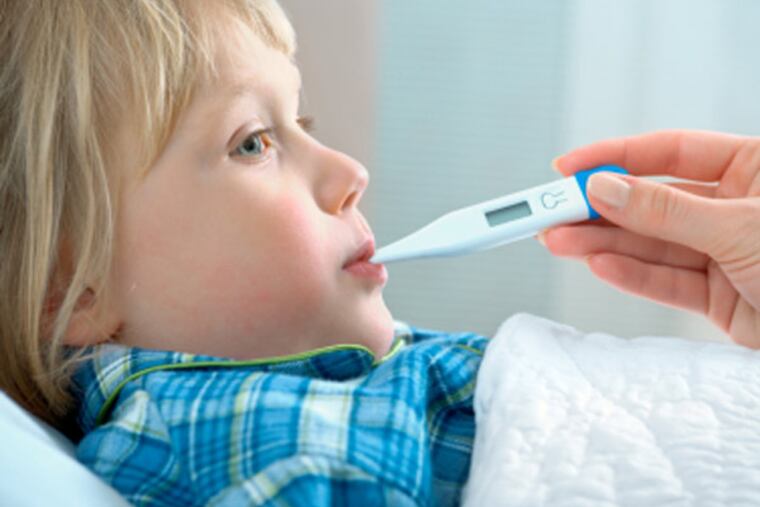
Recently, a frantic mother brought her 18-month-old son to our clinic with a fever of 103. Her anxiety over the child's fever was palpable, yet the boy's demeanor and his normal physical exam portrayed the opposite. After explaining that his fever was his body's normal response and that he probably did not need antibiotics, his mother looked at me pensively and said, "But he still has a fever. He's going to get a seizure. What are you going to do about it?"
Raise your hand if you think a fever of 105 can cause brain damage. If you did, you are not alone; 91 percent of caregivers in a recent study believed a fever could cause harmful effects, and 21 percent thought a fever itself could cause brain damage. These current statistics echo a study done more than 30 years ago by an eminent pediatrician, Barton Schmitt, "Fever Phobia," and show the continuing fear of febrile children.
Let's first define fever. It is a temperature, taken correctly, of 38 degrees Celsius or 100.4 Fahrenheit and above. Half of parents in the present-day study considered a temperature less than that to be a fever.
Fever is not an illness but a physiologic response that has beneficial effects in fighting infection. Each child's brain has an internal "thermostat" that will prevent temperature from getting too high. In higher temperatures, many viruses and bacteria can't reproduce as well, and the body's immune system gets revved up to fight the infection. As my infectious-disease colleagues point out, "fever is your friend."
The only caveats are if the child is younger than two to three months old; has hyperthermia from being in a hot, enclosed area such as a car; or has an underlying neurological condition that doesn't allow normal response to fever. Also, most fevers burn out in five days or so; consult a pediatrician if they persist longer.
Fever is a common complaint in pediatrics, accounting for almost one-third of all sick visits to pediatricians. That's a lot of heat.
Hundreds of years ago, children's fevers were treated with remedies such as placing leeches on the skin to draw out "extra blood," cutting their fingernails and placing the clippings outside the house, as well as giving them various plants such as willow-tree bark and yarrow.
Unfortunately, even in the 21st century, fever is still treated with toxic remedies that have sent many a child to the ER or worse. Alcohol baths and cold-water baths can worsen symptoms by causing dehydration or increased shivering. But a potentially dangerous "cure" for fever all of us have used is a ubiquitous medicine with many names: Q-pap, acetaminophen, or best known by its trade name, Tylenol.
One recent study showed that one half of all parents give the incorrect dose of acetaminophen, and 15 percent give a potentially toxic dose. Eighty-five percent of parents in the study also woke their children at night to give a fever-reducing medicine, exposing the children to potentially more erroneous dosing as well as disrupting their therapeutic sleep. Add this to other medicines parents might administer that already contain acetaminophen (some Triaminic, Benadryl, and Sudafed products) and the children could be getting two or three times the recommended dose of acetaminophen.
Here's a common scenario: A child has a fever of 102 and is acting normally. What should a concerned caregiver do? Let the fever do its job, most pediatricians will recommend.
Another scenario: A child has a fever, but is uncomfortable. What now? Give the appropriate dose of a fever reducer, remembering to use a measuring syringe, not a teaspoon from the kitchen, and check the dose based on the child's weight. If a child has a fever and is not acting normally, has an unusual rash, or is in pain, call your child's health-care professional to identify the cause. Also, if the child has an underlying severe heart or brain disease, contact the doctor.
Back to the febrile toddler. After I carefully explained to the woman there was no need to treat her child's fever, and that her son's body was doing what it was made to do, she smiled at me and thanked me for my help. I smiled back and advised her that if her child's symptoms changed for the worse, she could call to make another appointment.
The next day, I was reviewing the discharges from our ER from the previous night and noticed that the same child was seen several hours after I had seen him. His emergency room discharge diagnosis was "fever" and "viral syndrome."
His discharge instructions read; "reassurance, acetaminophen if in pain, and to call his doctor in the morning."
Fever phobia strikes again.