Dogs split from the wolf pack earlier than thought, DNA analysis suggests
A new analysis of ancient wolf DNA has shed light on the murky early history of man's best friend, suggesting that dogs split from wolves as many as 27,000 to 40,000 years ago - not 11,000 to 16,000 years ago, as earlier genome research had proposed.
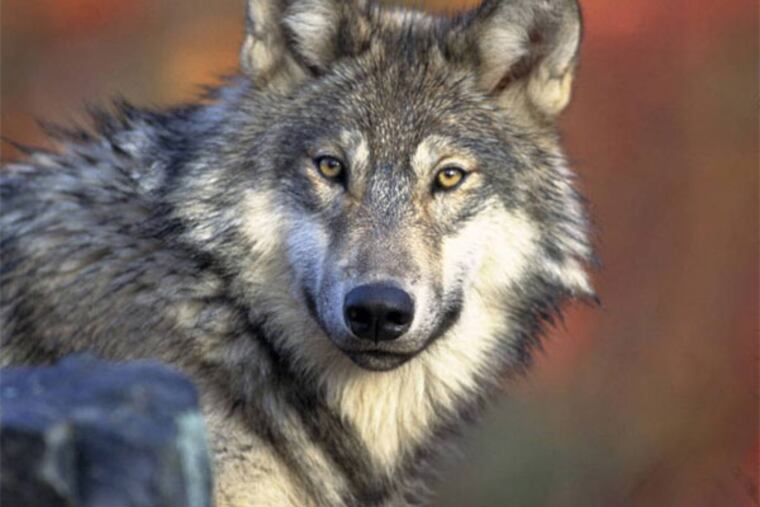
A new analysis of ancient wolf DNA has shed light on the murky early history of man's best friend, suggesting that dogs split from wolves as many as 27,000 to 40,000 years ago - not 11,000 to 16,000 years ago, as earlier genome research had proposed.
"Dogs may have been domesticated much earlier than is generally believed," Love Dalen, a researcher at the Swedish Museum of Natural History in Stockholm and coauthor of a study describing the discovery in the journal Current Biology, said in a statement.
Dalen, first author Pontus Skoglund of the Harvard Medical School, and their colleagues came to their conclusion after sequencing the DNA of a male wolf that lived on Siberia's Taimyr Peninsula.
The genetic material came from a small piece of rib bone collected during an expedition to the region. The team was unsure at first whether the sample came from a modern or ancient wolf; radiocarbon dating revealed later that the beast, which they referred to as Taimyr 1, lived about 35,000 years ago.
"This wolf lived just a few thousand years after Neanderthals disappeared from Europe and modern humans started populating Europe and Asia," Skoglund said.
Examining the animal's mitochondrial and nuclear DNA and comparing them to genomes of modern wolves and dogs, the team surmised that there must have been a three-way split among the Taimyr, dog and wolf lineages.
Furthermore, DNA evidence suggested that the animals would have diverged about the same time period, a conclusion inconsistent with a relatively recent parting of the ways between wolves and dogs.
The researchers also found that Siberian huskies and Greenland sled dogs shared a relatively large number of genes with Taimyr 1, compared with other breeds. The Chinese shar pei and Finnish spitz also shared Taimyr DNA, to a lesser extent.
"DNA can provide direct evidence that a Siberian husky you see walking down the street shares ancestry with a wolf that roamed northern Siberia 35,000 years ago," Skoglund said.