Study: The human ‘superpredator’ is unique, and unsustainable
If you’re looking for the world’s top “superpredator,” look no further than your own reflection.
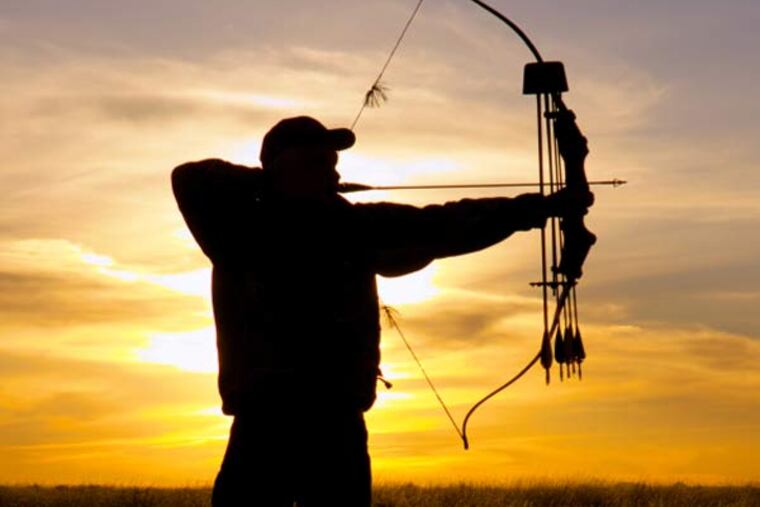
If you're looking for the world's top "superpredator," look no further than your own reflection.
A new study that examined more than 2,000 predator-prey interactions in populations around the globe has found that humans don't only kill top carnivores at a rate far higher than all other top predators combined, but that our particular hunting behaviors are so devastating to species on land and sea that they challenge these populations' ability to recover — and in some cases could alter the course of their evolution.
"Ultimately, humanity is feeling the impacts of our predatory dominance," said lead author Chris Darimont, a conservation scientist at the University of Victoria.
The findings, published in the journal Science, reveal the extent of the damage wrought by human hunting and fishing practices, and reveal that there might be hope for recovery — if we learn better practices from the same carnivores that we are hunting down.
"We have the unusual ability to analyze and consciously adjust our behavior to minimize deleterious consequences," Boris Worm of Dalhousie University, who was not involved in the paper, wrote in a commentary. "This final point, I believe, will prove critical for our continued coexistence with viable wildlife population on land and in the sea."
Many of the world's large fish and land-based top predators — your lions, your tigers, your bears — have been on the decline for years, and it's thought that humans have had a major hand in their downfall. Hunting, along with climate change and human habitat encroachment, all likely play a role.
That's not a new pattern: Within the last tens of thousands of years, marvelous megafauna — woolly mammoths, saber-toothed cats, giant sloths — roamed the Earth, and many of them began disappearing around the same time humans arrived in their habitats.
To get a better handle on the effect of human hunting, the researchers collected data on 2,125 predator-prey interactions in different populations on land and sea to calculate the rates at which predators exploited their available adult prey — in other words, what share of the adult population they killed each year. These interactions included both human and other natural hunters.
They found that the human take of adult fish each year was a whopping 14.1 times the rate of other marine predators' take. On land, humans killed top predators at a rate 9.2 times the rate that those top carnivores killed each other.
"We predicted that there would be difference, but we were surprised by the magnitude of that difference," said Darimont, who also serves as science director of the Raincoast Conservation Foundation in British Columbia. While other top predators do kill each other occasionally, he added, it's usually because of competition between members of the same species.
That's all the more shocking, given that the rate at which humans killed these carnivores was 3.7 times the rate at which they killed herbivores. Human hunters, it seems, like to specialize in turning other predators into prey.
It wasn't just the magnitude of the catch or hunt that was the issue — humans have a very different, and problematic, hunting strategy from nature's other successful hunters. Humans tend to pick out adults rather than younger, smaller, weaker members of a species. In the case of trophy hunting, it's likely for reasons of prestige — big-game seekers place higher value on killing a larger animal.
"Typically, human hunters remove 1 in 5 large carnivores from the planet each year, and that's kind of spooky because most large carnivores do not have the reproductive ability to withstand that sort of mortality," Darimont said. "They simply did not evolve as prey."
In short, these land-based meat eaters can't make babies that grow into adults fast enough to sustain their population levels. And that's why humans' focus on killing adults is so dangerous, Darimont said.
Think of it from a business perspective, the researchers said. An adult female, for example, is like your capital; the young that she produces are the interest generated by that capital. If you kill an adult animal today, it will take years for another to grow up and take her place. But if you kill a young animal, it will (theoretically) take only until the next breeding season to produce another. In other words, it's better to use the up interest rather than to draw down the capital, because the capital is much more difficult to build back. Once it's gone, it's gone — and so is the interest.
But highly successful hunters, such as fishing birds, naturally draw on the interest, rather than the capital — they actually tend to pick off the young and small of a species, rather than the adults. That's in part because the young are often easier to catch and eat — and many animals, such as birds, are limited in what they can gulp down by the size of their mouths (known as gape limitation).
Although that may not seem sportsmanlike, it's actually the reason predators are able to keep prey populations in balance without wiping them out — a lesson humans have yet to learn.
That's probably what has been happening for the last tens of thousands of years, in fact — and perhaps part of why so many charismatic megafauna that shared territory with humans no longer exist.
"Many vulnerable wildlife species on land have already disappeared during the past 40,000 years in successive waves of extinction on continents and islands that were colonized by people," Worm wrote.
The loss of these fearsome carnivores is also deeply worrisome to ecologists because top predators play a major role in keeping their ecosystems in balance.
In the case of fishing, fish populations aren't just dwindling — their "demographics" are changing. In some populations, killing the large adults means that later generations end up smaller when they reach reproductive age, which means they lay fewer eggs that will ultimately hatch more small fish, and so on. This doesn't just affect the evolutionary track of the fish population — it also affects our future supply of fish.
The solution, the study authors say, is to hunt and fish in ways that are more like our fellow natural predators, who have been hunting sustainably for millions of years: focus on the young, and preserve the large adults, capable of bearing more offspring. In other words, preserve the capital.
———
©2015 Los Angeles Times
Visit the Los Angeles Times at www.latimes.com
Distributed by Tribune Content Agency, LLC.