FBI: Marsalis had 7 victims on a list
Jeffrey Marsalis kept a list of women's names and contact information in his laptop computer in a file dubbed "The yearly calendar of women," an FBI agent testified yesterday.
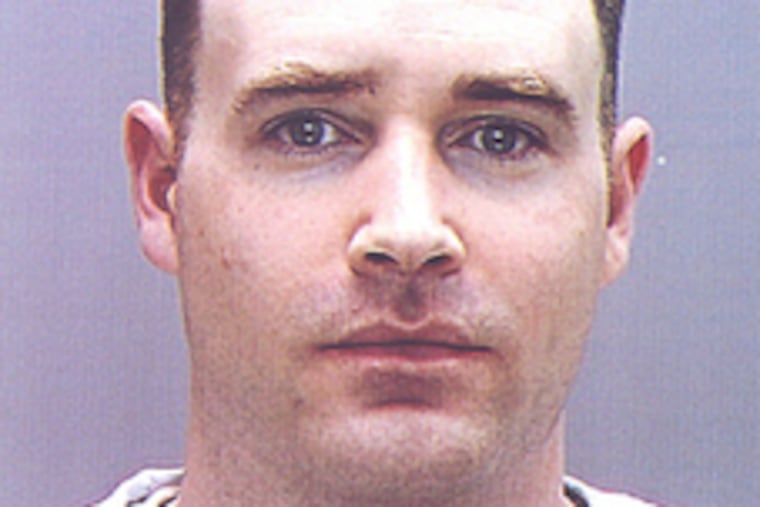
Jeffrey Marsalis kept a list of women's names and contact information in his laptop computer in a file dubbed "The yearly calendar of women," an FBI agent testified yesterday.
There was a "calendar" for 2003, 2004 and 2005, Special Agent John Kitzinger of the FBI's Philadelphia Division told a Common Pleas jury during the third week of Marsalis' trial on rape charges.
The first names of the seven women that Marsalis, 34, is accused of raping appeared under the calendar year in which their alleged rapes occurred.
Jurors yesterday also heard lengthy testimony from an expert forensic toxicologist.
Marc LeBeau, unit chief of the FBI's chemistry unit in Quantico, Va., testified that he used a computer software program to calculate the seven women's likely blood-alcohol-content levels based on the amount of alcohol they said they drank and taking into account their heights and weights.
LeBeau testified that the symptoms each woman experienced were not consistent with the amount of alcohol each said she consumed.
The women, six of whom Marsalis met on the dating Web site Match.com, had testified earlier in the trial that they had experienced symptoms such as fogginess or not being able to move parts of their body while going in and out of consciousness. They all testified that they had blacked out at some point and didn't remember blocks of time with Marsalis.
As a group, the women's maximum BAC levels ranged from 0.01 to 0.12 over a span of hours, according to the computer-run calculations. A person is legally intoxicated with a BAC of 0.08.
In some cases, the women would have had to drink about five times the amount of alcohol they said they consumed to experience the symptoms they did, LeBeau testified under questioning by prosecutor Joseph Khan.
LeBeau, who co-edited the book "Drug-Facilitated Sexual Assault: A Forensic Handbook," also testified that in addition to a significantly larger amount of alcohol, the women could have experienced those symptoms after having a few drinks and ingesting any number of drugs that have the effects of being a central-nervous-system depressant, which affects the brain.
One such depressant, diphenhydramine HCl, was found in Marsalis' University City apartment, according to a report prepared by a U.S. Food and Drug Administration scientist. The FDA was asked to examine liquids found by police in Marsalis' apartment.
LeBeau, who was asked to look at the FDA report, testified that diphenhydramine HCl is found in Benadryl, an over-the-counter allergy medicine. In Marsalis' apartment, 50 milligrams of the drug were found in liquid form in an injectable syringe.
LeBeau testified that the liquid form is more concentrated than in pill or capsule form and that the injectable liquid form cannot be obtained over the counter.
Defense attorney Kathleen Martin asked LeBeau if diphenhydramine HCl in liquid injectable form is something paramedics could carry in their bags.
LeBeau said yes.
(According to the Florida Department of Health's Web site, Marsalis has an active paramedic license in that state.)
During direct examination, Khan also asked LeBeau if any of the central-nervous-system depressants on LeBeau's list was illegal in the United States. LeBeau testified that Rohypnol, known by its street name as "Ruffies" or "Roofies," is illegal.
According to testimony yesterday, there was no evidence of "Ruffies" found in Marsalis' apartment.
However, Jessika Rovell, Marsalis' ex-fiancee, when asked by Khan earlier in the trial if Marsalis had ever mentioned date-rape drugs to her, testified that he had. She named "Ruffies" as an example.
Rovell also had testified that Marsalis, who falsely claimed to be an emergency-room resident at Hahnemann University Hospital, had access to syringes and medications in a supply room near the emergency room.
Another prior witness, John Cornele, a Drexel University clinical instructor, also had testified that when Marsalis was a Drexel student on the Hahnemann campus, Marsalis had had access to expired medications.