Fashions make a comeback
DRESSES, HEELS FROM '60S ARE SHOWING UP 40 YEARS LATER
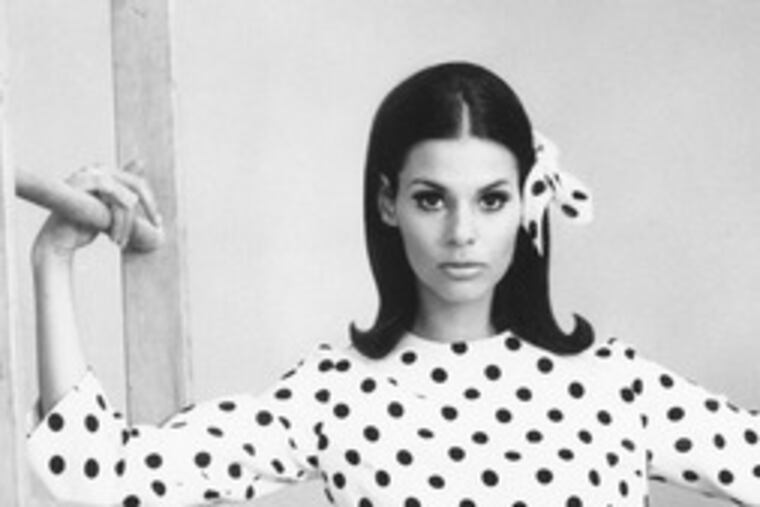
FORTY YEARS after the London King's Road style made many a girl channel her inner Twiggy, similar fashions have come around again - only with 21st century charm.
The boyfriend cardigan, the shift dress and short kitten heels, fashion staples in '68, are being seen again, even on first lady-in-waiting Michelle Obama.
Recall the coral red dress designed by Maria Pinto that Obama wore on her White House visit this week, which some fashion experts say evoked Jackie Kennedy.
Even the long-dormant bouffant hairdo made an unexpected comeback with the huntress appeal of Alaska Gov. Sarah Palin.
Fashions that debuted in that era have been with us ever since, evolving along the way.
Army fatigues gave way to pilot jackets; tie-dyed T-shirts became slogan T-shirts; the miniskirt – which briefly reappeared in the '90s - was replaced by an inconsistent hemline. The belted shift dress gave way to the baby doll dress in the '90s, only to return to its original form years later.
"[Those] styles have not lost their places in everyone's wardrobe," said Janice Lewis, head of the fashion-design department at the Moore College of Art and Design. "It came to us from 1968."
During the 1960s, extravagant fashion trends came and went, but it all came to a head in the turbulent year of 1968.
The year marked a period of civil unrest, mile-high emotion, excessive drug use and uninhibited sexual behavior. Fashion served as the backdrop to that raucous time, fashion experts say.
"In the early '60s, fashion was what you thought was cute," said Lewis. "In 1968, all the cute stuff fell apart. Young people were being drafted. Things changed. It was a time of social revolution."
Youth in particular rejected the staid fashion styles of previous generations and began charting their own courses, said Lewis, 55, who was a teenager that year.
"What you wore symbolized a little bit of something of your personality," she said. "People on the streets started to make their own fashion. They wanted to make their own story."
Those stories - which embodied an explosion of individualist fads - were told through an array of clothing: army fatigues and combat boots worn by Vietnam War protesters; Afrocentric prints in the black community; hippies frolicking in distressed jeans and peasant skirts; Grateful Dead heads in tie-dyed T-shirts.
Maggie Baker, a fashion history professor at the Art Institute of Philadelphia, said that every conscious fashion decision was aimed at making a "significant social statement.
"It's hard to say anyone followed any [particular] style, with tons and tons of people defining themselves," Baker said.
Lewis agreed, adding that although people today still wear the same styles in varying degrees, the original concepts are lost.
Today, the style doesn't necessarily speak about who they are and their beliefs, she said.
"In 1968 it was more about people's politics and social issues in how they dressed," she said, before giving an example of a hippie unwilling to wear clothes associated with any other group. "People now have more fun with fashion."
She noted the constantly changing 1968 vintage styles of her students.
Baker credited both periods - 1968 and 2008 - with being a time of transformation, before drawing the comparisons between Martin Luther King and Robert Kennedy to President-elect Barack Obama, three transformational figures who she said influenced Americans' self perception.
"They were speaking what young people wanted to hear," she said. *