'D.C. Sniper' to face own death tonight
Injection will end killer's life, but not the questions
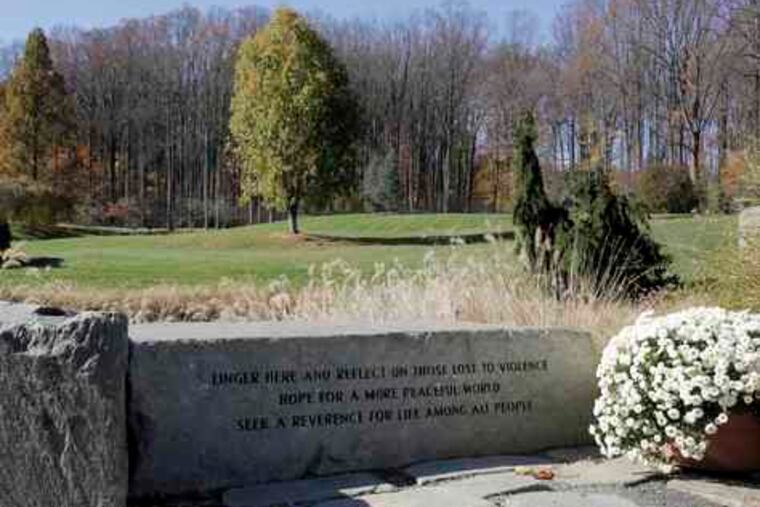
John Allen Muhammad's path to notoriety took him from the U.S. Army to the Nation of Islam and finally on a coast-to-coast killing rampage, stopping in New Jersey to buy the used Chevy Caprice that he and his young accomplice used as a sniper's nest to gun down 10 strangers in the Washington, D.C., area.
About 9 p.m. tonight, Muhammad's violent American odyssey is slated to end in silence, with the long-anticipated death of the so-called "Beltway Sniper" by lethal injection in a Virginia prison.
Last-ditch efforts by Muhammad's legal team to spare their client's life appeared to come up short yesterday when the U.S. Supreme Court denied without explanation a petition to halt the execution, although his attorneys were still hoping for a stay from Virginia's outgoing Democratic governor, Tim Kaine.
Although his accomplice in the murder rampage - a then-17-year-old Jamaican named Lee Boyd Malvo - will be serving the rest of his life in prison without the possibility of parole, Muhammad's lethal injection would close a case that riveted the nation for 10 anxiety-filled days in October 2002, during the random D.C. shootings.
At the time, the murders were seen as a kind of aftershock to the 9/11 terror attacks, although a motive for the senseless series of sniper attacks remains elusive. Now, Muhammad's scheduled execution has stirred up memories of a case that many have struggled to put behind them - including relatives of the gunmen's lone victim from the Philadelphia area, Kenneth Bridges, 53, who was shot dead as he pumped gas near Massaponax, Va., on Oct. 11, 2002.
"I would like to be moving forward with my life," Jocelyn Bridges, Kenneth's widow and a mother of six, told the Washington Post recently. "That has nothing to do with forward motion. That's a snapshot in time. My life is a moving train. It's moving forward. . . . I don't have to go back and rent or borrow or go to any more nightmares."
Nathanial Osbourne, the former South Jersey man who inadvertently helped Muhammad in the killing spree, has dropped out of sight. Efforts last night to reach Osbourne, now 33, who helped Muhammad buy the used Chevy from the ironically named Sure Shot Auto Sales, in Trenton, were unsuccessful. Osbourne was most recently listed as living in Hawthorne, Calif.
Osbourne, described in 2002 as "a quiet guy who likes to help people," encountered Muhammad during his cross-country crime rampage and apparently helped him buy the blue 1990 Caprice for just $250 and then to register the car at a New Jersey Department of Motor Vehicles office in Camden - in another irony, on Sept. 11, 2002. That car was later retrofitted with a hole in the trunk for a sniper's nest.
Osbourne was later arrested as a material witness in the case while visiting his girlfriend in Flint, Mich., then released. Meanwhile, the episode also spurred the New Jersey DMV to finally upgrade the DMV's computer technology, after authorities had to spend five days searching paper records in a warehouse in order to find information about Muhammad's registration.
But learning about Muhammad's car-buying habits weren't the only problems that investigators encountered as they probed the two-man crime wave carried out by Muhammad and Malvo. Authorities have long suspected that the snipers were involved in other murders and nonlethal shootings stretching across the southern United States from California to Florida. Those cases have not been brought to trial.
Muhammad's execution in Virginia is for the death of one of the pair's Beltway victims, Dean Harold Myers, who was also gunned down at a gas station. Even though the majority of the snipers' murders took place in Maryland, then-Attorney General John Ashcroft decided to hold Muhammad's initial trial in Virginia because death-penalty cases move more swiftly there.
Indeed, Muhammad's case has rekindled some of the long-running national debate over the fairness of the death penalty, including the issue of whether Muhammad killed people because he was mentally ill.
Jonathan Sheldon, Muhammad's attorney, said yesterday that "Virginia will execute a severely mentally ill man who also suffered from Gulf War Syndrome the day before Veterans Day."