In Philly, feds have a knack for finding narcs
WHEN the former mistress of a drug lord was faced with the prospect of spending 30 years behind bars, she did what many defendants here do after federal prosecutors have charged them with serious crimes.
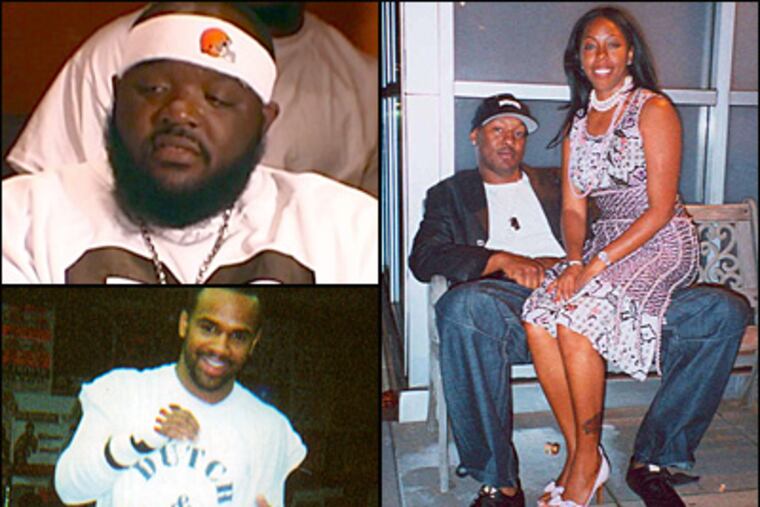
WHEN the former mistress of a drug lord was faced with the prospect of spending 30 years behind bars, she did what many defendants here do after federal prosecutors have charged them with serious crimes.
She became a rat.
Chanell Cunningham, the one-time paramour of drug kingpin Maurice Phillips, who had been charged in 2007 with cocaine conspiracy and money laundering, testified against him at his trial last spring, implicating him in the murder-for-hire of a federal witness.
Cunningham ultimately got a 12-year sentence. Phillips got life in prison.
Cunningham's cooperation provides a window into the world of how Philly-based federal prosecutors operate, by enticing witnesses to turn on their former buddies at a remarkable rate.
Despite conventional wisdom that Philadelphia has a "no-snitch" reputation, federal prosecutors here have long been relying on cooperators like Cunningham to make cases. In fact, one out of three federal criminal cases involves cooperating defendants, almost three times the national average for federal cases, according to the U.S. Sentencing Commission.
"There isn't anybody facing mandatory minimum sentences that we have not urged to cooperate," said Assistant U.S. Attorney Robert Zauzmer, chief of the appeals unit in the U.S. Attorney's Office for the eastern district of Pennsylvania.
Prosecutors' win-win
When defendants cooperate and provide information the government deems useful, prosecutors make a motion at sentencing based on "substantial assistance." The motions generally mean a reduction in the prison time a cooperating defendant would otherwise have to serve.
The model has proved to be a win-win for the feds: Philly prosecutors are getting lots of cooperation and nearly double the national average of prison time.
Several factors conspire to make the Philly feds look like bad-asses.
For one thing, a higher percentage of violent crimes are leveled here than the national average, and those crimes often carry mandatory minimum sentences of 10 to 30 years - even life for drug kingpins - meaning defendants have a greater incentive to cooperate. (In 2010, 61 percent of federal criminal cases charged here involved drugs, guns and robbery or a combination, compared with 39 percent nationwide, according to federal data.)
Executive Assistant U.S. Attorney Robert K. Reed said that for many defendants facing the prospect of spending much of the rest of their life behind bars, cooperating is a no-brainer.
"They think, I want to get out of jail someday. I want to have a life. I don't want to be in Leavenworth," he said, referring to the famous federal prison at Fort Leavenworth, Kan.
Unlike many other federal districts and state criminal cases here, prosecutors generally don't bargain with defendants over the severity of charges, so they have even more incentive to cooperate.
Moreover, when federal defendants are arrested and charged with drug, gun or robbery offenses, they are often denied bail, making it more difficult to intimidate potential witnesses, Reed said.
Federal prosecutors also have more advantages than their counterparts in state court to induce cooperation.
A federal fait accompli
In federal court, charges typically are brought only when prosecutors are convinced they can get a conviction or plea. That leads to far fewer cases each year than in state court, with about 900 federal cases here in 2010, compared with about 16,000 in Philadelphia Common Pleas Court.
Further, federal prosecutors often work from the beginning with FBI or Drug Enforcement Administration agents, to build cases from the ground up - a luxury not always enjoyed by county D.A.s, said prominent criminal-defense lawyer Theodore Simon, whose clients have included convicted murderer Ira Einhorn and boxing promoter Don King.
"In state court, you have many more site arrests based solely on the observation of a police officer, and there may or may not have been probable cause, and you can win a motion to [exclude evidence]," Simon said.
Defendants in federal criminal cases also face other obstacles.
"It's not that we have all rock-star federal prosecutors; it's deeper than that," said Catherine Henry, the senior litigator of the Federal Defenders office here.
"You have more mandatory minimums here, which means judges can't exercise their discretion at sentencing," she said. "And in Philadelphia gun and robbery cases, the government has handpicked them to be tried before suburban juries. It's a big disadvantage for defendants."
Henry was referring to a federal program called Project Safe Neighborhoods that permits federal prosecutors to adopt gun and neighborhood-store-robbery cases charged by the D.A.'s Office for prosecution in federal court, where sentences can be harsher than in local courts. Two neighborhood robberies involving guns results in a mandatory prison sentence of 32 years.
That wouldn't happen in Common Pleas Court.
District attorneys "have fewer mandatory minimums available to them, and they are generally not [able] to shoehorn information from defendants, and so
we're closer to the no-snitch mentality," said a veteran prosecutor with experience in the U.S. Attorney's Office and the D.A.'s Office.
For defendants fortunate enough to have information federal prosecutors want, substantial assistance motions generally result in below-guideline sentences. Officials here say the variances have not been substantial, and when they are - such as in Cunningham's case - the cooperators have enabled the feds to take down numerous multidefendant drug gangs and their kingpins.
But even if defendants don't believe they're guilty or they can't cooperate, opting to go to trial in federal district court doesn't favor most criminal defendants. The feds here lose only 1 percent of the cases that go to trial. And those found guilty at trial often face longer sentences for causing the government to expend additional resources.
As one former federal prosecutor put it: "When you're indicted in federal court, the party's pretty much over."