PMN offers new way to keep tabs on Philly news
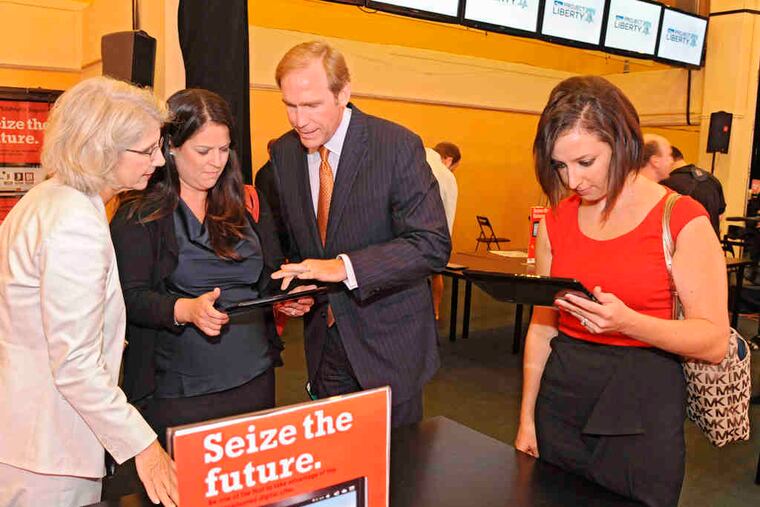
GET BUSY LIVING, or get busy dying. That line was uttered quite a bit in "The Shawshank Redemption," but it would have fit in just as well yesterday when Philadelphia Media Network, the company that owns the Daily News, Inquirer and Philly.com, announced that it would sell discounted tablet computers that feature digital versions of the papers.
GET BUSY LIVING, or get busy dying.
That line was uttered quite a bit in "The Shawshank Redemption," but it would have fit in just as well yesterday when Philadelphia Media Network, the company that owns the Daily News, Inquirer and Philly.com, announced that it would sell discounted tablet computers that feature digital versions of the papers.
Some 5,000 of the Arnova 10 G2 tablets, which are powered by Google's Android operating system, are available beginning today for as little as $99.
To get the tablets at that low price, buyers must sign up for a two-year, $10-a-month subscription for digital editions of the papers and the Inquirer's newly developed Android multimedia app.
Customers also have the option of purchasing a one-year, $13-a-month subscription to the digital editions, which would raise the price of the tablet to $129.
"As a media company, you have to be courageous enough to try new things," said Greg Osberg, CEO of Philadelphia Media Network. "We think consumers will really respond to this."
The tablet, made by the French manufacturer Archos, also allows users to surf the Web, read e-books, watch videos and purchase more apps through Amazon.com's Appstore for Android.
The company set up a website, www.phillytablet.com, and a hot line, 1-800-688-2222, to sell the tablets. They can also be purchased on the first floor of the Inquirer-Daily News Building at Broad and Callowhill streets.
Osberg said that the tablet-selling effort is the first of its kind involving a media company in the U.S. and landed sponsorships from Comcast, Wells Fargo and Main Line Health.
It comes after both papers struggled for years to come up with a way to charge readers for digital content.
"I think it's exciting, in the sense that they're trying something," said Andrew Mendelson, the chairman of Temple University's journalism department.
"But is the device enough? I don't think so, not if the content isn't what people desire and feel they need to have."