2 housing markets: The wealthy few . . . and everybody else
In America, it's starting to feel as if there are two housing markets - one for the rich, and one for everyone else.
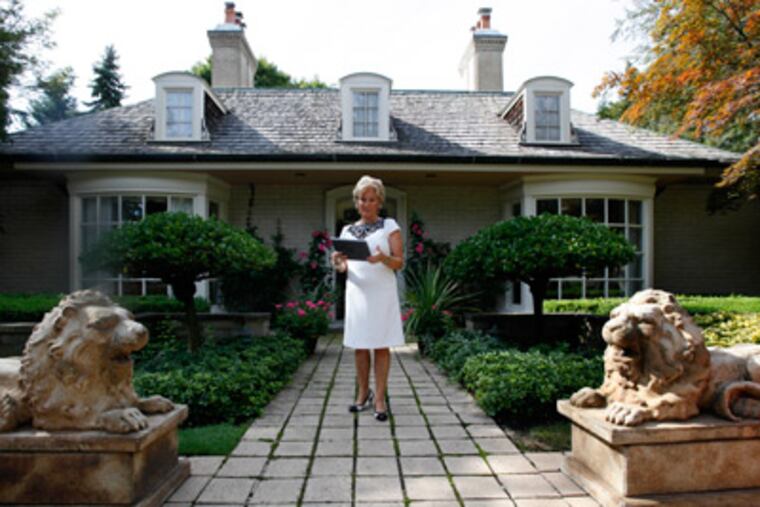
In America, it's starting to feel as if there are two housing markets - one for the rich, and one for everyone else.
Consider foreclosure-ravaged Detroit. In the historic Green Acres district, a haven for hipsters, a pristine, three-bedroom brick Tudor recently sold for $6,000 - about what a buyer would have paid 80 years ago during the Great Depression.
Just 15 miles away, in the posh suburban enclave of Birmingham, bidding wars are back. Multimillion-dollar mansions are selling quickly. Sales in August were up 21 percent from the previous year. The country club has ended its stealth discounts on new memberships. And Main Street's retail storefronts are full.
"We're getting more showings, more offers, and more sales," said Ronni Keating, a real estate agent with Sotheby's International.
Think of this housing market as bipolar. In the luxury sector, the recession is a memory, and sales and prices are rising. But everywhere else, the market is moving sideways or getting worse.
In the housing market inhabited by most Americans, prices have fallen 30 percent or more since their peak in 2007. That's a steeper decline than during the Depression. Some people have had their homes on the market for a year without a single offer.
Almost a quarter of American homeowners owe more on their mortgage than the house is worth. Another quarter have less than 20 percent equity. About half of homeowners couldn't get a mortgage if they applied today, says Paul Dales, senior U.S. economist for Capital Economics.
But then there is the other housing market, occupied by 1.5 percent of the U.S. population, according to Zillow.com. The one with outdoor kitchens and in-home spas, with his-and-hers boudoirs and closets the size of starter houses. The market that is not local but global, with international buyers bidding in all cash. And where the gyrations of the stock market are cause for conversation, not cutting expenses.
In this land of luxury properties, the Great Recession seems over. Prices of $1 million-plus properties have risen 0.7 percent since February, according to Zillow. Prices of houses under $1 million have fallen more than 1.5 percent.
Normally, these two segments of the housing market rise and fall together. Now, they're moving in opposite directions.
"Luxury is the best-performing segment of the housing market right now," said Zillow.com chief economist Stan Humphries.
After every recession since World War II, housing has led the economic recovery. Not this time.
The renewed vitality in the comparatively small market for luxury homes is not enough to power a full-blown recovery in housing or in the broader economy. This bifurcation in the market is yet another reason Michelle Meyer, the chief economist at Bank of America Merrill Lynch, says her housing outlook is "increasingly downbeat."
The phenomenon is not limited to real estate. You can see the same split in other gauges of the economy. Sales at Saks vs. Wal-Mart. Salaries on Wall Street vs. Main Street. Corporate profits vs. family balance sheets.
The divide also is making credit a perk of the rich. Mortgage rates are the lowest in decades. But what good are absurdly cheap rates if you can't get a mortgage? Banks aren't granting credit to anyone "who even has a smudge on their application," said Jonathan Miller, founder of the real estate consulting firm Miller Samuel. Applications for new mortgages languish at 10-year lows.
Wall Street's rebound starting in March 2009 - and lasting until recently - brought back the market for mansions in the Hamptons, on Long Island, where the number of closings has returned to the 2007 level, and for luxury co-ops in New York City. And because of social-network riches in Silicon Valley, twice as many homes have sold for $5 million or more this year than in 2010.
But in the other housing market, an apartment tower built in 2007 in San Jose, Calif., recently converted to all-rental. The building had not sold a single unit. In Miami, a city that exemplifies the foreclosure epidemic, idled cranes dot the skyline. Unemployment shot up again this summer by 2 percentage points to 14 percent, a level not seen since the energy crisis in 1973.
There are so many two-bedroom condos in gated communities with golf courses, private pools, and rustic jogging paths that you can pick one up for $25,000, 66 percent off the price five years ago. But luxury condos priced at $1 million or more are selling as rapidly as they did during the boom.
"In the 20 years that I have been in South Florida real estate, I have never seen a greater divide between those who have and those who have not," said Peter Zalewski, founder of the real estate firm Condo Vultures.