Finding your sperm donor not as easy as in movies
Devon Wolfkiel knows her father is a thin man with hazel eyes and wavy brown hair - but she may never know his name.
Devon Wolfkiel knows her father is a thin man with hazel eyes and wavy brown hair - but she may never know his name.
Wolfkiel, 20, a New York University student, was conceived with sperm from Penn State's Milton S. Hershey Clinic through artificial insemination. After graduating from high school, she found a paper in her parents' room with information, but nothing she could use to identify her donor.
She said her search is not urgent, but in her late teens, when she began to feel a sense of medical responsibility for herself, she decided to try to find her donor's medical information. Last year she posted what little she knows on the Americans for Open Records website (amfor.net), which contains a registry for donors and donor offspring.
"I am now 19 and am having some health issues . . . which require a more complete family history," her listing reads. "Beyond the obvious health concerns, I'm just curious."
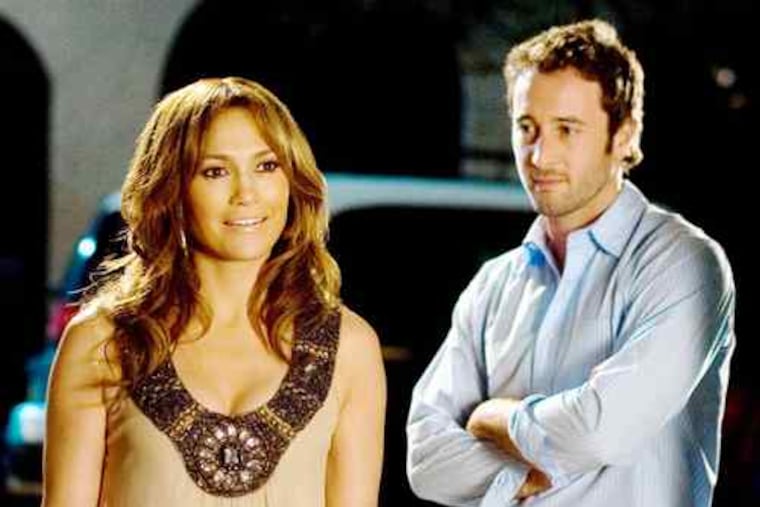
Connecting with sperm donors isn't always as easy as it is portrayed in the new film The Kids Are All Right, starring Julianne Moore, Annette Bening, and Mark Ruffalo. In the movie, the children of lesbian partners find the man whose sperm was used in their conception. He and the children attempt to forge relationships, but the result is not entirely what the parties involved had hoped.
Director and cowriter Lisa Cholodenko, who is raising a child conceived through artificial reproductive technology with her partner, said she wanted to explore the idea that a donor might not live up to a child's picture of her biological parent.
"There's always that kind of first blush of fantasy about who that person is, and nobody lives up to that," Cholodenko said. "Everyone is human and ultimately falls from grace in a certain way when they're held up to some kind of perfect ideal."
Artificial insemination also surfaced in The Back-Up Plan, released in April, and in The Switch, debuting in August. The films highlight the growing number of offspring of sperm donations who are trying to find their fathers. Dozens of websites and online groups have formed to help donors and offspring connect.
Although the United States keeps no records of births from sperm donation, experts estimate that anywhere from 4,000 to 40,000 such births occur annually. Unlike some countries, the United States does not require that donors' names be released to their offspring, and there is no national donor registry. In recent years, however, many U.S. sperm banks have let donors choose whether to have personal information, or even their names, released when their offspring turn 18.
Whether donors should be required to disclose their identity is becoming a heated issue, and groups have formed on both sides of the debate. So far, no legislation has been introduced.
Wendy Kramer is the founder of Donor Sibling Registry, a Nederland, Colo., nonprofit group that matches sperm and egg donors with their offspring. "It's a free-for-all," she said in an e-mail. "Sperm banks can do whatever they'd like."
Wolfkiel supports giving donors the option of remaining anonymous but thinks children like her should have access to a thorough and current genetic history. Although sperm banks collect detailed health records from donors, not all track medical histories. Several countries do, including the United Kingdom and Germany. And several countries require information to be released to offspring.
Betsy Cairo, a University of Northern Colorado professor who founded the CryoGam Colorado sperm bank in Greeley, about an hour's drive north of Denver, fears that laws banning anonymity would lead to a shortage of donors: "If they don't remain anonymous, we will lose our donor pool."
At CryoGam, donors have the option of agreeing to potential future contact. When the offspring turns 18, he or she can ask the bank to contact the donor. If the donor consents, the bank will ask whether he wants his information released. The oldest offspring from CryoGam donors would now be in their early 20s. So far, none has requested contact.
At Cryobiology of Ohio, lab supervisor Donna Ridder said about half of new donors agree to the possibility of future contact. She said her bank began moving toward more open agreements in the last five to 10 years. About 95 percent of donors are agreeing to release baby photos, audio recordings, or silhouettes. Those who agree get paid slightly more ($55 versus $40) per sperm donation. She said the industry as a whole is moving away from anonymity.
The Donor Sibling Registry reports more than 7,400 matches through the service since its founding in 2000. Nearly 28,000 donors and offspring are registered.
Cairo of CryoGam believes failure is more likely than success in attempts at donor-offspring bonding - another reason she supports donor anonymity. Those who wish to remain anonymous should be able to do so, she said.
"Sometimes these donors are 19 or 20. They don't think that far down the road," she said. "Some might even forget they were a donor in college, and then suddenly there's a person on their doorstep. They're not family. They're genetically linked."
Some are fighting for the United States to require disclosure. The Institute for American Values, a nonprofit group in New York "whose mission is to study and strengthen key American values," released a study called "My Daddy's Name Is Donor," which outlines what it deems the harms of anonymous donation.
The Web-based study of more than 1,600 found that 65 percent of donor offspring agree with the statement "My sperm donor is half of who I am" and that "family relationships for donor offspring are more often characterized by confusion, tension, and loss." The study also found that 53 percent agreed that "It hurts when I hear other people talk about their genealogical background."
Kathleen LaBounty, 28, of Houston, hopes the United States will require disclosure to prevent others from knowing the pain she has felt during a so-far-unsuccessful search for her biological father. After half a decade, 16 DNA tests, and her interviews for The Oprah Winfrey Show and other national shows and publications, her father has not come forward.
"I hope with time he decides to know me," she said. Although she is at peace with the idea that she may never find her father, she hasn't given up her search. "I don't like to live with regrets."