Bristol Twp.'s Martha Miller enjoys a long life of quiet accomplishment
Martha Miller has never had a car. Never learned to drive, in fact. "And I get everywhere I need to go," the diminutive 74-year-old says with a smile.
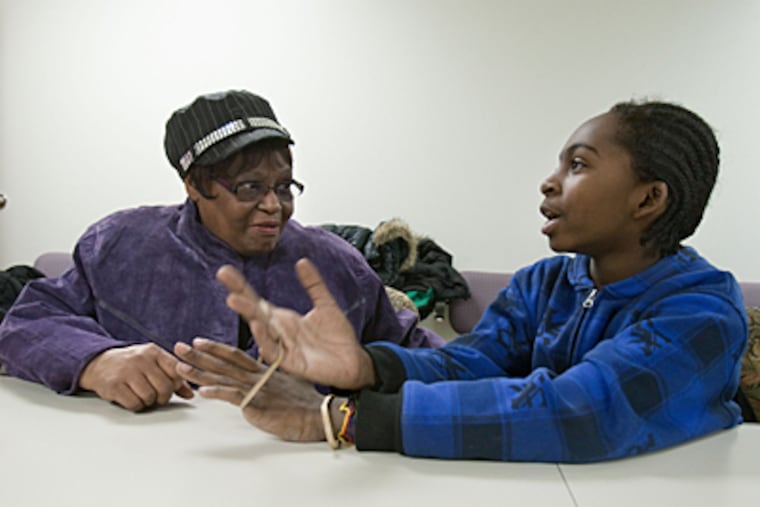
Martha Miller has never had a car. Never learned to drive, in fact.
"And I get everywhere I need to go," the diminutive 74-year-old says with a smile.
It's no surprise that Miller always finds a way. It is a recurring theme in her long life of quiet accomplishment.
Amid the chronic drug traffic and attendant crime of a struggling, low-income corner of lower Bucks County, the softspoken great-grandmother has, for a quarter-century, found ways of bringing hope to thousands of needy children and adults.
In 1985, Miller helped found No Longer Bound, Bucks County's first African American-run drug and alcohol prevention program, and continues to oversee it as program developer.
Working with limited funds and staffing, she has helped the Bristol Township nonprofit provide an array of services, from after-school programs and stepping teams to life-skills and employment counseling, summer camps, nutritional instruction, and an emergency food bank.
"It has been a stellar program, and Martha has really been at the heart of that," said Marge Hanna, executive director of Bucks County Drug and Alcohol Commission, which provides most of No Longer Bound's funding.
"She is a driving force in the community, period," said the Rev. James Evans III, pastor of Norton Avenue Baptist Church, whose buildings host No Longer Bound. Up to 25,000 households are served in some way each year, said Evans, who serves as the program's executive director.
"Her role in history is the kids who have come out of her program," said John Jordan, past president of the Bucks County NAACP. "Some have gone on to colleges and universities across the nation, and many have taken key jobs in the community."
The object of all these laurels stands barely 4-feet-11, speaks in a low, friendly voice, and doesn't sound all that impressed with herself.
"I guess if you are an underdog, you can look to me," she says. "It's not a role that you want to aspire to greatness with, or anything like that. It's just, if somebody needs help, then that's what inspires me."
Beneath that humility, say those who know her, lies a keen, strategic mind and an uncommon tenacity that has won her numerous area awards and honors.
"She is a very sweet woman, but she has true grit, a lot of strength to see that the people she cares about get what they need," said Connie Bastek-Karasow, executive director of Bucks County's Libertae treatment program. "She puts a heavy emphasis on seeing that children get attention in a prevention mode, so that they don't repeat the problems we have seen in the community."
It is a mission in which Miller has an intensely personal stake.
On Oct. 17, 1988, one of her four sons - Walter L. Miller Jr., who had struggled with substance abuse for several years - was fatally shot in a drug-related slaying.
Ten years later, in 1998, a federal grand jury concluded that Miller, 31, had been the victim of a botched contract killing ordered by a drug lord against a local rival. Two hitmen, who never were publicly identified or charged, had mistaken Miller for the targeted dealer and shot him at the dealer's home in Bristol Township, the grand jury said.
"You can't help but be motivated by that," Evans said of the tragedy.
By then, Martha Miller was already well into her role as an anti-drug activist.
A homemaker in the 1960s, her activism began slowly.
She unsuccessfully fought a school redistricting plan. She worked with neighbors to recruit buyers to repair boarded-up homes on their street.
By the late 1970s Miller was a Democratic committeewoman, deeply dismayed by the crime and drugs overtaking her neighborhood.
"We had marches, with kids in the streets saying no to drugs and alcohol," she recalled. "We did a lot of youth programs too, to keep the kids away from the drugs."
After the death of her husband, she helped found No Longer Bound in 1985.
Until then, "there was very little community response to the issue of addiction," Hanna said, recalling the crack vials littering the streets. No Longer Bound enabled minority leaders to plan a wide range of programs using their own identities and visions for their community, she said.
That may have to narrow some in the face of federal and state budget cutbacks, said Hanna, whose agency currently provides $147,000 of No Longer Bound's annual budget of about $200,000. Programs not directly tied to drug and alcohol prevention may have to find different funding sources, she said.
Through it all, "Miss Martha," as the children call her, has been there with encouragement and vision.
"I like that you know there are people here who can help you," said Jeffrey Nixon, 10, taking a break from his homework at the after-school program Wednesday afternoon. "Miss Martha's a nice lady and she can organize and keep things straight. If something goes wrong, she can figure out how to solve it."
After-school tutor Christine McKinney, 32, said Miller, a fellow member of the Norton Avenue Church, "goes into her own pocket to pay for things. You go to her house at 7 at night and you need some food, she'll give you food."
Some have come to church on Sundays and testified about Miller's quiet impact.
"They will stand up in church and say how they were hungry or on drugs, and she helped them," McKinney said. "It's not like she's preaching to them about Jesus, but they can see the love inside her heart. There's many people whose lives she has changed."