Mostjewish.com seeks to help young Jews define identity
The Reconstructionist Rabbinical College in Wyncote wants to know what members of the Jewish community love most about Passover.
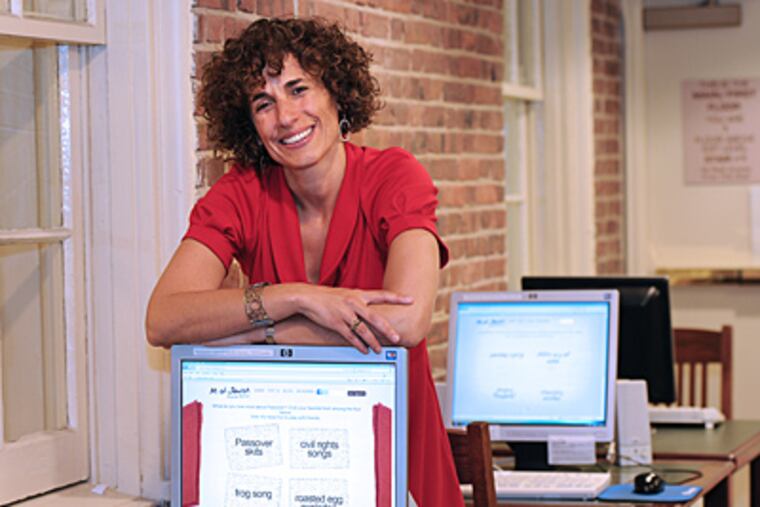
The Reconstructionist Rabbinical College in Wyncote wants to know what members of the Jewish community love most about Passover.
The four questions, or snoring relatives?
Potato kugel, or arguing relatives?
Pick a favorite thing about the seven-day festival, which began at sunset Monday. Then discuss.
It's all a part of a new online game and social-networking initiative called MostJewish.
Launched in December, the digital project at www.mostjewish.com is an effort by the rabbinical college to activate Jewish involvement and connection, online and off.
"Jews - younger Jews, especially - like most Americans are spending more time on the Web, Facebook, Twitter, and we want to be there to help people find ways to express themselves and connect Jewishly," said Rabbi Deborah Glanzberg-Krainin, director of the project.
Mostjewish.com includes a game, a blog, a top-10 list, and special features designed to engage Jews in a fun way that can lead to more thoughtful discussion of what it means to be Jewish in the 21st century.
The game on the home page serves as a fun way to get into the site. It asks visitors to answer a question and then comment. For Passover, which commemorates the Israelites' freedom from slavery, the question is about favorite things related to the holiday.
But for the rest of the year, the query asks visitors to click on the term that's most Jewish. Multiple-choice alternatives might be potato knishes, the New York Times, or Linda Richman's expression "Talk amongst yourselves" from Saturday Night Live.
"I thought it was sort of fun and hilarious," said Jessica Shimberg, a rabbinic student at the college, which trains rabbis and offers a graduate degree in Hebrew letters. "It's neat to see all these different people from all walks of life weighing in."
Shimberg, 31, is in the age range of one of the college's target demographics - young Jews.
Studies show that many are less connected to religious institutions than previous generations.
Many don't join a synagogue, Glanzberg-Krainin said. "They are looking for new forms of religious expression. They are interested in creating their own communities, smaller communities around groups with shared interests, and they use social medial to connect."
The dilemma of reaching young people who are even less inclined to affiliate with religious institutions is an issue confronting all faiths, Glanzberg-Krainin said.
In the Jewish community, local programs such as the Jewish Community High School at Gratz College in Melrose Park and the Jewish Federation of Greater Philadelphia are among those also turning to social media for an answer.
The 600-student Jewish Community High School has increased and expanded its use of Facebook, said Rachel Steinberg, school director of community relations.
The Jewish Federation is preparing to launch a local version of "What's your #ish?", an online campaign of the Jewish Federations of North America that encourages Jews to post ideas about what being Jewish means to them, said Alex Stroker, the local federation's chief marketing officer.
On mostjewish.com, visitors also see how many users agreed with their answers to the website question. Once they post, their thoughts are shared on Facebook in what college officials hope will spark discussions around Judaism with the posters and their friends, and then the friends of friends, and then the friends of friends of friends. The MostJewish Facebook site has 6,000 followers.
Glanzberg-Krainin writes much of the website blog, which tackles a more thoughtful consideration of Jewish topics, such as Jewish identity and tradition.
During Passover, there is a special section on the website for memorable stories about the tradition of hiding a piece of matzo during the Passover seder, the holiday meal in which family and friends recount the escape from slavery.
During the seder, children hunt for the hidden matzo, the afikomen.
Barry Brian of Dresher, who manages a real estate investment fund and works as a pharmaceutical industry consultant, contributed his memorable experience to the site.
At a seder 14 years ago, Brian hid seven pieces of afikomen. Only six were found. Later that night, relatives smelled something burning. They called the fire department as a precaution, but told officials that sending fire equipment wasn't necessary. The department didn't listen.
When the truck arrived, neighbors came out of their houses. A firefighter in full gear walked into Brian's house. He checked the light fixtures - including one holding the seventh afikomen.
Memories about being Jewish and connected to family and tradition are the kinds of things MostJewish hopes to get people talking about.
MostJewish may eventually team with other Jewish organizations to address environmental, social-justice, and urban Jewish life issues.
In the meantime, it's the Passover season, and the game is on. Do you love sesame candies, singing off-key, or matzo balls that float or sink?