Hilary Jay: After 10 years with DesignPhiladelphia, time for reinvention
Once a year for the last decade, the city's designers and architects have come together for a weeklong festival of films, tours, open studios, talks, exhibitions, and art installations called DesignPhiladelphia. More or less synonymous with that festival is Hilary Jay, who cofounded it while running the Design Center at Philadelphia University and who managed it through moves to the University of the Arts and the AIA Philadelphia's Center for Architecture, where it's now based.
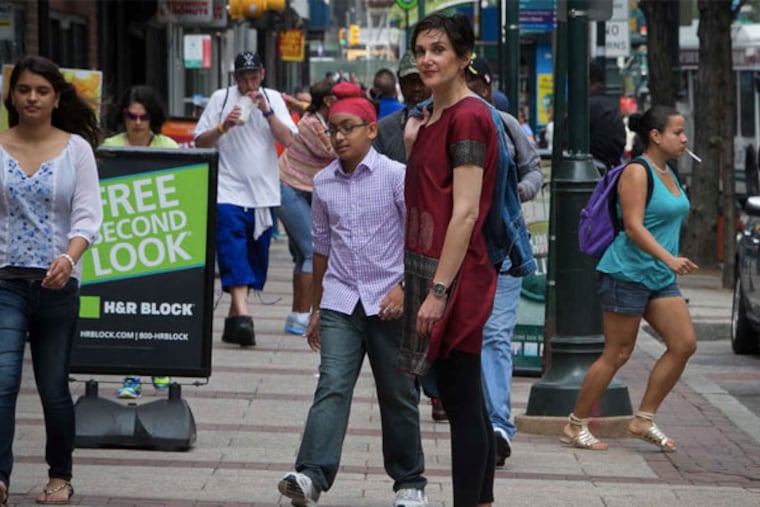
Once a year for the last decade, the city's designers and architects have come together for a weeklong festival of films, tours, open studios, talks, exhibitions, and art installations called DesignPhiladelphia. More or less synonymous with that festival is Hilary Jay, who cofounded it while running the Design Center at Philadelphia University and who managed it through moves to the University of the Arts and the AIA Philadelphia's Center for Architecture, where it's now based.
Recently, Jay, of Washington Square, left her job as director of the Center for Architecture and of DesignPhiladelphia. The festival will continue, with an eye to not just showcasing design but advocating for its improvement, said Rebecca Johnson, AIA Philadelphia's executive director. Jay spoke with The Inquirer about 10 years of DesignPhiladelphia, stepping down, and what's next.
Q: When you started this event, what were you hoping to accomplish?
A:
There were these silos, and we felt they could be broken down and there could be more integration and transformation possible if everyone was working together. . . . I also saw it as a civic vehicle for opening Philadelphia up to a national platform, if not international.
It was a time when there weren't a lot of festivals going on, and there were no other design festivals in the country. There was a precedent in design fairs. But this was about educating the public, professionals, and students; it wasn't a retail extravaganza. . . . Mayor Nutter came in and established the Office of Arts, Culture and the Creative Economy, and we were there ready to expose the amazing number of designers, makers, educators, and professionals this city had to offer to the world.
Do you think it's accomplished those goals?
I think it's well on its way.
I landed it at the Center for Architecture, which I think is the perfect place for it. I got an ArtPlace America grant with Asian Arts Initiative and Friends of the Rail Park to create a set of 10 installations on Pearl Street just north of Vine during DesignPhiladelphia. I think that's going to cement the idea of what design can be, and how important it is.
Design, to me, is a thread that passes through everything. The more people are aware of that, and feel empowered to make choices about the design they live with in their lives, the better our environment is going to be.
Why did it move to the Center for Architecture?
I realized the schools weren't really pulling their weight. They weren't showing the best of the best, and I felt like there were more opportunities in the community - there were more hidden gems. We put out a call and got a lot of interest. Young architects wanted to create events.
The big idea was to help people understand why design was so important in everyday life and get it as much on the street as possible, because there are an awful lot of people who are not acquainted with the idea of going to galleries and high-end stores. They feel intimidated by them.
So, what if we made it much more accessible?
How do you think the environment for design in the city has changed since you started out?
There are a lot more makers here now. There are people who tell me they came here because of DesignPhiladelphia, because there's the opportunity here, and people understand. South Philadelphia, Kensington, Francisville - there are so many areas that have come alive with design. There's a lot more interaction going on. There was a year where University of the Arts students did chalk crayons that were maybe four feet tall and gave them to a bunch of kids in Municipal Plaza, and these kids were drawing with them in the middle of the workday. It just brought joy to people. And that's a big part of it, too. It's not just educational. It's life-affirming.
Then why leave?
It's been 10 years. It was perfect timing. I think the community is passionate about it, and I have other things to do. I'm calling myself a cultural anthropologist. And I'm researching and seeing what's needed, what's next.
I've had the great fortune of several careers, reinventing myself several times. I was a jewelry designer in the 1980s. From there, I became a design and architecture writer. I got to start a design center at Philadelphia University. I was never trained to do anything I've done.
What's your hope for the future of the festival?
What I really wish and hope is that it can become more attached to Philadelphia, a way that people outside the city recognize Philadelphia as a place where design innovation and creation happen, and more people are drawn here because of their own passion for those things.
215-854-5053
@samanthamelamed