Capano recalled as 'an impossible client'
Three former attorneys say he ignored their advice in his trial for the death of his ex-mistress.
This story was originally published Friday, Oct. 22, 2004.
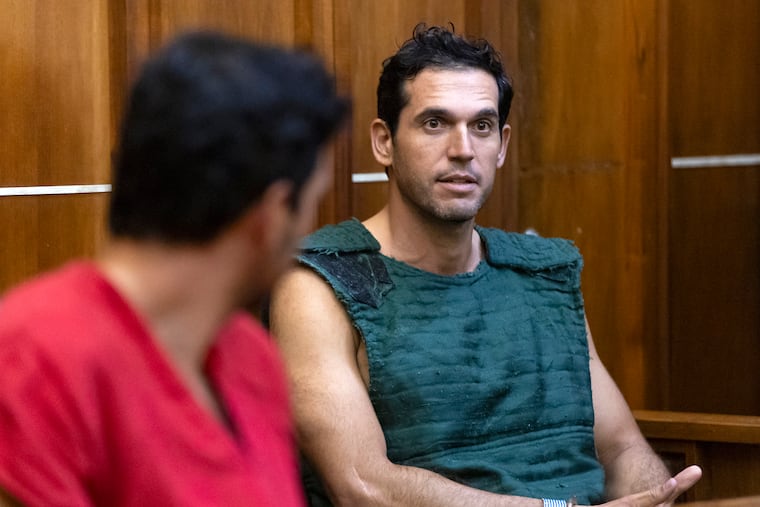
Defense attorney Eugene Maurer Jr. was asked yesterday if there came a time during the murder trial of his former client Thomas J. Capano when he realized he had "lost control" of the case.
Maurer, considered one of the top criminal lawyers in Delaware, shook his head ruefully.
"First of all, that assumes we ever had control," he said. "Tom was running the show from the start. "
Maurer was one of three former Capano defense attorneys questioned yesterday at a hearing on one of Capano's pending appeals of his murder conviction and death sentence.
Once a high-powered lawyer, Capano, 55, was convicted in January 1999 of murdering Anne Marie Fahey, his former mistress.
He has been on death row ever since.
Capano has claimed he is entitled to a new trial because his defense team - four prominent lawyers paid an estimated $1 million - failed to provide him with an effective and adequate defense.
Maurer, like the others, bristled at the allegation during yesterday's hearing.
Under questioning from Capano's current attorney, Joseph Bernstein, all three said Capano consistently ignored their advice.
Maurer, Joseph Oteri and John O'Donnell testified during the four-hour session before Superior Court Judge T. Henley Graves.
A fourth member of the defense team, Charles Oberly 3d, a former Delaware attorney general, testified last week.
Among other things, they said that Capano refused to answer their questions during pretrial prep sessions, that he took the stand in his own defense against their advice, and that he bickered constantly with the prosecutor in front of the jury.
Maurer called Capano "an impossible client. "
Oteri said he learned about 12 hours before he was to make opening arguments in the case that Capano intended to blame Fahey's death on someone else and claim it was an accident.
"This was the weirdest case I've ever been in," said Oteri, a Boston-based lawyer with more than 40 years' experience.
Oteri said that in meetings with his attorneys before the trial, Capano offered "scenarios" about what might have happened to Fahey, but never a clear explanation until he took the witness stand.
"How do you give an opening [argument] when you don't know what the defense is? " Bernstein asked.
"That's a good question," Oteri replied.
Oteri said he, too, urged Capano not to testify and said he accurately predicted that prosecutor Colm Connolly would devastate Capano on the witness stand.
Connolly's cross-examination was considered the pivotal event in the trial in which Capano had been portrayed as a controlling, manipulative, arrogant and self-centered individual who thought he could get away with murder.
Lawyers for both sides said they believed Connolly brought those traits out in front of the jury through his skillful questioning of Capano.
Graves is expected to rule sometime later this year.
Capano's appeal process, which could wind up in federal court, is expected to take several more years.
Fahey, a former appointment secretary for the governor of Delaware, disappeared in June 1996 after having dinner with Capano in Philadelphia.
Notes in her diary gave investigators the first hints of a secret affair she had been having with Capano, who had a wife and four daughters and was about 20 years old than she.
Contact staff writer George Anastasia at 856-779-3846 or ganastasia@phillynews.com.