Accused Shore dumper will not avoid trial
First, he tried to slit his wrists. Then he tried to buy a gun at a sporting-goods store. But Dr. Thomas McFarland's final "cry for help" was dumping a bag of medical waste into the waters at the Jersey Shore last summer, his attorney said yesterday.
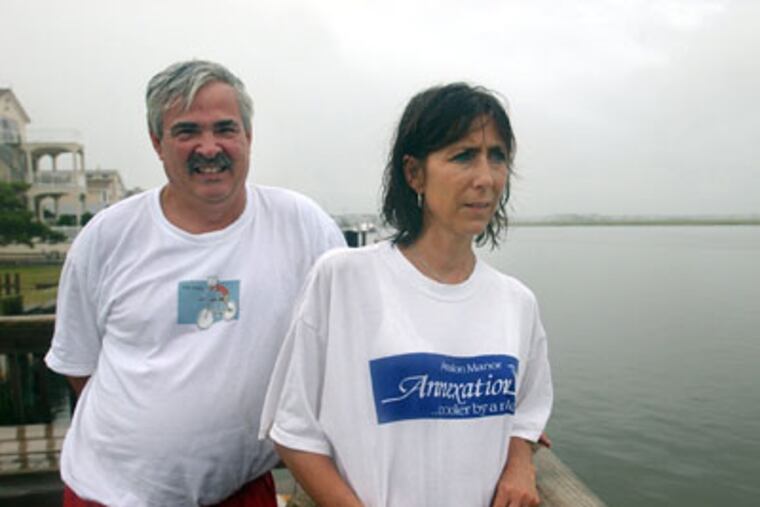
First, he tried to slit his wrists. Then he tried to buy a gun at a sporting-goods store. But Dr. Thomas McFarland's final "cry for help" was dumping a bag of medical waste into the waters at the Jersey Shore last summer, his attorney said yesterday.
Joseph Rodgers, McFarland's attorney, called the dumping on Aug 22 a "tragic, terrible mistake" made by a well-respected Main Line dentist who had grown depressed over his wife's chronic illness.
"This was entirely a manifestation of an undiagnosed and untreated psychiatric condition, not greed, not trying to save a buck," Rodgers said during a hearing in Cape May County Superior Court.
Superior Court Judge Raymond Batten acknowledged that recent years have been filled with "sadness" for McFarland, but he said that didn't outweigh the immediate and long-reaching damage he caused at the Jersey Shore.
Batten rejected Rodgers' motion to have McFarland, 60, of Wynnewood, entered into a pre-trial intervention (PTI) program for first-time offenders that would have allowed him to pay restitution and perform community service while avoiding a trial and possible jail time.
McFarland, who owns a waterfront home in the Avalon Manor section of Middle Township, Cape May County, was accepted into PTI initially but the attorney general's office rejected it in March. Rodgers said he plans to appeal Batten's decision.
McFarland, whose dental license is suspended, faces up to five years in prison and $125,000 in fines if convicted.
"I think the judge made a mistake," Rodgers said after the hearing.
On the night of Aug. 22, McFarland took his Boston Whaler out into the waters of Townsends Inlet, near the Ocean Drive bridge, and dumped nearly 250 dental needles, amalgam capsules, cotton swabs and other medical debris into the water. Medical waste began washing up in Avalon the next day, forcing officials to close the beach for five days.
McFarland claimed to be suicidal when he surrendered to Avalon police in September.
On Thursday, officials in Avalon issued their final tally for the security and clean-up costs incurred: $70,104, which Rodgers agreed was restitution his client owed.
Batten, however, said the true costs of McFarland's actions were "inestimable."
Rodgers had argued that the prosecution was using a state medical-waste law, which was enacted after large amounts of waste washed ashore repeatedly in the '80s, that was meant to go after large corporations that habitually broke the law.
"This wasn't the McFarland Medical Waste Company, dumping for six months to save money in its 401(k)," he said.
Rodgers suggested that McFarland's prosecution was politically motivated, a way for officials up for election to pin a "gold star" on their lapels for prosecuting a polluter. He declined to elaborate further.
Deputy Attorney General Edward Bonanno said McFarland's actions, regardless of their motivation, undercut two decades of stringent work by the state to keep beaches clean.
"It has taken a long time for people to appreciate and realize the beauty and grandeur of our beaches, and people don't have to worry about being stuck by a needle or hit by garbage," he said.
Joanne McFarland sat in the courtroom, staring at the floor, as Rodgers recounted how her cancer had sent her husband's mental health adrift. *