Defense attorney pounces on government's star witness
Jack McMahon repeatedly called ex-narcotics cop Jeffrey Walker a thief and a liar.
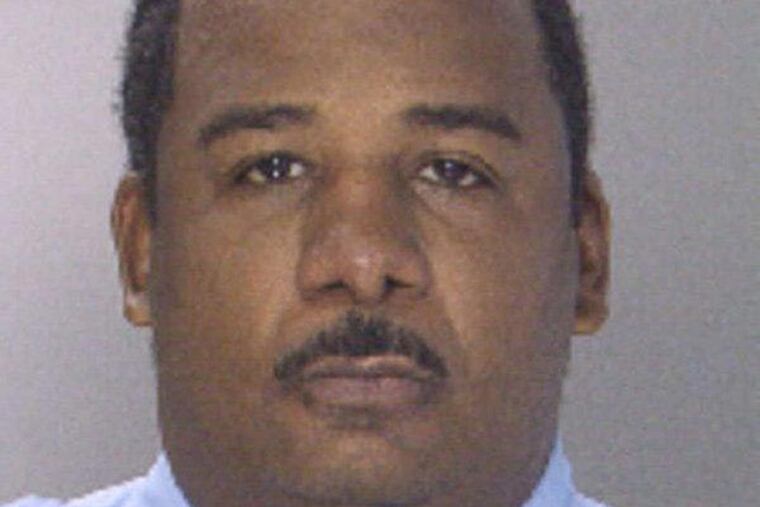
VETERAN DEFENSE attorney Jack McMahon, known for being aggressive and combative, quickly pounced at the outset yesterday in his cross-examination of the government's star witness, ex-narcotics cop Jeffrey Walker.
"I'd appreciate it if you could look at me when we talk," McMahon told Walker after greeting him.
"Sure, no problem," said Walker, 46, who has been in custody for almost two years after his arrest in an FBI sting in May 2013.
McMahon, the attorney for Brian Reynolds, one of six ex-narcotics cops on trial, accused by the feds of robbing suspected drug dealers, has been the leadoff hitter on the defense team, the first of the six defense attorneys to cross-examine all witnesses.
He swiftly launched into Walker's criminal past, repeatedly calling Walker a "thief" and "liar."
"You told us [Tuesday] that your thievery started in the 16th District," McMahon told Walker.
Walker agreed, saying he was then in his mid-20s and five years into his police career, which began in 1989. He said he was 44 when he was arrested by the FBI.
"So, basically you've been a thief and a liar from the '90s all the way up until you got arrested, correct?" McMahon asked. "So you've been a historical liar, right?"
"I lie," Walker readily admitted.
Throughout his all-day cross-examination, McMahon tried to show that Walker - who began cooperating with the feds after his arrest - had been stealing and lying on his own, and that his six ex-colleagues did nothing wrong.
McMahon tried to show that Walker's narcotics squad - which Walker said was led by defendant Thomas Liciardello - was aggressive in a good way.
"He [Liciardello] worked at cultivating sources and informants and information so that he could do his job, that is, getting the drugs and the guns and the money off the street, did he not?" McMahon asked Walker.
"Oh, we were getting the drugs, the guns and the money, we were getting that, but we were also stealing money, too," Walker, dressed in a forest-green prison jumpsuit, replied in a calm voice.
McMahon also repeatedly brought up the idea that supervisors were at the places searched by the ex-cops on trial, trying to show that the higher command approved of what the six ex-cops did.
To that, Walker basically said that supervisors were at some scenes, but were not present at specific times or places of robberies.
Referring to Walker's testimony Tuesday about how he had gradually felt isolated from his squad, McMahon suggested that the reason for Walker's being ostracized was because he began arriving at his job drunk and was sleeping during work surveillances.
"I don't know . . . why I was being ostracized . . . they were still using me when they needed me to do something," Walker contended.
In reviewing the different "episodes" in the feds' indictment against the six ex-cops, McMahon questioned Walker's version of events and pointed out some inconsistences between his testimony this week and what he previously had said.
For instance, Walker told the FBI that he found $50,000 in a Timberland shoebox in a basement dryer of a man's home on Nedro Avenue in Ogontz in connection with a drug investigation. Yesterday, Walker, who said he had split what he found with Liciardello, said: "I did not count any of that money." He said he assumed it was $50,000 because "it was a lot of money."
Asked by McMahon what he spent money on, Walker replied: "Women, just living the lavish life." He said he had bought expensive items for his then-wife or girlfriend and suits for himself.
"I was a shopping hawk. I was going around shopping, shopping, shopping," said Walker, who faces cross-examination by the other five defense attorneys today.