Sayre P. Schatz, 92, economics expert
Sayre P. Schatz, 92, of Melrose Park, an internationally known expert on African economics and professor emeritus of economics at Temple University, died Thursday, May 7, of Alzheimer's disease at the Quadrangle in Haverford.
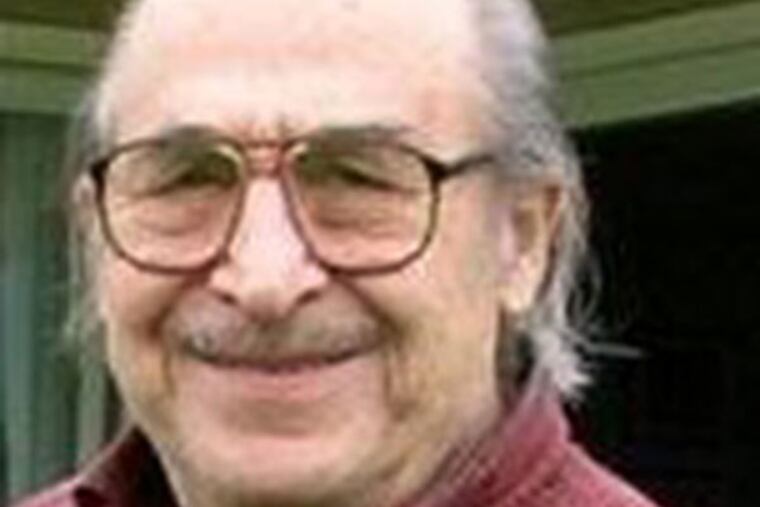
Sayre P. Schatz, 92, of Melrose Park, an internationally known expert on African economics and professor emeritus of economics at Temple University, died Thursday, May 7, of Alzheimer's disease at the Quadrangle in Haverford.
A World War II veteran, Dr. Schatz was drawn to the field of African economics in the 1950s, when few scholars were interested in the subject. He went on to author several books and dozens of articles on the topic, many of which were translated into other languages.
The pioneering work led him to move with his family to Nigeria shortly after that country became independent of the United Kingdom in 1960. At first he was a researcher, and he then served as acting director of the Nigerian Institute for Social and Economic Research.
Later, he went back as an adviser to the Nigerian government. His research and advisory work also extended to Ghana, Liberia, Sierra Leone, Kenya, Uganda, Ethiopia, Tanzania, Zimbabwe, and Curaçao.
Early in his career, Dr. Schatz taught at several universities. He was especially proud of his years at Lincoln University, where he was voted "outstanding professor" by students.
During the McCarthy era of the 1950s, Dr. Schatz refused to disavow Marxist theory. As a result, he faced the threat of termination from Lincoln, which he successfully opposed, his family said.
He became an economics professor at Temple University in 1967 and taught there until retiring in 1992. After Temple, Dr. Schatz worked for eight years as a visiting professor at the Institute of African Studies at Columbia University.
Born in Philadelphia into a working-class family, Dr. Schatz graduated from the University of Pennsylvania, and earned his master's and doctoral degrees from the New School for Social Research in New York City.
"He never forgot his working-class roots, and his profound sense of economic injustice powered his passion for researching and speaking out on behalf of Africa's poor," his family said in a tribute.
His searing critiques of World Bank policy and conventional development policies toward Africa often put him at odds with mainstream economists and government officials, as well as other scholars on the left. "He was a great believer in just saying what was right," said his son, Benjamin.
Dr. Schatz's concern for social justice led him to take leadership roles with the American Association of University Professors, and to become active in local Democratic Party politics. He moved to the Quadrangle from Melrose Park in 2000.
Dr. Schatz lived intensely, learning sports such as scuba diving, tennis, and windsurfing in his 50s, 60s, and beyond, his family said. His other passions included classical and jazz music, incessant punning, and eating chocolate.
Besides his son, he is survived by his wife of 67 years, Letta Saroff; daughter Judy; and three grandsons.
A Celebration of Life is to be held at 2 p.m. Friday, July 3, at the Quadrangle, 3300 Darby Rd., Haverford. Dr. Schatz donated his body to science.
Donations may be made to Doctors Without Borders via www.doctorswithoutborders.org/, or to the American Civil Liberties Union via www.aclu.org/.
610-313-8102