Mark Segal dug a grave for bigotry and danced upon it
The nationally known LGBT leader spills (almost) all in his memoir.
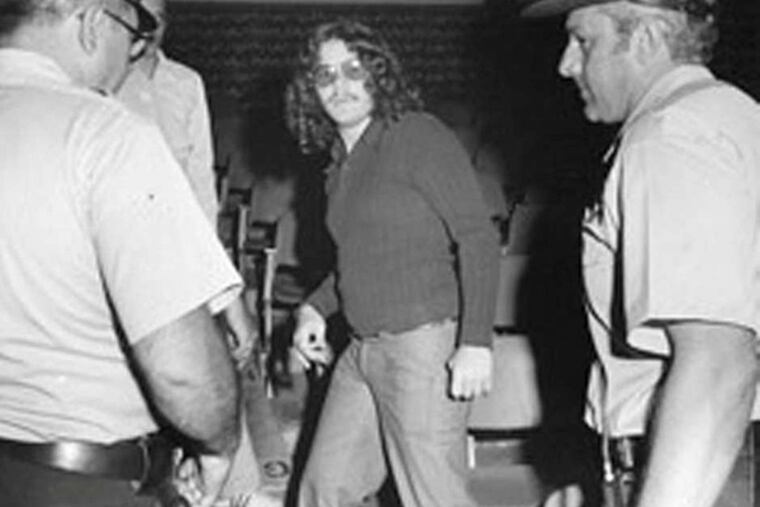
IN HIS MEMOIR, without him saying it - maybe not even realizing it - gay icon Mark Segal is transformed from a long-haired, "left-wing pinko fag" social outcast into a bald, suit-wearing, political-power insider. A national LGBT leader, the South Philly-born Segal was at the 1969 Stonewall riots in Greenwich Village, the Bunker Hill of gaydom.
The supporting cast in And Then I Danced: Traveling the Road to LGBT Equality includes Pennsylvania Gov. Milton Shapp, an early supporter; Walter Cronkite, a zap victim; Ed Rendell; Tom Corbett; Patti LaBelle; Vince Fumo; John Street; Elton John; Cecil B. Moore; Morton Downey Jr.; Andy Warhol; even Frank Rizzo. The 302-page, $16.95 book, to be released Oct. 6, is part personal, part gay history and a guidebook to four decades of Philadelphia politics.
In its pages, Segal, 64, admits he occasionally has been wrong, something he has never done to my face in the 40 years I have known him. (For the record, he denies never admitting he's wrong.)
We met in the early '70s, when he telephoned me after some gays were stirred up by a positive review I gave a Bette Midler concert.
I described some in the audience at the glittering Academy of Music in terms the Divine Miss M used: fags and hags and queers and queens. I assumed the spirit of concertgoers themselves.
Quickly, offended gays organized a harassment campaign, including nightly 4 a.m. calls to my home. (I had a listed number.)
Before that launched, Segal called and simply asked where I was coming from.
"Why should gays be the only ones to have fun?" I replied.
Segal laughed and accepted my explanation. He became my first (openly and loudly) gay friend, and soon a dear friend.
The anecdote illustrates Segal's bifurcated psyche: While an unyielding partisan, he tries the polite path first - and has a sense of humor, able to laugh at himself and able to get even opponents to laugh with him.
As how he got Bob Brady, now the congressman, to laugh after Segal interrupted City Council proceedings and then-President George X. Schwartz ordered sergeant-at-arms Brady to remove Segal. Brady dutifully carried him outside.
A group of nuns happened to be walking by. Segal immediately shrieked, "I'm melting! I'm melting!" and jumped toward Brady, who dissolved into laughter.
Not laughing, however, was Walter Cronkite, when Segal, then a Gay Raider, invaded the sanctuary of his CBS News studio and flashed a sign - "Gays Protest CBS Prejudice" - on his evening broadcast.
Segal invaded many live national broadcasts, usually followed by a rough ride to jail and then invitations to guest on other TV shows. The "zaps," as he called them, were publicity stunts designed to bring attention to gay issues.
The zaps eventually led to meetings with the networks about stereotypical portrayals of gays on TV, and to a warm friendship between the anchor and the activist.
During the early years of his activism, which paid nothing, Segal was spooning dinner out of tin cans. He kept alive by driving a cab, odd jobs and welfare.
His goal then, and after returning to Philly, was "fighting to end the invisibility" of gays, most of whom were then cowering in the closet, says Segal, a short man with a soft nose and a voice that rockets to soprano when he gets excited. Imagine a pit bull with a parrot's call.
Around the time he was thrown out of Council by Brady (Segal was trying to get a city ordinance banning discrimination against gays), he chained himself to a Christmas tree in the City Hall courtyard. Mayor Rizzo had an aide bring him up to his office against the advice of some staffers who warned against meeting with a gay nuisance. "I like this kid," Rizzo said. "He's got balls."
It took balls to fight not just the straight world, but even gays who felt he was pushing too hard, destroying their comfort zone. Segal's sometimes outrageous tactics and supreme self-certainty are not universally praised.
Some detractors call him an egomaniac who doesn't share as much credit as he should, but none was willing to be named. One feared that Segal would be "vindictive." Others didn't want to sow "division" in the gay community.
Segal spent part of his youth in South Philly's Wilson Park project, grew up poor but loved by his parents, Martin and Shirley. Not so much his older brother, Larry, who receives cursory mention in the book. Decades later, Segal took into his heart and home Larry's estranged son, Jeffrey, a troubled youth, because he was family.
Family would include Segal's estranged longtime partner, briefly described but not named in the book. There's drama and trauma I need not describe.
Growing older hasn't slowed him. On July Fourth 2005, he organized the Elton John concert on the parkway. That was huge, both as headache and entertainment, but was surpassed in 2014 when the John C. Anderson Apartments, on 13th Street near Spruce, the nation's first gay-friendly senior housing, opened here. This was his greatest achievement.
Segal pushed, nagged and wheedled as never before to get it funded. At the dedication, his friend Rendell said that Segal was more persistent than a badger.
"He is a pain in the behind sometimes, and it turns out people do it because they want to get rid of him," says Nurit Shein, CEO of the community-health Mazzoni Center, adding that at other times Segal "convinces people."
As a journalist, Segal has won many awards for his columns in the Philadelphia Gay News, the influential weekly he owns. He has traveled to Cuba and Russia and Egypt to cover the gay community, its triumphs and its problems.
He has used the newspaper to push his agenda, which he believes is synonymous with the gay agenda. Some disagree, but not for the record. Segal repeatedly called John Street a "homophobe" in print until Street yielded on gay matters.
"He was a homophobe," Segal insists in an interview. "We wanted to make a symbol of him."
He knows the importance of symbols, but even more so the necessity of legislation.
With gay marriage now legalized, one major gay initiative remains: banning discrimination against gays across the board, as it is in Philadelphia, where Segal's clout is centered. Passing such laws, and seeing that they are enforced, is the next struggle.
The book's title, And Then I Danced, suggests the closing of a circle. Forty years after he got kicked off Ed Hurst's "Summertime on the Pier" TV show for dancing with another guy, Segal and his newlywed husband, Jason Villemez, danced at President Obama's White House to the U.S. Marine Corps band.
For insider Segal, it will not be the last dance.
Email: stubyko@phillynews.com
Phone: 215-854-5977
On Twitter: @StuBykofsky
Blog: ph.ly/Byko
Columns: ph.ly/StuBykofsky
