At Carlisle, Seneca dancers follow ancestors' footsteps
During the 39 years the Carlisle Indian Industrial School was in existence, 628 students from the Seneca Nation would walk through its gates. Approximately 50 Seneca visitors from the Cattaragus and Allegany Reservations in western New York came recently to walk in their footsteps. And in a location where American Indian students were once not allowed to express their native traditions, the Seneca visitors came to dance.
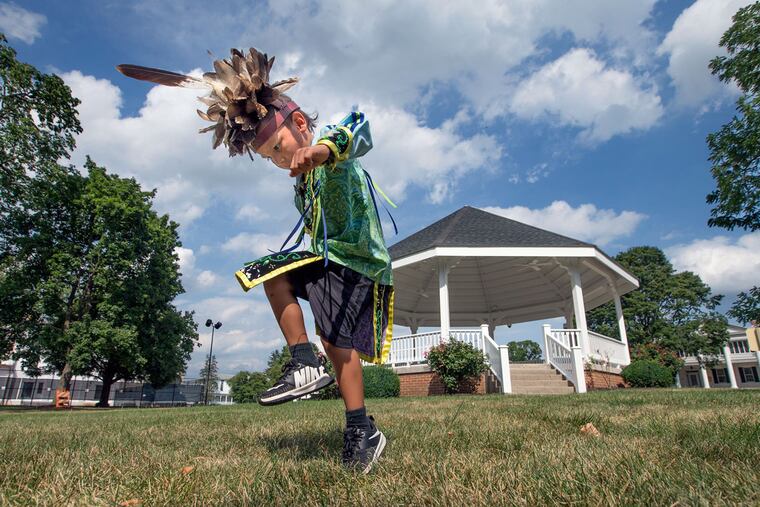
During the 39 years the Carlisle Indian Industrial School was in existence, 628 students from the Seneca Nation would walk through its gates. Approximately 50 Seneca visitors from the Cattaragus and Allegany Reservations in western New York came recently to walk in their footsteps. And in a location where American Indian students were once not allowed to express their native traditions, the Seneca visitors came to dance.
"Our social dancing is to bring positive energy, good feelings," said Sheldon Sundown who organized the dancers. "A lot of our children were put here and taken away from their parents, and things weren't always in a good way. . .We're here to come in a positive way and bring positive energy. And let the people from the past who are still here at Carlisle know we are not the ones that put them here. We are here to visit them and to honor them."
And then the group visited the cemetery where just under 200 former students lie buried, including Seneca students Albert (buried as Albert but could be Alfred according to Seneca records) Jackson and Robert Scott. Blaine Tallchief, one of four head Faithkeepers of the Coldspring Longhouse, performed the ceremony. "We always like to honor our ancestors and there's a lot of them here and a lot of them that are still here in spirit," said Tallchief. "We say Deyago'nigöëgwa't. We are going to lift their minds and lift their spirits. . . This was a horrific thing for our people."
Maurice "Moe" John, president of the Seneca Nation reflected on the day, "I just hope that by having a couple of dances and by looking at the graves today, we can let our people know, let the spirits know that we love them and we want to bring them home."