Recognizing African Americans in Abington Friends cemetery
Dave Wermeling, caretaker of the Quaker cemetery behind the Abington Friends Meeting House in Jenkintown, was looking through ancient burial records when he noticed the designation "COL" next to dozens of the names.
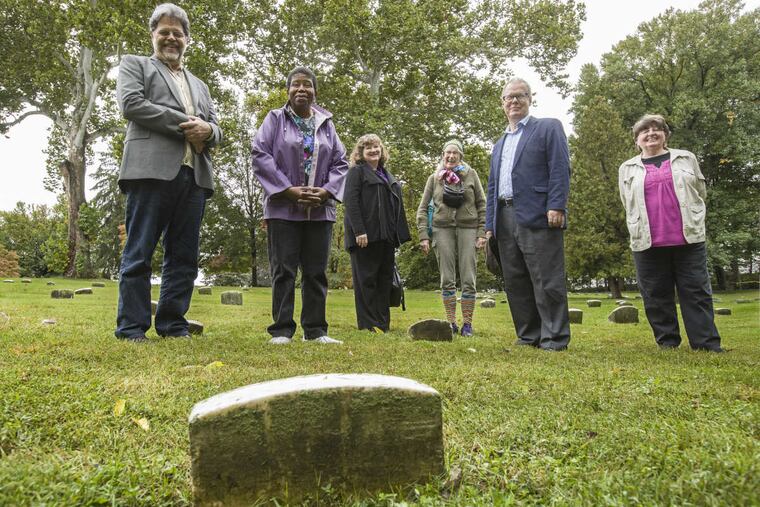
Dave Wermeling, caretaker of the Quaker cemetery behind the Abington Friends Meeting House in Jenkintown, was looking through ancient burial records when he noticed the designation "COL" next to dozens of the names.
Researching further, Wermeling was surprised to learn that it stood for "colored," which meant that 66 people buried in unmarked graves along Jenkintown Creek between 1851 and 1925 were of African descent.
The discovery resonated so deeply within the Abington Meeting that members recently erected a bronze plaque at the burial ground entrance to "acknowledge that unmarked gravesites in this sacred place contain the remains of early Quakers, settlers, people of African descent and other persons whose race, creed and identity are known only to God."
On Saturday at 2 p.m., the plaque will be dedicated at a Friends Memorial Meeting followed by an interdenominational tribute concert, including the singing of "Sometimes I Feel Like a Motherless Child," "Lift Every Voice and Sing" (a.k.a. "The Negro National Anthem") and the Underground Railroad classic, "Follow the Drinking Gourd."
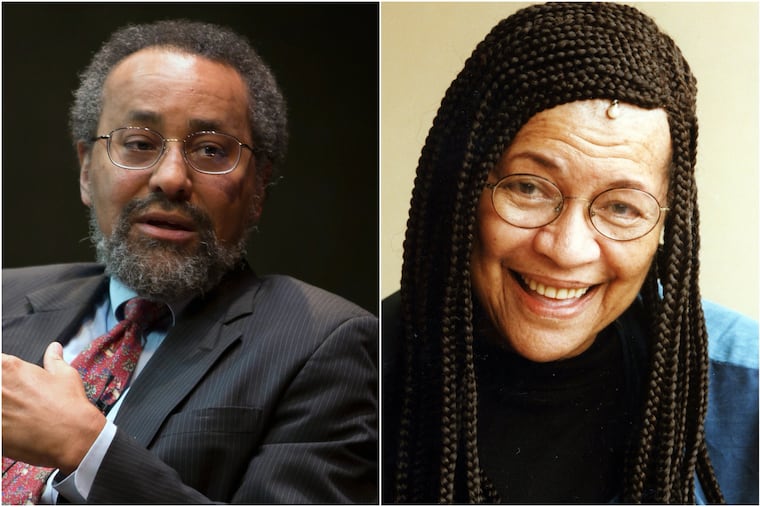
"How amazing this is!" said Avis Wanda McClinton, an African American member of the Upper Dublin Meeting who also attends the Abington Meeting. "Slave-owning Quakers built this meeting, and now their descendants thought it was a wonderful idea to honor my ancestors.
"This is rocking the world of Quakerism, this type of standing up at this time, when black people are being murdered and blood is running up and down the streets," she said Sunday. "The founding fathers of Quakerism were slave owners. That's what makes this outstanding and remarkable."
George Schaefer, clerk of Abington Meeting, said: "We are seriously looking at historical racism within the Society of Friends and how to remedy that. Our concern for finding ways to address historical racism is a way to heal."
Quakers in the Abington area were involved in sheltering runaway slaves on the Underground Railroad, he said, but did not welcome African Americans as members of the Abington Meeting.
Today, Schaefer said, "We have several African American families who are active in our Meeting. As a religious society, we are really wanting to become more diverse."
Loretta Fox, secretary/bookkeeper of the Abington Meeting, said one of the things she finds attractive about Quakerism as a religion is that "we don't have the answers but we raise the questions. Abington Meeting people are not a community that's complacent, just patting ourselves on the back, saying we're doing the right thing. There is real self-examination. There are questions about what we still need to do."
A couple of years ago, McClinton, on a personal mission to find unmarked burial sites of African American slaves in Quaker graveyards, attended an Abington Meeting and met the always colorfully dressed Peace and Social Concerns Committee member Rosemary Bothwell. "She looked like a box of Crayola crayons," said McClinton. The two Friends quickly became friends.
After Bothwell and Abington Meeting member Lowell Booth researched 19th- and early 20th-century Quaker records at Swarthmore Friends Historical Library, and discovered who was buried in the unmarked graves at Abington, Bothwell was inspired to pay for the new burial ground plaque.
Earlier this month, Schaefer informed the Abington Meeting that the people of African descent buried in the cemetery's unmarked graves "are part of our family. They are a part of our common ancestry, part of the ground we stand on. For me, this acknowledgment is one way to begin to heal the loss and damage to our collective soul caused by racism, ignorance and fear."