Snagged gear led to Cape May sinking, survivor believes
CAPE MAY, N.J. - Jose Luis Arias knew it was time to abandon ship.
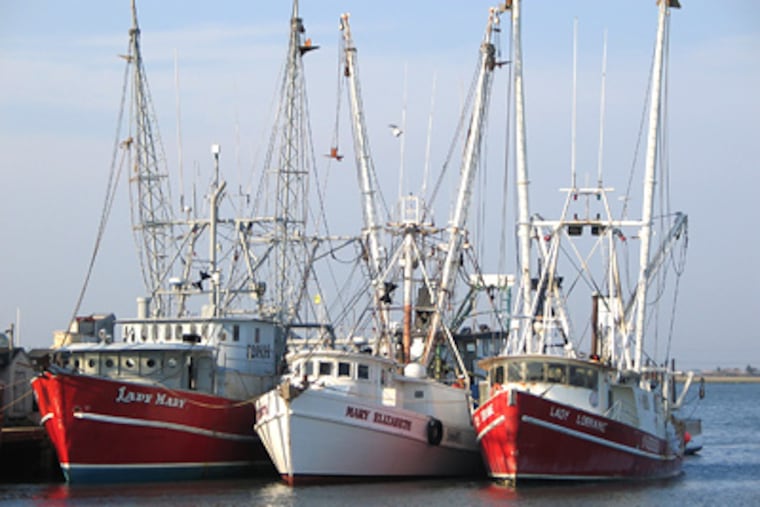
CAPE MAY, N.J. - Jose Luis Arias knew it was time to abandon ship.
The scallop boat he and six crew members were on was listing 30 degrees to the left, 12-foot waves crashed against the sides, water spilled onto the deck, and the captain seemed unable to control the vessel. The motor strained, but the Lady Mary wasn't moving.
When water reached the engine room, knocking out all power, Arias jumped into the roiling sea and floated on his back so water would not seep into the survival suit he had donned seconds before.
He furiously paddled away from the boat, fearing it would suck him under when it went down.
He spied an eight-foot board from the boat that was now floating. He grabbed it and clung to it as he watched the top of the boat's rigging slip beneath the waves.
For two hours, he clung to the board in the icy darkness. The voices he had heard yelling in desperation were now silent.
After the sun rose, Arias heard a helicopter overhead.
"It was a great joy," he told a panel today. "I felt like I had a chance to be born again."
Arias was the only one of the Lady Mary's seven-man crew to survive the vessel's March 24 sinking about 60 miles off Cape May. He testified before a joint Coast Guard-National Transportation Safety Board hearing on the disaster.
During his testimony, Arias recalled details that support a theory offered yesterday by the lawyer for the boat's owner - that the Lady Mary's fishing gear may have become entangled with something and pulled the boat down.
In the three to four minutes after being jarred awake by a crew member screaming that the boat was going down, Arias noticed that the ship's engines were fully engaged.
"The engine was running but the boat seemed like it was at a standstill," Arias testified. "The boat wasn't moving. The captain was trying to maneuver it, but it didn't seem like it was going anywhere."
In other testimony, a toxicologist testified that autopsy results showed the captain and one of the crew had used marijuana at some point before the accident.
Dr. Anthony Costantino, who runs a drug screening facility in Warminster, said Capt. Royal Smith Jr. and Timothy Smith both had marijuana in their systems.
But the doctor could not say how recently the brothers had used the drug, or whether it might have impaired them at the time of the sinking.
Stevenson Weeks, a lawyer for the Smiths' father, said the captain's level was low enough to have been caused by second-hand smoke from Tim Smith's use.
Weeks said authorities have no evidence that either man was impaired, but added that illegal drugs have no place on a fishing boat.
Arias said the boat had no mechanical problems on the morning it sank. The captain was capable, if somewhat inexperienced, he added.
"There were a couple of times during rough seas that he had a little bit of trouble maneuvering," Arias said.