Experimental HIV/AIDS vaccine offers hope
Scientists and activists reacted with measured enthusiasm today to the news that, for the first time ever, an experimental vaccine appears to have provided mild protection against the HIV/AIDS virus.
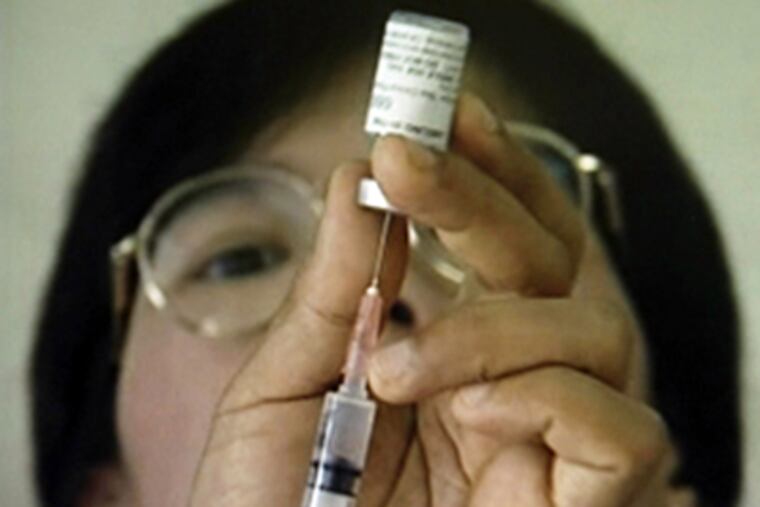
Scientists and activists reacted with measured enthusiasm today to the news that, for the first time ever, an experimental vaccine appears to have provided mild protection against the HIV/AIDS virus.
The immunization - a combination of two vaccines that had failed individually in previous studies - was tested against a placebo in more than 16,000 young adults in Thailand.
After three years, 51 vaccinated volunteers contracted HIV, compared to 74 who got placebos, making the vaccine 31 percent effective.
Researchers can't yet explain why the vaccine showed any effectiveness at all. Nor can they say why it failed to bolster a key theory: that vaccinated people who became infected would have low amounts of virus in their blood, a sign of a partial immune response.
Instead, vaccination had no affect on viral loads.
"This is an important step forward because it's the first positive signal of any degree of efficacy," said renowned AIDS researcher Anthony S. Fauci, director of the National Institute of Allergy and Infectious Diseases, one of the sponsors of the trial. "But this is a humbling finding, because we may be looking at an that hasn't really been on our radar."
Jerome Kim, a researcher at the U.S. Military HIV Research Program, another trial sponsor, echoed Fauci: "We think the result is scientifically important, but we have to temper our enthusiasm."
Some scientists said their enthusiasm will be tempered by skepticism until they scrutinize the trial data for possible flaws.
Robert Doms, chair of the microbiology department at the University of Pennsylvania School of Medicine, noted that the results could be skewed by subtle, hard-to-control differences in the vaccine and placebo groups - especially since the effectiveness was modest.
"Were the groups really identical in terms of risk factors?" said Doms. "What if, by chance, more people in the control group engaged in more high-risk sexual activity?"