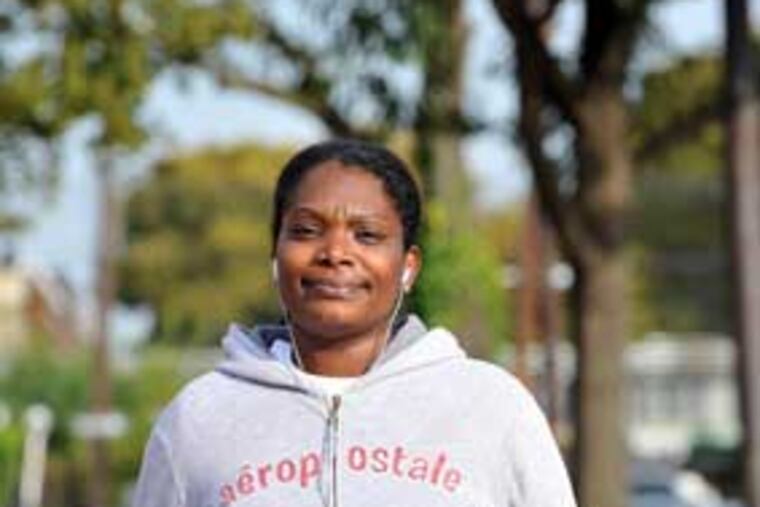
Nakida Jones couldn't believe her eyes.
At a corporate screening for high blood pressure at her nursing home job, her reading on the monitor was 176/110.
For too long, Jones, 35, mother of two daughters, had forsaken the signs: a family history of hypertension, and her own diagnosis two years ago, for the convenience of fried, take-out foods, and the comfort of her couch after a long day.
176/110. A cold wake up call.
Jones' screening two weeks ago was part of an effort by the Heart Healthy Philadelphia campaign to spread awareness and change unhealthy, potentially deadly behaviors.
The campaign culminates tomorrow with a health fair outside of City Hall.
It has been promoted by startling facts:
Heart disease is the #1 killer of all Americans.
82% of heart disease is preventable.
African Americans, like Jones, and Latinos are at a greater risk.
In Southeastern Pennsylvania, 1 in 3 adults has high blood pressure; 1 in 10 has diabetes.
"One thing has to do with our lifestyles," said Dr. Robert Barchi, president of Thomas Jefferson University. "The food we eat, the lack of exercise, the pressure we're under - all of that contributes to high blood pressure. Two, most people don't know they have elevated blood pressure, so they're not treating it. It doesn't present symptoms unless they're catastrophic. That's why it's called the silent killer."
Blood pressure is the force of blood against the walls of arteries, and it rises and falls during the day, normally at a level less than 120/80. When blood pressure stays elevated over time, it is called high blood pressure, or hypertension.
Doctors consider anything over 121-139 / 81-89 to be pre-hypertension; greater than 140/90, hypertension.
High blood pressure is dangerous because it overworks the heart, and contributes to hardening of the arteries, increasing the risk of heart disease, stroke, congestive heart failure, kidney disease, and blindness.
Barchi said the Heart Healthy campaign aims to give people the opportunity to have their health screened, to know if they have high blood pressure, but more so, to learn steps, involving diet and exercise, to live healthier lives.
On Dilworth Plaza, with a backdrop of music, from 8 a.m. to 3 p.m., the health fair will offer free cardiovascular screenings - including blood pressure, blood glucose and cholesterol, cooking tips, heart-healthy recipes, weight-loss advice, fitness demonstrations, and prizes.
The campaign is a partnership between Thomas Jefferson University and Hospitals, the city, businesses and community organizations.
The day of her screening, Jones, lost in hectic pace of her morning, forgot to take her blood pressure medication. Now, breakfast serves as a reminder.
Since the screening, she's made an appointment with her doctor to check the dosage of her medicine, and to find a nutritionist. At work, she opts for stairs over the elevator. And every other day, after work, she goes for an evening stroll in her Nicetown neighborhood.
"It makes me feel a lot better," Jones said of her new routine. "I don't feel as tired throughout the day. And I feel good knowing I'm doing something for my heart."
Jones plans to attend the health fair to have her blood pressure checked, hopefully with a few friends in tow.
"Hypertension is such a danger," she said. "You can walk around with it, and not know that you have it, until it may be too late."