Franklin Institute prize to Personal Genome Project
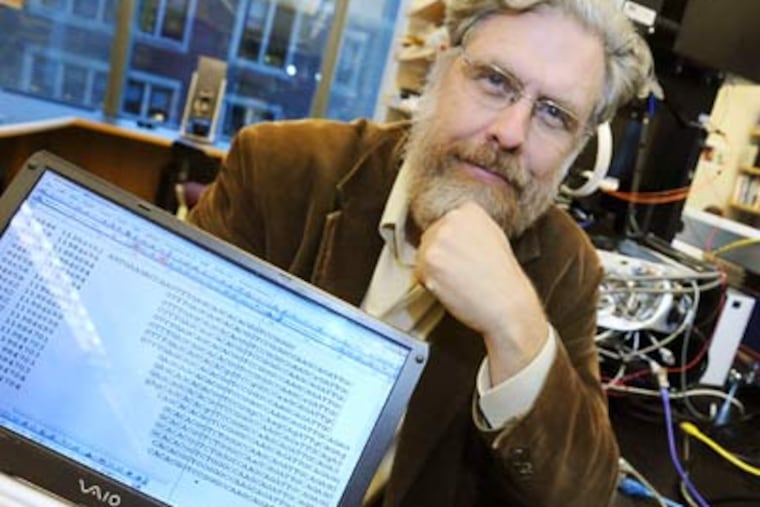
Like many visionary ideas, George Church's notion of personal genetic sequencing seemed unrealistic at first, if not downright crazy.
Just 10 years ago, the government had just spent $3 billion to read the full genetic codes of a small handful of volunteers as the basis of the Human Genome Project. That took armies of researchers most of the 1990s to accomplish. It seemed a bit unwieldy to imagine doing this for individual patients.
But Church, a geneticist at Harvard Medical School, insisted that it would not only be possible but would bring the benefits of the genome project to real people, allowing doctors to predict future illnesses and make otherwise difficult diagnoses.
In 2008, he announced the launch of what was called the Personal Genome Project - an effort to make genomic sequencing more accessible. It's starting to pay off - doctors even saved a toddler's life by sequencing his entire genome.
On Monday the Franklin Institute named Church the 2011 winner of the Bower Prize for Achievement in Science - a $250,000 award bestowed each year in April.
Six other scientists were named recipients of Franklin Medals for individual fields. The Franklin Institute has been giving these awards since 1824 - and past winners include Albert Einstein, Orville Wright, and Marie and Pierre Curie.