At some SEPTA spots, the gig is up
For buskers in Philadelphia train stations, yesterday was the day the music died. Or at least the day the music was marched off to "designated performance areas."
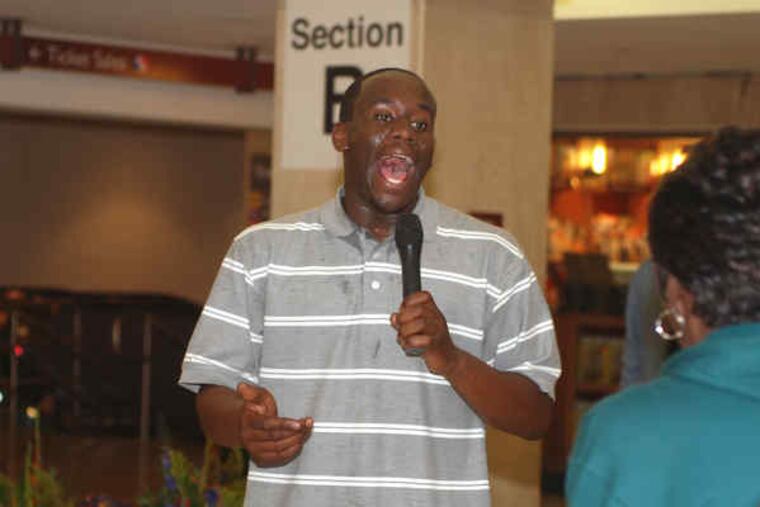
For buskers in Philadelphia train stations, yesterday was the day the music died.
Or at least the day the music was marched off to "designated performance areas."
Under new rules announced by SEPTA, musicians and other entertainers will be restricted to seven specified areas in Suburban and Market East Stations, where they will be allowed to perform for three hours a day, if they get a SEPTA permit, which must be renewed monthly.
One musician or group per DPA, please (and no more than four people in a group).
The move was prompted by complaints from riders and merchants in the stations, SEPTA customer service chief Kim Scott Heinle said yesterday in announcing the new rules.
Signs will go up immediately at three designated areas in Market East and four in Suburban Station, Heinle said, but the new limits won't be enforced until Aug. 3.
Starting Monday, though, all performances must be acoustic only. Electronic amplifiers will be banned.
"The issue we've been hearing about is these battles of the bands," said SEPTA space facilities manager Peter Hansen, who will issue the permits for buskers. "One will turn up the sound, then the other will turn it up louder, and soon you can't hear anything."
"We don't dislike the musicians," Hansen said. "But we're a train station first and a performance theater second."
SEPTA has tried, and failed, in the past to keep musicians from playing in its stations. And a lawyer who has successfully sued SEPTA on behalf of itinerant musicians said yesterday that he may be back in court.
"We're going to watch this very carefully and make a decision based on how SEPTA attempts to enforce it," said Paul M. Messing, a local civil rights attorney.
"The First Amendment protects the right of street musicians to play in public places," Messing said. "I'm very disappointed that SEPTA chose to implement this kind of unnecessary restriction on the right of musicians to perform in public areas."
Messing twice represented Byard Lancaster, a saxophonist who was cited by SEPTA police for playing in Suburban Station in 2001 and 2002. Both times, Lancaster won cash settlements from SEPTA.
Evan Shingles, an attorney who represented Anthony Riley, a musician who was arrested for singing in Rittenhouse Square and who has had run-ins with SEPTA police for performing in Suburban Station, said the new rules are "a double-edged sword."
Shingles said he had First Amendment concerns about the restrictions, but he said "some of these musicians want some order created out of the chaos down there."
He said Riley, who successfully fought in court for the right to perform in Rittenhouse Square, sometimes had problems with other performers in the train station who would try to compete by drowning him out.
"Anthony wants to be able to sing unmolested down there."
A regular performer in Suburban Station, David "C-Scale" Porter, of South Philadelphia, said he hadn't gotten any complaints about his music, but he said he would comply with the new rules and get a permit.
"If the public is complaining, I guess it's a good thing. But I don't get that feeling," Porter said. "I love playing for the people, and I get good feedback."
Then, on his guitar and harmonica, he broke into a rendition of "Don't You Worry About a Thing."
Read about the buskers of Suburban Station at http://go.philly.com/buskerEndText