Phila. taxi strike ends after one day
Leaders of Philadelphia's striking taxi drivers ended their 48-hour strike a day early yesterday but promised to continue fighting problematic new high-tech dispatch and credit card systems mandated by the Philadelphia Parking Authority.
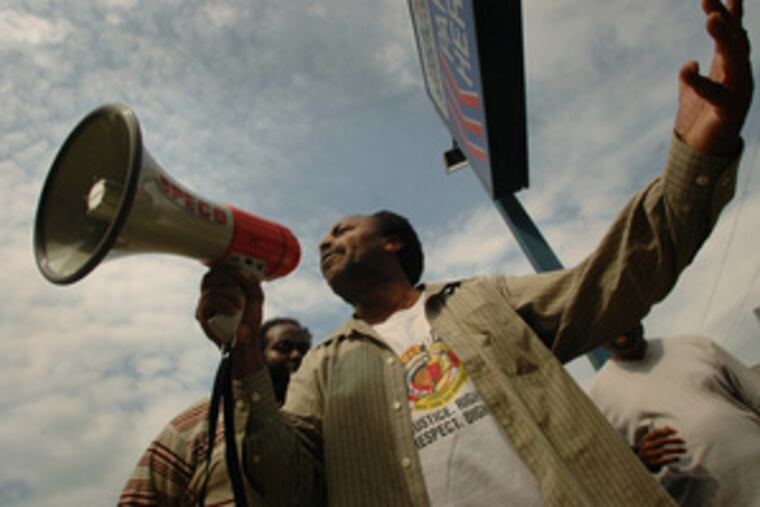
Leaders of Philadelphia's striking taxi drivers ended their 48-hour strike a day early yesterday but promised to continue fighting problematic new high-tech dispatch and credit card systems mandated by the Philadelphia Parking Authority.
Leaders of the drivers and Parking Authority officials disagreed about how many cabbies stayed off the streets and about the strike's effectiveness. But officials of the authority, which since 2005 has regulated city cabs, said there was no shortage of taxis yesterday at Philadelphia International Airport and only brief rush-hour delays at Amtrak's 30th Street Station.
All 1,200 members of the Taxi Workers Alliance will be back at 6 a.m. today, alliance president Ronald Blount announced yesterday during an afternoon rally in front of Parking Authority headquarters at 3101 Market St.
"We've made our point. We've proved that we can launch a two-day strike," Blount told reporters in front of about 25 supporters. "This system is not working. It's been almost a year now. How long are we supposed to be patient?"
The strike was part of a concerted protest with Taxi Workers Alliance hacks in New York City about the dispatch-fare system that Philadelphia has been testing and that New York drivers are supposed to get beginning Oct. 1.
As of late yesterday afternoon, New York taxi drivers promised to continue striking today; New York officials questioned the strike's effectiveness and promised group rides and flat fares to help commuters cope with delays.
In Philadelphia, Parking Authority officials also maintained that far fewer drivers joined the strike than Blount's estimate of 90 percent. The alliance's 1,200 members are the largest group among the city's 1,600 medallion cabs.
"It's hard to estimate, but it was no 90 percent," said James Ney, director of the authority's taxi and limousine division. The authority began regulating Philadelphia cabs in 2005 after the legislature transferred that responsibility from the state Public Utility Commission.
Ney said there was no shortage of taxis yesterday at Philadelphia International Airport and only sporadic rush-hour waits at 30th Street Station.
The Parking Authority had issued an emergency order allowing limousine and sedan drivers to pick up customers hailing them from the street and taxi stands. Also, some neighborhood cabbies from Germantown were allowed to serve major commuter stops in Center City.
Blount insisted he did not cancel the strike's second day because of anemic participation. Nor did he consider it significant that more cabdrivers did not join him at the afternoon rally in West Philadelphia.
Blount said most drivers had attended an earlier rally at Temple University.
"We told them to take the rest of the day off, to go home and spend some time with their families," Blount said.
He said the alliance would now consider other steps, including litigation, against the Parking Authority requirement to use the VeriFone Transportation System dispatch and credit card equipment.
The $4 million system produced for the authority by VTS, a New York joint venture of VeriFone Inc. and TaxiTronic Inc., includes a global positioning system, or GPS, integrated with the cab dispatchers, and a meter that lets passengers pay using a credit or debit card.
Blount said the GPS frequently loses contact with the satellite, which means drivers lose contact with dispatchers. Drivers also complain that the credit card device fails because of signal problems and that they are required to use a single credit card company that charges drivers 10 percent.
Parking Authority officials said the authority was withholding about $1 million in payments to VTS pending successful completion of the contract and maintain that the drivers' main objection is being forced to accept credit cards from customers instead of cash.
Ney said yesterday that periodic outages were common to GPS systems in urban areas and that he believed the complaints were typical of a new system in the break-in period.
Philadelphia was a pilot project for VTS, one of four companies that will install similar systems in New York's 13,180 medallion cabs beginning Oct. 1.