Bodies tired, souls calm
As the holy month of Ramadan winds down, aromas rise for the breaking of the fast.
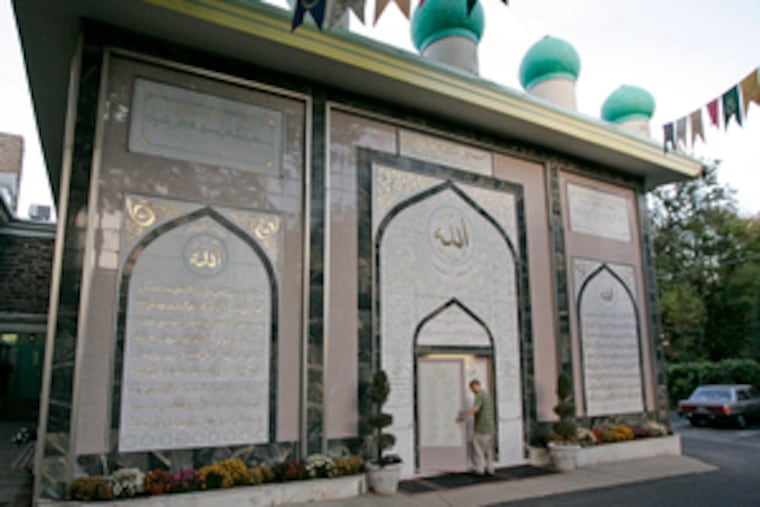
If the Muslim holy month of Ramadan is a time of fasting, what are those fragrant aromas wafting through the halls and up the stairs of the Bawa Muhaiyaddeen Fellowship mosque in Overbrook?
Some hint of cayenne, turmeric, coriander and cumin. Others shout of onion, cloves, fenugreek and cinnamon.
Follow them to the kitchen of this stately old mansion-turned-mosque on Overbrook Avenue, and discover Swiss chard, Chinese cabbage, garlic, kale, radishes, beet greens and more, pumping fragrant steam from bubbling, stainless-steel cauldrons.
These are the smells of food, of course, that essential, "glorious" stuff of life that most Americans take for granted - and often overdo.
But Ramadan (due to end Friday if a sliver of new moon appears that evening) is a special time of year, when devout Muslims seek to quell, from sunrise to sunset, the human appetite for food and other sensory pleasures.
"By the third week people are tired and worn down," said Muhammad Abdur-Razzaq, imam of this 26-year-old Sufi community, "but not dopey or grumpy.
"You become more contemplative," he said last week while gently stroking his long, gray beard. "It's actually a very peaceful time, when the feelings in your heart are a lot more discernible."
A concert musician and former financial analyst who converted to Islam in 1972, Abdur-Razzak inherited spiritual leadership of the fellowship after its Sri Lankan founder, the mystic M.R. Bawa Muhaiyaddeen, died in 1986.
As the most mystical branch of Islam, Sufism speaks fluently of encountering the divine, especially during Ramadan. "By starving what is false within us," said Abdur-Razzaq, "we are able to attune ourselves to our real food, which is the light and grace of God."
Members of the fellowship agreed that the fatigue and calm of fasting are surprisingly agreeable sensations.
"One of the brothers here calls it 'Ramadan Accumulated Fatigue,' " joked Muhammad Abdur-Rauf, 45. He had stopped by the mosque on the way to work to pick up a pot of spicy, seasoned rice-and-potato porridge, or kanji.
It was just one of the evening break-fast dishes whose long preparation was filling the mosque.
It would be nearly six hours before he could sample the kanji, but the sight and scent of food are not troubling temptations, Abdur-Rauf said. Rather, he enjoys the physical and spiritual dimensions of fasting.
"The body shuts down, but a peacefulness comes over you," he said. "You feel fuzzy but a quieting-down inside. You're definitely less in the world. . . . It helps you think and pray more clearly on some level."
At a counter nearby, Qadir Bibi paused from her work selling books and pamphlets.
"You naturally just sort of mellow out" during Ramadan, said Bibi, a native of Sweden who has been a Sufi Muslim and active in the mosque since the early 1980s.
"Instead of feeding the body three times a day, and the time spent shopping and cooking and cleaning - all that is just parked to the side. The body gets weaker, the emotions get weaker. All of that which is normally tied to everyday life gets weaker. You start to slow down. Even the multiplication tables are more difficult," she said and laughed.
"Eight times nine? You must think for an extra moment. But it is an opportunity for the soul to get its nourishment."
"Hunger is all in the mind," insisted Bob Barnett, 54, as he diced potatoes and peeled ginger in the kitchen. He has cooked there most weekends and Wednesdays for 20 years.
It was his fragrant vegetarian curry dishes that were radiating throughout the building on this warm autumn afternoon, in preparation for the crowd that would gather for the break of fast at sunset and Maghrib, the fourth prayer of the day.
That moment arrived this day at 6:29 p.m., when about 35 adults and a few children gathered at the mosque for a bite of kanji, about 10 minutes of prayers, and then dug into Barnett's curries, served on rice.
"During Ramadan you feel other people's struggling more," Cathy Didona 62, of Ardmore, said as she sat with a plate of dinner on her lap.
A diabetic, Didona used to fast during the month, she said, but "started getting the shakes" in recent years and no longer fasts. She compensates, she said, by "praying and reading more" and donating money to the mosque's fund for the poor.
Muslims are expected to give 21/2 percent of their accumulated wealth to the poor, Abdur-Razzaq explained, and many make their zakat gifts, as the tithe is called, during Ramadan.
Many of the members said they not only welcomed the calm that comes with fasting but grow sad at the prospect of its ending.
"It's like having a beautiful, elegant house guest come for a month," said Bibi, "and then the time approaches when she must depart.
"You find yourself saying: 'Oh, no! So soon?' "