Doggedly devoted to saving animals
On a recent soggy autumn afternoon, Bill Smith was making his usual rounds in Amish country, picking up canine castoffs. At one farm with a kennel he whisked a bundle of scraggly white fur out of a garage, through the rain, and into a crate in the back of his Subaru. The West Highland terrier mix was no longer of value to the Lancaster County breeder because she had a goose-egg-size mammary tumor that prevented her puppies from nursing.
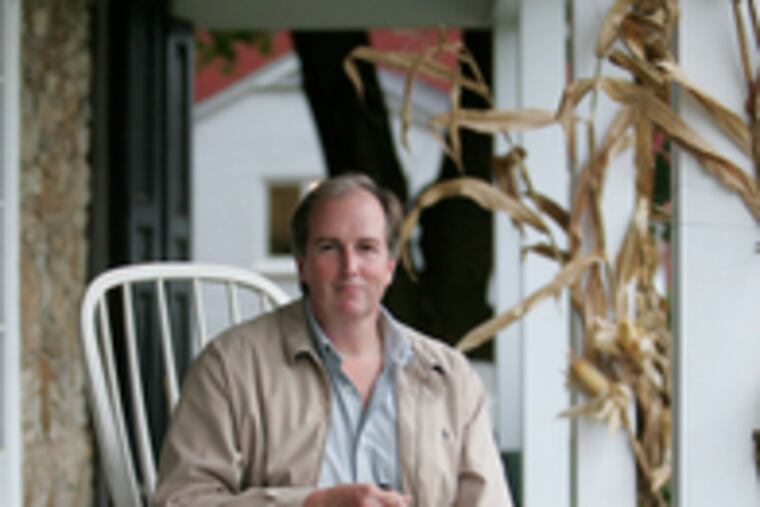
On a recent soggy autumn afternoon, Bill Smith was making his usual rounds in Amish country, picking up canine castoffs. At one farm with a kennel he whisked a bundle of scraggly white fur out of a garage, through the rain, and into a crate in the back of his Subaru.
The West Highland terrier mix was no longer of value to the Lancaster County breeder because she had a goose-egg-size mammary tumor that prevented her puppies from nursing.
Cowering in the back seat was a 9-year-old golden retriever who spent her life in a small pen and was given up because she could no longer produce puppies. Next, at yet another kennel, came five schnauzer-poodle-mix puppies. At 13 weeks, deemed no longer cute, they'd passed their "sell-by" date. All were almost certainly spared a miserable fate by Smith.
Call him St. Francis of the Main Line.
As founder and director of the Main Line Animal Rescue in Chester Springs, Smith maneuvers on the front line of the battle against animal cruelty, a rare witness to the often crowded and dirty conditions in private dog-breeding factories. As Smith roams the region, he saves the animals he can, finding them homes. He plucks dogs from death row in city shelters. He scoops up strays and takes in people's unwanted pets. The rescue center's vet bill for last year alone was $180,000.
In his spare time, Smith dreams up creative billboard campaigns to protest "puppy mills," the large commercial breeding kennels for which Pennsylvania, particularly Lancaster County, has become known.
Today, Smith will receive the ASPCA's lifetime achievement award for his rescue work and advocacy on behalf of animals.
Since he's only 46, "we bent the rules on lifetime achievement for Bill," said Matthew Bershadker, the ASPCA's vice president of development. "Here's a guy who finds homes for thousands of animals and who has demonstrated relentless perseverance against the horrors of Pennsylvania's puppy mills."
Dozens of dogs
Main Line Animal Rescue sits on 58 scenic acres in Chester Springs. Housed in the kennel and nearby barn are 100 homeless dogs - plus a dozen cats - of all sizes, each with its own tale of abandonment or abuse. They get first-class veterinary care, along with love and exercise courtesy of 85 regular volunteers.
"Everybody who comes out here has a special gift," Smith said. "We have a woman who loves washing buckets, someone who walks the larger dogs, someone who walks the small dogs."
With the help of wealthy patrons and a successful fund-raising campaign, a new $2 million kennel facility is set to open in January. Plans call for the old kennel to be converted into a clinic, offering free health services for animals rescued by this group and others.
The list of people who have adopted from Main Line reads like a mix of the Social Register and the who's who of Pennsylvania politics: Gov. Rendell and his wife, Marjorie; former Supreme Court Justice William Lamb; state Gaming Control Board chairman Mary Colins; philanthropist Anne Hamilton.
Animals and histories
Strolling through the concrete kennel, dressed in his regular uniform - mud-stained khakis and untucked Oxford shirt - Smith rattles off the names and stories of the inhabitants.
There's Rocket, the shepherd mix found in Valley Forge National Historical Park; Gizmo, the border collie mix airlifted from St. Croix, Virgin Islands; and Charlotte, the German shepherd from a puppy mill who ran away from her adopted family while vacationing in Maine. Smith flew there last month in a patron's private plane to retrieve her.
"You have to do something," said Smith, who started taking in animals nine years ago. "I don't believe you can be happy unless you're doing something for others."
Smith, who is single and lives in Valley Forge, receives no salary, supporting himself with a modest inheritance and savings. He works around the clock. In the wee hours, fueled by Jelly Bellies and chocolate milk, Smith often can be found clutching a sick dog in the office of a 24-hour emergency vet or roaming suburban neighborhoods conducting fence checks to make sure potential adopters have properly secured their yards.
Whether Smith is tussling with celebrities or hammering the Department of Agriculture for not doing more to end animal suffering, his style is more guerrilla fighter than diplomat.
In 2005, fed up with the state's inaction on puppy mills, Smith launched a billboard campaign along the Pennsylvania Turnpike in Lancaster County.
Smith relentlessly e-mails state officials at all hours with complaints about poorly run kennels and other abusive situations he has seen.
Among those who have clashed with Smith on dog-related issues is John Gibble, president of the North East Beagle Gun Dog Federation.
"In one e-mail he called me 'ignorant,' but I do respect the rescue work he does," said Gibble, a member of the state Dog Law Advisory Board.
Supporters admire Smith's willingness to put himself on the line to bring attention to the problem.
"His activism is bringing attention to devastating conditions in Pennsylvania puppy mills," said Marsha Perelman, who also serves on the advisory board and is a Main Line Animal Rescue board member. "Some may find his actions extreme, but what he's bringing attention to is extreme."
Animal rescue was a career Smith never envisioned for himself.
"It found me," Smith said, taking a rare break to enjoy the view of the farm in the mist from the hay loft of the barn.
Born in Center City, Smith visited the Philadelphia Zoo every week with his father, who helped nurture his love of animals. After graduating from Widener, he worked a variety of jobs: solar panel salesman, textbook illustrator, and book researcher, before animal rescue came to him in the form of a papillon with a floppy ear.
The breed rescue that he was delivering the dog to had rejected him for having an imperfect ear. So Smith took in the dog, and soon the orphan animals of greater Philadelphia started finding their way to him.
Each day since has been an emotional roller-coaster ride, he says.
"Sometimes I think everything's really bad, and then someone steps up and takes in a diabetic cat," he said. "There are a lot of good people out there."