Puzzles the giraffe dies at PhiladelphiaZoo
Puzzles the giraffe, one of the Philadelphia Zoo's most beloved animals, was remembered yesterday as a "gentle and friendly favorite" after being euthanized last week, zoo officials said.
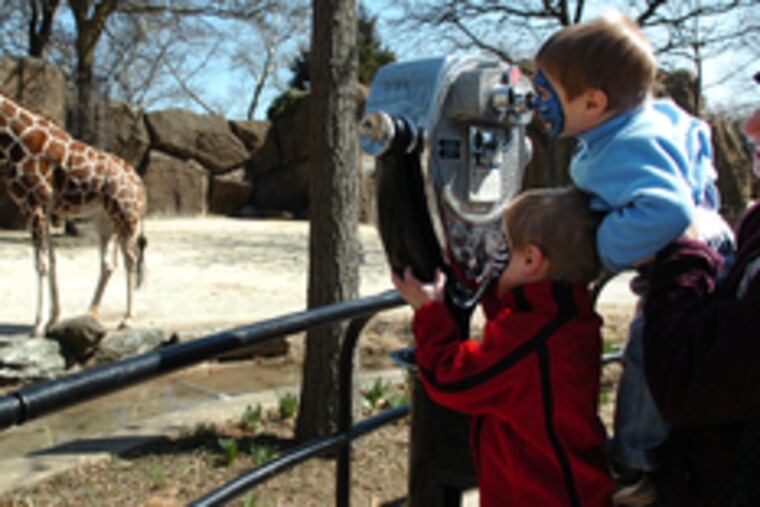
Puzzles the giraffe, one of the Philadelphia Zoo's most beloved animals, was remembered yesterday as a "gentle and friendly favorite" after being euthanized last week, zoo officials said.
Puzzles, 27, had been suffering from failing health due to advanced age. She died Friday. The female reticulated giraffe was among the oldest in the United States.
At 13 feet, 6 inches, she wasn't particularly tall. But Puzzles was the most easily identifiable of the zoo's three-member herd due to a large growth on her neck.
The growth, which mystified zoo veterinarians, was not believed to have contributed to her declining health, zoo officials said.
A post-mortem examination will determine what caused the slow-growing tumor to sprout on the animal's neck.
Puzzles was a favorite of staff and visitors, said Andrew Baker, zoo vice president of animal programs.
"All of her keepers commented on what a gentle personality she had," Baker said. "It was so easy for them to become attached to her."
Puzzles was born in 1981 at a children's zoo in Fort Wayne, Ind. Three years later, she came to the Philadelphia Zoo.
She was the mother of seven calves, all of which were adopted by zoos across the country.
The two other giraffes at the zoo are Stella, 7, and Twigga, 28, her mates in the "African Plains" exhibit.
Zoo staff have been closely monitoring Twigga, who has been receiving treatment for a variety of symptoms linked to her age. Giraffes typically live 20 years.
According to the zoo Web site, most giraffes do not live to their maximum age, though animals in captivity usually outlive their wild cousins. Like humans, female giraffes generally live longer than males.
The zoo's veterinary staff and Puzzles' keepers met early this month to discuss the giraffe's prospects for a happy life.
In the end, they agreed euthanasia was the best medical option to alleviate pain and suffering.
Zoo staff and volunteers had the chance to visit Puzzles and pay their respects to the aging ungulate.
"We let as many people know in advance so they would have the opportunity to say goodbye," Baker said.
"All of our care staff become very attached to our individual animals," he said. "It can be traumatic when they pass away."
Puzzles died at home.
On March 21, a keeper led Puzzles to her stall in the giraffe barn. A veterinarian gave her a shot of a powerful anesthetic that put her to sleep. A high dose of a barbiturate then stopped her heart, said Keith Hinshaw, zoo director of animal health.
Afterward, workers folded her body, slid it out of the stall, and lifted it onto a large truck.
The giraffe, though towering, was surprisingly light, weighing about 1,000 pounds, Hinshaw said.
Zoo workers covered Puzzles with a large tarp. The makeshift hearse drove her body 40 miles to Kennett Square, where doctors conducted a necropsy at the University of Pennsylvania School of Veterinary Medicine's New Bolton Center.
Results are pending, Hinshaw said.
Her body will be cremated or buried. Zoo officials did not have plans for a memorial. It is unclear where Puzzles would be buried.
"There's a graphic posted at the exhibit explaining to our visitors what happened," Baker said. "But we don't do services for individual animals."
Baker said the zoo had begun a search for a replacement giraffe. At 28, Twigga is not expected to live much longer.
"We've been talking to other zoos about getting company for young Stella," Baker said. "We don't want her to be all by herself."