No picnic: Corzine's ax falling on Parvin
With budget cuts threatening to close nine state parks, a group is rallying to save the popular spot on the Cumberland-Salem border.
PITTSGROVE TOWNSHIP, N.J. - Generations of working-class families have spent their summer vacations at Parvin State Park, where handcrafted cabins from the 1930s and big-timber pavilion shelters dot the shores of placid lakes.
But it is possible the park will shut down by midsummer, closing the swimming beach on Parvin Lake and the adjacent trophy-rated fishing area. Also off limits would be the canoe and rowboat launch, the quaint cabins on a lake dramatically named Thundergust, and the picnic areas and tent campsites.
The Corzine administration has proposed closing Parvin and eight other parks in New Jersey. The state's 33 other parks would reduce services and off-season hours, all victims of a state budget crunch.
But the closures won't happen without a fight.
On Saturday, at 10 a.m., the Parvin State Park Appreciation Committee, a nonprofit service organization that has spent 25 years donating time and funding to maintain the park, plans a rally to raise awareness about the possible closure. The group also intends to spend the day planting flowers and clearing the miles of scenic hiking and biking trails, as it does each spring.
Organizers say they hope to gather hundreds of people - and thousands of signatures on a petition - to make Gov. Corzine aware of "what a huge asset he would be taking away from the people of New Jersey if he closes Parvin," said Robert B. Zuest, 43, president of the group.
"To fix the budget, they pick the only thing that the average person has to do that doesn't cost a million dollars," said William Arrison, 62, of Barnsboro, who has been coming to Parvin to fish and camp since he was 5.
"Everybody isn't a millionaire and can go wherever they want on vacation like the governor," said Arrison, a retired steelworker on a fishing jaunt to Parvin to troll for largemouth bass and pickerel in the stocked lake. "All some people can afford, to get a little enjoyment out of life, is to take an afternoon out to fish before they have to go to work. Now they want to take that away from us."
Corzine is trying to reduce spending by about $500 million from last year with his proposed $33 billion state budget for the coming fiscal year. Closing the nine parks would save $8.8 million in the state's $34 million state park allocation, he said.
Arrison and others say Parvin's regular visitors - about 240,000 people a year - have an immense respect for the place, a certain reverence for its tall trees and quiet ambience.
While American Indians were likely the first people to camp there - evidence of at least four encampments has been unearthed - Parvin was established as a park in 1930 when the state acquired its 1,952 acres.
In a flagging economy after World War I and the Great Depression, Franklin D. Roosevelt established the Civilian Conservation Corps to create jobs.
At Parvin, the corps produced a hidden jewel on the Cumberland-Salem County border, about six miles west of Vineland.
The young men built the swimming-beach complex using bricks from Philadelphia factories abandoned during the Depression, created the beach and parking-lot areas, dug out and dammed a swamp to create Thundergust Lake, and built the 18 cabins there. The corps also built the tent campsites at Jaggers Point.
Since then, the state has maintained the facilities and lovely Pinelands-fringe oak-pine forest and hardwood swamp woodlands.
"It's off the beaten path," said Mike Filipski, 65, of the Hilltop section of Gloucester Township, who has camped at Parvin for more than 25 years. "A lot of people don't know it's here, but for the people who do, it's a beloved place."
Closing it would devastate the region, said Filipski, who twice a year rents a cabin - always No. 8 - with best buddy Bill Shockley, 65, of Pennsgrove, to fish and hike for a few days.
With a cozy living room warmed by a stone fireplace, a compact kitchen, a full bathroom, and two tiny bedrooms with bunk beds, cabins like the one Filipski and Shockley rent every year seem like a bargain at $45 a night.
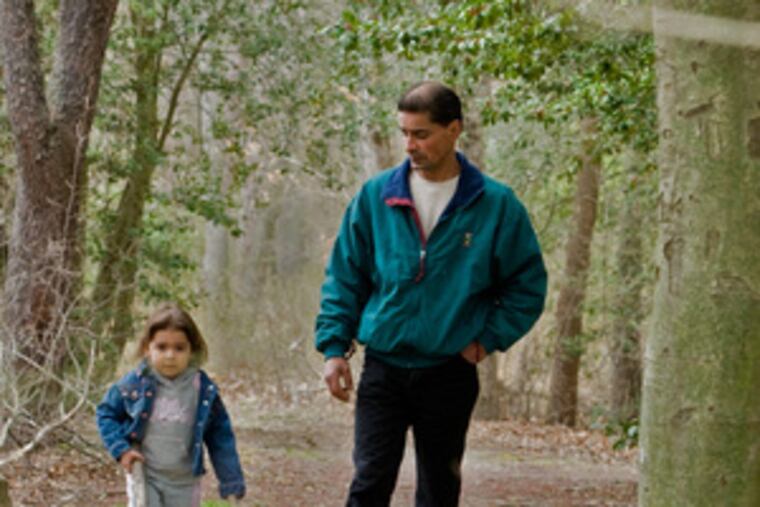
David Rodriquez, 43, who lives in nearby Rosenhayn, Deerfield Township, said he visited the park regularly with his 3-year-old daughter, Alysa.
"It's nice and peaceful here," Rodriquez said. "I like bringing my daughter and taking a walk. I came here when I was little, and I want her to have a place like this that we can keep coming back to."
Dean Cramer, the park's superintendent, said Rodriquez was typical of Parvin's visitors.
"The fact that it is so close to urban areas like Philadelphia and Camden but is surrounded by cultivated farmland makes it a nice, little wooded oasis for so many people," Cramer said. "It's really the kind of place that everyone utilizes for outdoor recreation in the region, but it will be particularly missed by people in the lower-income brackets because there are so few places for them to find this kind of affordable recreation."
If the park closes, Cramer and his staff of 11 would likely be laid off.
Elaine Makatura, a spokeswoman for the state Department of Environmental Protection, said tough economic times meant tough decisions must be made.
"I think, in general, during this severe budget crisis, choices must be made that are both difficult and painful on many levels," Makatura said.
Filipski and Shockley said they almost had tears in their eyes after they were told at the park office that workers could not accept reservations for the cabins past June.
"People in Cumberland, Salem and southern Gloucester County don't have very many recreation activities like this one," Filipski said. "It's really unfair to people who pay their taxes so that facilities like this are available to them."