Insurance companies dropping Jersey Shore policies
State Farm officials began sending notices to customers last month, saying they would not be renewing some homeowners' policies at the Jersey Shore.
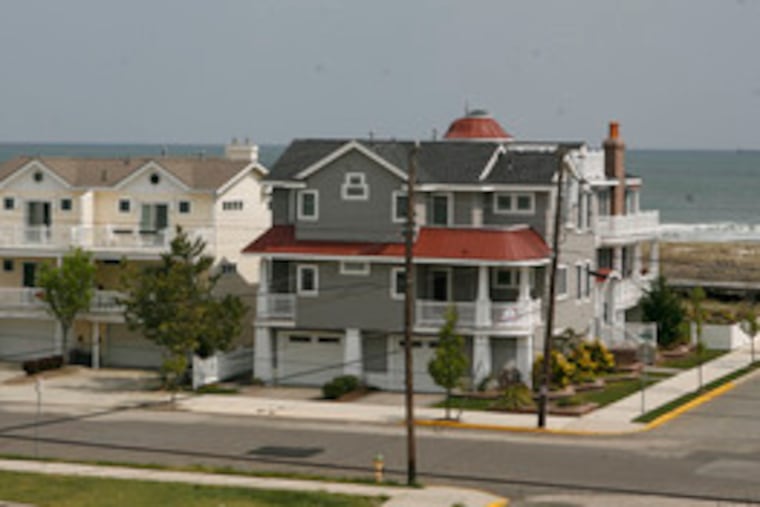
State Farm officials began sending notices to customers last month, saying they would not be renewing some homeowners' policies at the Jersey Shore.
The company wants to reduce the number of its policyholders along the coast by 2 percent over the next five years, said State Farm spokesman John Baldino.
With those letters, State Farm became the latest company to target coastal areas after Hurricane Katrina - and a variety of lesser weather events - cost the insurance industry billions of dollars in claims.
The result: coastal homeowners scrambling to buy coverage, and facing higher premiums when they find it.
Ten years ago, a policy on an average house on a Jersey Shore barrier island cost about $600 a year, roughly double what it would have cost just over a bridge in a mainland area. Now, the same coverage can cost between $1,200 and $1,800 a year, according to experts.
"It never used to be, but the cost of insurance is now a factor when we decide what we are going to charge our renters," said Faye Shivers, whose family has owned four rental duplexes in Wildwood for more than 20 years.
Shivers said she is being dropped by State Farm and has found that new coverage will cost her more than double what she had been paying.
Baldino said the company will not release exactly how many homes the non-renewal plan will affect, but State Farm carries about 315,000 homeowners' policies in New Jersey and holds a market share of 13.5 percent across the state.
"At this point, this is a very sensitive issue with our policyholders at the Jersey Shore," Baldino said. "We are trying to do what is in the best interest of all our policyholders so that policies remain available and affordable."
In February 2007, Encompass Insurance, an Illinois-based subsidiary of Allstate Insurance, which insures 56,000 homes in New Jersey, began dropping policyholders; it has dropped about 5,300 at the Jersey Shore over the last 14 months, according to spokeswoman Geralyn Thompson.
Tom Heist IV, founder of Heist Insurance Agency in Ocean City and Ventnor, one of the largest insurance brokerages at the Jersey Shore, said the non-renewals have sent his agency scrambling to find new insurance options for about 600 of his Encompass customers.
"When companies do something like this, especially if they try to do it within a one-year renewal period, it creates a near panic because there are so many people in the marketplace looking for insurance all at once," Heist said.
And there may be other companies planning to do the same thing, according to Marshall McKnight, a spokesman for the New Jersey Department of Banking and Insurance, which regulates the state's insurance industry.
Legislators are calling for a public forum with representatives from the state agency so homeowners can voice their concerns about the non-renewals.
No date has been set for the meeting.
"We are very concerned," said McKnight. "It's something that we've actually been concerned about for several years when we began seeing the trends nationally after Katrina."
McKnight said his agency has begun talks with companies that may want to pull their coverage in coastal areas to encourage them to do so slowly, so that the market isn't flooded with so many people trying to buy coverage at the same time.
McKnight said State Farm agreed to a five-year withdrawal as opposed to accomplishing it all in one renewal period.
The trend to limit the exposure of insurance companies to catastrophic losses in coastal areas dates back to the late 1980s and early 1990s, when the cost of real estate in these areas began to boom.
As the coastline became increasingly populated, people didn't bother to insure properties, or bought very minimal coverage on what were, for the most part, bare-bones second homes. But in the later part of the 20th century, homeowners at the beach began constructing more elaborate castles on the sand - and demanding better insurance coverage to pay for them should they wash away.
By the late 1980s, many companies were refusing coverage or attempting to limit it, leaving many people who were trying to buy shore properties unable to obtain mortgages because they could not buy insurance to cover potential losses.
And when Hurricane Andrew cut a wide swath of destruction through South Florida in 1992, it became so difficult even for some Jersey Shore homeowners to purchase coverage that the state was forced to create the Fair Access to Insurance Requirements (FAIR) Plan the following year.
Critics of the plan, however, have called it "unfair" because the cost for coverage has sometimes far exceeded the expense on the open market.
But fewer people in recent years have had to purchase homeowners' insurance through the FAIR plan because more and more "surplus lines" have been made available in the state, McKnight said.
Surplus lines are usually not major insurance companies like State Farm, but are smaller carriers that are licensed to sell insurance under less stringent state guidelines, McKnight said.
"The surplus lines have helped create better competition for customers in the state, so I don't think we will see the same problems with placing people for coverage that we may have seen back in the 1980s and 1990s," McKnight said. "You have companies now that are willing to write policies; it's just that the cost may be higher."