At gathering, the focal point is black families
The African American Family Conference wants communities to take control of their fates.
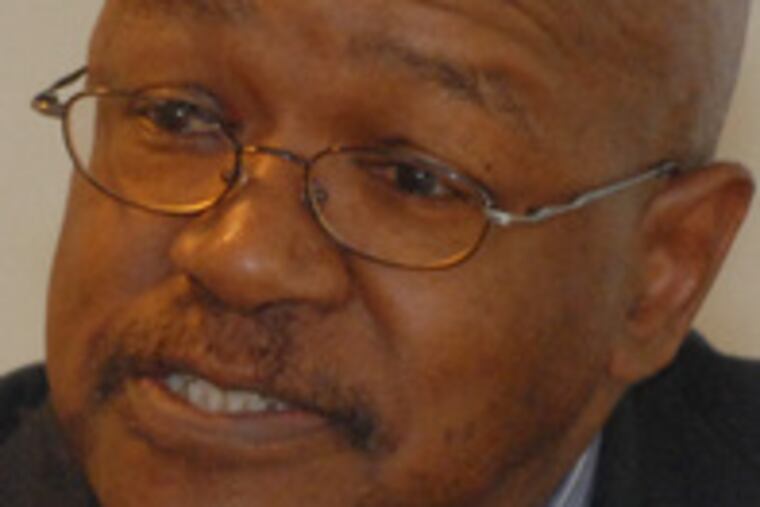
Presenters and attendees at a Philadelphia conference on African American families yesterday tackled the problems of the black community with a focus on small steps close to home.
Whether the concern was public education, HIV/AIDS, poverty, or jobs and economic development, part of the solution, they suggested, was in the living room, with the next-door neighbor, in the church on the corner, and in the mom-and-pop grocery down the street.
"It's the community that has to take control of their lives," said Duane C. Ingram, vice president of programs and planning for the Urban League of Philadelphia.
The African American Family Conference, organized by Willingboro filmmaker Dana Ross, became a call to action for the 200 attendees. The one-day event at Temple University was the first in a series of similar gatherings scheduled for cities around the country, including New York and Baltimore.
Ross organized the conferences after traveling nationwide to film a documentary on black fatherhood. She found a disconnect between social-services agencies and the people seeking their help.
"I kept running into families who asked where to get help and find resources," Ross said. Potential clients said some organizations had dismissively treated them as stereotypes, she said. Social-service agencies lamented the lack of funding that limits programming and services.
The African American Family Conference is designed to lead to ongoing community workshops. Yesterday's conference offered nearly 30 seminars on subjects including youth empowerment, fatherhood, violence, and family life skills.
"I'm here because I feel the church needs to be a part of encouraging family unity and information. We can't just preach about Moses," said the Rev. Inez Thompson, 86, of Overbrook. "In other words, the headlines need to be in the sermons."
In an afternoon session, Ingram outlined the findings of the Urban League of Philadelphia's latest State of Black Philadelphia report, which was released in December. For every $44,000 earned in a white household, an African American household earns $29,000, according to the report. Black Philadelphians have attained a standard of living that is 72 percent that of their white counterparts, the report said.
Social scientist Elijah Anderson, a professor at Yale University who formerly was at the University of Pennsylvania, gave the historical context that he said had split the black community into two societies: a middle class "trying to make it" and the poor living in urban centers.
Late in the day, filmmaker Bill Duke screened his new 40-minute documentary,
Faces of HIV
. Duke recently filmed the movie
Cover
, about AIDS in the black community, in and around Philadelphia.
Both films are intended to shake the black community out of what Duke described as a stubborn refusal to face life-threatening facts.
"People are in denial," he said, "so my films bring as much attention to the situation as possible so that the community realizes there are things we can do to impact it."