Zimmer wants a seat after years in the lobby
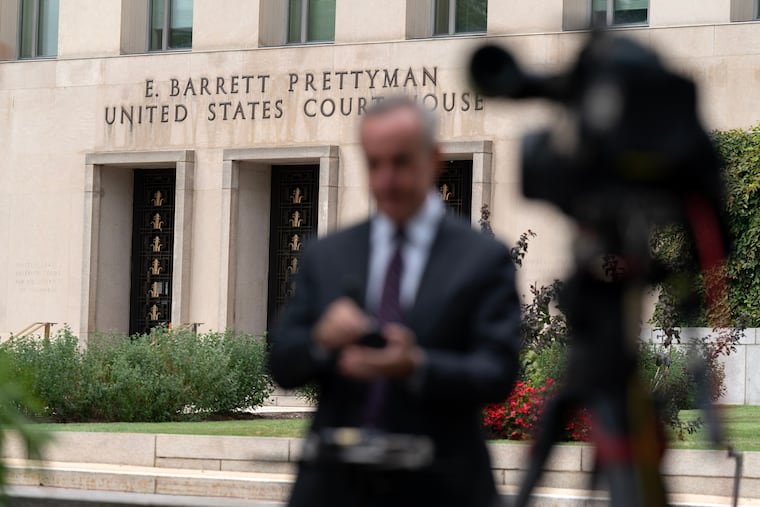
Dick Zimmer may have left Congress in 1997, but in the last few years he has been a regular on Capitol Hill.
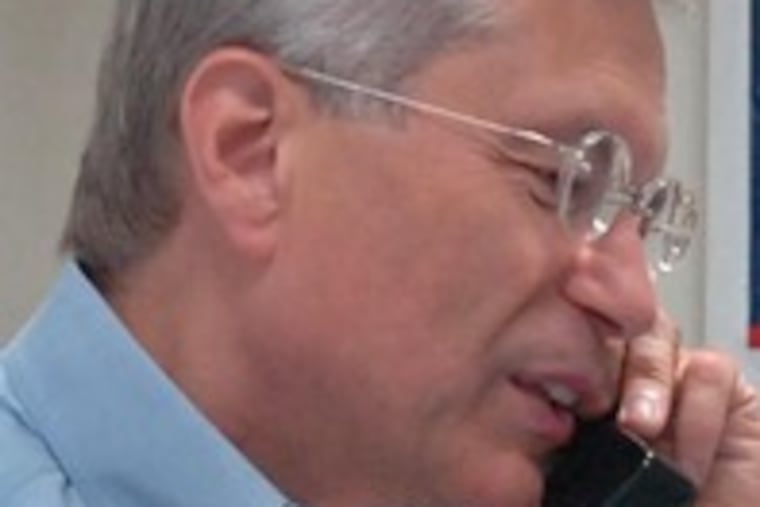
Dick Zimmer may have left Congress in 1997, but in the last few years he has been a regular on Capitol Hill.
Now he wants to take the unusual step of leaving lobbying to return to Congress.
As a lobbyist, Zimmer collaborated on international matters with his November opponent in New Jersey's Senate race, incumbent Frank R. Lautenberg. These days, he is working against the Democrat on the very subject as both try to establish their credentials to voters.
At Gibson, Dunn & Crutcher's Washington law office since 2001, Zimmer has been busy calling on former colleagues for clients as diverse as the former son-in-law of Uzbekistan's president, a drug company that sought Medicare payment for its pain pump, the Business Roundtable, and asbestos trusts.
Zimmer has kept his eyes on obscure paragraphs of dense pension legislation and even teamed with Lautenberg to aid terror victims. In New Jersey, he has worked on development issues for Hunterdon and Warren Counties.
Zimmer's lobbying became a minor issue in the June 3 GOP primary, with candidate Murray Sabrin calling Zimmer a "liberal loser lobbyist."
In the fall campaign, no doubt Lautenberg will take a look at what Zimmer has been doing since leaving politics after his 2000 attempt to retake his House seat.
Zimmer can expect a "guilt by association" attack for being a lobbyist, Seton Hall University political scientist Joe Marbach said. Lautenberg's campaign will be "looking at what's perceived as the worst people he lobbied for and try to link Zimmer to that."
One of Zimmer's clients is Mansur Maqsudi of Mendham, N.J., who retained Zimmer's firm to help him with the fallout from a messy divorce. Maqsudi was married to Gulnora Karimova, daughter of Uzbekistan President Islam Karimov, known for imprisoning thousands of political enemies and boiling two of them to death. Soon after divorce proceedings began in 2001, Karimova took the couple's two children to Uzbekistan and later ignored a 2002 court order to return them to the United States.
Uzbek officials seized Maqsudi's lucrative Coca-Cola bottling plant, charging that he owed taxes. They strip-searched his elderly parents at an airport, deported and imprisoned relatives, and issued warrants for him, his brother and their father.
Zimmer reached out to several members of Congress, including Rep. Chris Smith (R., N.J.), with whom Zimmer served in the 1990s.
Smith met with Karimov on Maqsudi's behalf and was one of several members who repeatedly asked State Department witnesses whether they were helping Maqsudi.
The heart of the problem, Zimmer said, was that Uzbekistan, which borders Afghanistan, became a strategic U.S. ally after the 9/11 attacks and the State Department did not want to anger its president.
Ultimately, Congress did not help Maqsudi see his children or get his relatives released from prison.
Zimmer wound up in Lautenberg's office last year to amend the defense authorization to allow terror victims to collect damages from nations that sponsor attacks.
Steve Perles, a Washington lawyer who represents terror victims, enlisted Zimmer to get support from Republican lawmakers.
"He is a very effective professional guy on the Republican side of the aisle," Perles said.
Nevertheless, he added: "Frank Lautenberg has been there every step of the way - every step. He is the go-to guy in Congress for victims of terror or hostage-taking."
In 1996, Lautenberg worked on legislation that first allowed victims to sue foreign states. In 2000, he sponsored an amendment that lets terror victims collect damages from nations. His latest effort permits them to go after a nation's assets, such as refined oil. President Bush signed the legislation in January.
The law was written so the families of the 241 victims of the 1983 bombing of the Marine barracks in Beirut could collect damages from Iran, which supports the militant group behind the attack.
In December, a U.S. court ruled that families could attach $2.6 billion in Iranian assets.
Zimmer gets his clients through his law firm, he said, not through his connections in Washington, where he served in the House from 1991 to 1997, getting a seat on the powerful Ways and Means Committee.
He got one set of clients from the Gibson firm's bankruptcy practice. They were trust funds created with the assets of bankrupt asbestos manufacturers. The money was to be distributed to victims of asbestos exposure.
The trusts were concerned about a bill sponsored by Sen. Arlen Specter (R., Pa.), who was trying to fix the system by creating a national asbestos trust fund. Hundreds of thousands of claims were unpaid or unanswered. More than 70 asbestos manufacturers already were bankrupt, making compensation increasingly uncertain. The bill died in February 2006 after strong opposition from insurers and trial lawyers.
The asbestos trusts objected because Specter's proposed fund would have taken their assets. Zimmer argued that was unconstitutional.
Specter said Zimmer was a professional advocate for his clients. He listened to Zimmer's constitutional argument but didn't buy it.
"We were on some very novel ground in what we were doing," Specter said. "I thought we would win in court, but I would not discount the possibility to the contrary. It was an open question."
Zimmer's wish to return to Congress from the lobbying world is a change in course. Lobbyists rarely push the door back into Congress, experts say, mainly because being a lobbyist is far more lucrative than the $169,000 congressional pay.
Zimmer is on leave from Gibson during his Senate campaign.
But while working there, he said, the firm let him select his clients. He rejected clients sometimes because they conflicted with his values and for "other reasons," but he declined to elaborate.
Much of his work at Gibson was advising clients on the baroque details of the federal bureaucracy, he said.
In the House, Zimmer wrote a bill that would have prevented members of Congress from becoming lobbyists for five years.
Although the bill failed, he didn't become a lobbyist until nearly five years after leaving the House. Last year, Congress extended the grace period from one to two years.
"When I left Congress, the most lucrative offers came from Washington, and I really didn't want to go through the revolving door right away," he said.
Between his public service and going to Gibson, Zimmer worked at the New Jersey office of the Philadelphia law firm Dechert L.L.P. and taught government at Princeton University's Woodrow Wilson School of Public and Internationa Affairs.
Until March, Zimmer thought he was done with elected office.
But mainstream Republicans lost their Senate candidate and fielded him for this race.
"I figured that [the 2000 race] was the end of the sprint, and it had been a pretty good run, and I was going to spend the rest of my life as a private citizen," he said. "I think if I knew I was going to run for the Senate, I might not have given my opponent the issue that I was a lobbyist at all."